
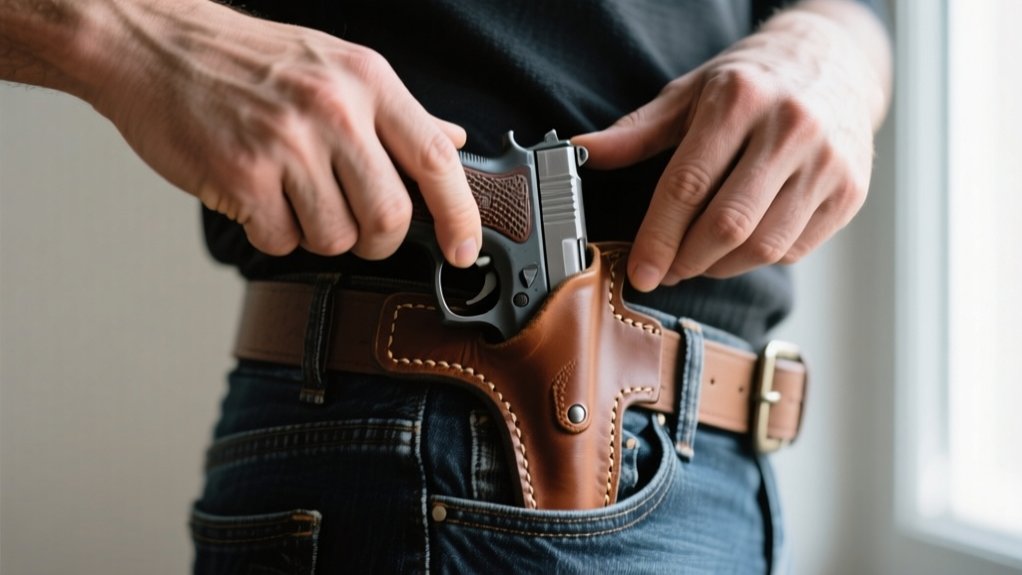
How to Wear a Iwb Holster?
To wear an IWB holster, first secure a sturdy gun belt and loosen it slightly for positioning. Clip the holster inside your waistband at your preferred carry spot, like appendix, strong-side, or kidney, for comfort and concealment.
Adjust the holster’s angle and retention to fit your body and clothing style. Make sure the firearm feels secure but accessible. Practice safe handling every time you draw or reholster.
Keep going to uncover tips that improve comfort and safety.
What Is an IWB Holster?
An IWB holster, or Inside the Waistband holster, lets you carry your firearm discreetly by tucking it inside your pants’ waistband. You secure it to your gun belt using clips, which keep the holster firmly in place while giving you quick access.
You can wear it in various positions like appendix, strong-side, or kidney carry, depending on what feels most comfortable and accessible to you.
These holsters often come in durable materials like leather or Kydex, crafted to fit your specific firearm model snugly.
The design focuses on natural retention and concealment, so your gun stays secure and prints minimally under your clothing.
With an IWB holster, you get a low-profile, practical way to carry your firearm every day.
Benefits of Using an IWB Holster
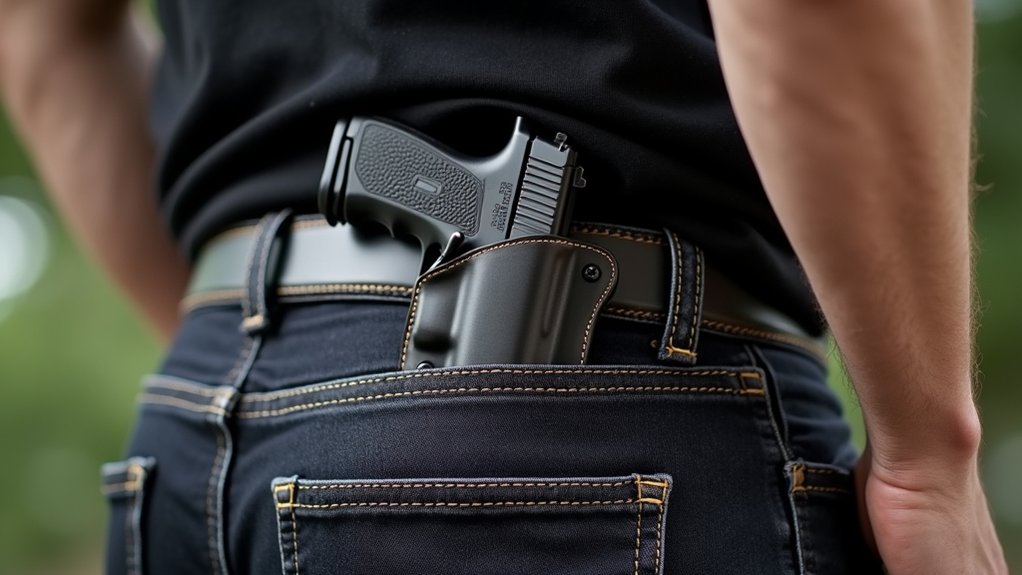
Choosing an IWB holster means you get a great mix of comfort and concealment that suits everyday carry.
You can wear it discreetly under various clothing styles while minimizing printing. This helps keep your firearm virtually invisible.
Plus, you get to customize your carry position and fit for maximum comfort and quick access.
Here are three key benefits of using an IWB holster:
- Versatile Carry Positions Choose appendix or strong-side carry depending on what feels best and allows the fastest draw.
- Adjustable Fit Many holsters let you tweak cant and ride height to match your comfort and accessibility needs.
- Slim Profile Materials like Kydex and leather keep your gun snug against your body, making concealment easier.
Choosing the Right IWB Holster Material
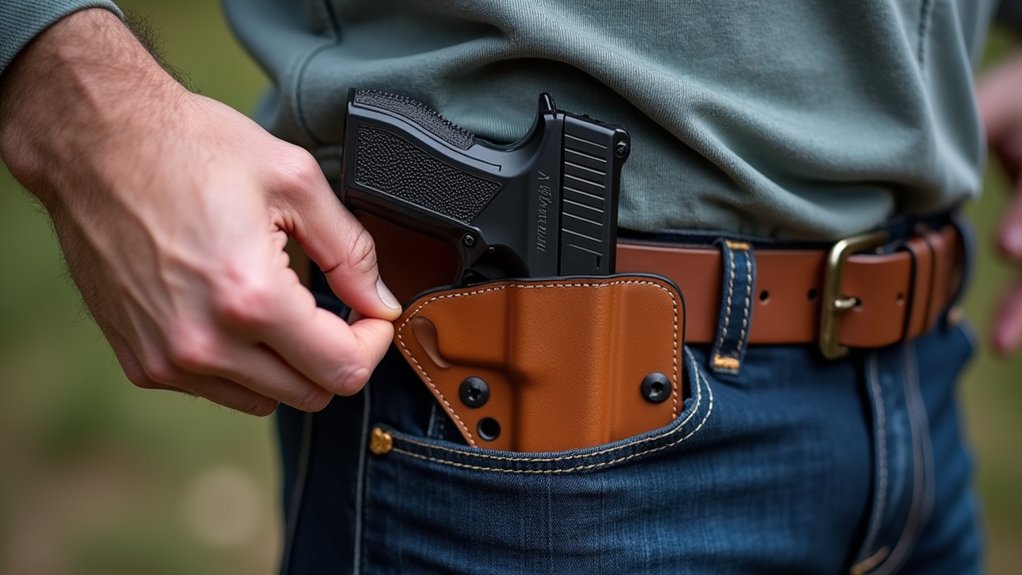
When you pick an IWB holster, the material plays an essential role in comfort, durability, and concealment.
Leather offers a classic look and molds to your body over time, giving you comfort but may feel bulkier and needs upkeep.
Leather holsters provide lasting comfort as they mold to your body but can be bulkier and require maintenance.
Kydex is lightweight and slim, providing excellent retention and a quick draw. It’s perfect if you want easy concealment and accessibility.
Hybrid holsters combine the best of both: leather’s comfort with Kydex’s secure fit and thin profile. They usually feature a leather backing with a Kydex shell.
To choose the right material, consider your climate, clothing style, and how it feels against your skin.
Picking the right holster material guarantees you carry comfortably and confidently throughout your day.
Preparing Your Gun Belt for IWB Carry
Before you start, make sure your gun belt is sturdy enough to support your IWB holster—leather or heavy-duty nylon works best.
You’ll want something that won’t easily bend or sag. Loosen the belt a bit so you can slide the holster under your waistband without any hassle.
Once it’s in place, secure the clips tightly to keep everything from shifting around.
Adjusting the fit just right will help keep your firearm accessible and comfortable all day long.
Choosing Sturdy Gun Belts
One key component to comfortable and secure IWB carry is a sturdy gun belt that won’t sag or lose shape under your firearm’s weight.
Choosing the right belt guarantees your holster stays firmly in place, minimizing printing and allowing a smooth draw.
When selecting a gun belt, keep these points in mind:
- Material: Opt for high-quality leather or reinforced nylon, as these materials offer durability and stiffness needed for daily carry.
- Width: Choose a belt about 1.5 inches wide to fit most holster clips and provide solid support.
- Adjustability: Look for multiple adjustment holes to accommodate slight changes in your waist size or clothing thickness throughout the day.
Picking a belt with these features will help maintain comfort and security during IWB carry.
Adjusting Belt Fit
Although a sturdy gun belt provides essential support, you’ll need to adjust its fit carefully to prepare for IWB carry.
Start by loosening the belt as you put on the holster to avoid unnecessary pressure while positioning it.
Use the multiple holes on your leather or nylon belt to fine-tune the fit, ensuring it’s snug but comfortable. This prevents sagging or shifting when you move.
Make sure the belt sits high enough on your waist to keep the holster secure and well concealed, yet still allows a natural range of motion.
Securing Holster Clips
When securing holster clips, you’ll want to make certain they attach firmly over your gun belt, which should be sturdy enough to prevent sagging.
A solid belt designed for holster support keeps your setup stable and comfortable throughout the day.
Before tightening, position the holster correctly to maintain accessibility and the right draw angle.
Then, adjust the clips so they fit snugly against the belt, preventing any movement.
Always orient the clips with prongs facing your waist for a secure hold.
Remember to regularly inspect the clips for wear to guarantee safe carry.
- Attach clips firmly over a sturdy gun belt to avoid sagging.
- Adjust clips snugly to keep the holster stable.
- Orient clips with prongs facing the waist for security.
Step-by-Step Guide to Wearing an IWB Holster
To wear an IWB holster comfortably and securely, start by loosening your gun belt and unbuttoning your pants if needed to make room for the holster. Slide the holster under your waistband, placing it where you find it easiest to reach.
Next, clip the holster firmly over your belt to keep it stable. Insert your unloaded firearm, keeping your finger off the trigger, and make sure it’s fully concealed.
Finally, adjust the retention, cant, and ride height for comfort and quick access.
| Step | Action |
|---|---|
| 1 | Loosen belt & unbutton pants |
| 2 | Slide holster under waistband |
| 3 | Secure holster clips on belt |
| 4 | Insert unloaded firearm |
| 5 | Adjust retention & positioning |
Common IWB Carry Positions and Their Advantages
When you’re picking a spot to carry your IWB holster, there are a few popular positions to consider, each with its own perks.
Maybe you like the quick access that appendix carry offers, or perhaps you prefer the smooth concealment you get at 12 o’clock.
It really comes down to what feels comfortable and fits your lifestyle.
Popular IWB Positions
Choosing the right IWB carry position can greatly impact your comfort, concealment, and draw speed. Here are three popular IWB positions you might consider:
1. Appendix Carry (1-2 o’clock): Offers quick access and easy draw while seated, making it ideal for defense.
However, it can feel uncomfortable when bending, depending on your body type.
2. Strong-Side Carry (3 o’clock): This common position provides a natural draw motion.
It’s reliable but might be less concealable with tight clothing.
3. Kidney Carry (4-5 o’clock): Positioned behind the hip for a palm-facing draw, this spot can be discreet.
Be mindful of safety when sitting or falling in this position.
Experiment with these to find the one that suits your lifestyle and gear best.
Benefits of Each Position
Each IWB carry position offers unique benefits that cater to different needs and situations.
At 12 o’clock, you get smooth draws with longer firearms and excellent concealment.
Appendix carry (1-2 o’clock) places your gun at the front for quick access while reducing the chance of printing. It’s perfect for defense.
Strong-side carry (3 o’clock) offers a natural draw motion, though it might show more under tight clothes.
Kidney carry (4-5 o’clock) tucks your firearm behind the hip for comfort when seated but requires caution during fast draws.
Cross draw (10-11 o’clock) is great if you prefer using your non-dominant hand and provides easy access while seated.
But you’ll need practice to guarantee safe handling.
Each position balances accessibility, comfort, and concealment differently.
Adjusting Retention, Cant, and Ride Height
Although getting your holster positioned correctly takes some trial and error, adjusting retention, cant, and ride height guarantees your firearm stays secure while remaining easy to draw.
Proper holster adjustment ensures your firearm stays secure and ready for a smooth, quick draw.
You can fine-tune these settings to match your comfort and quick access needs.
- Retention: Tighten or loosen the holster screws to keep your firearm secure without making the draw difficult.
- Cant: Change the angle by repositioning clips. A forward cant usually makes drawing more natural, especially for right-handed users.
- Ride Height: Adjust the clips to raise or lower the holster on your waistband, tailoring fit based on your body and clothing.
Keep testing these adjustments regularly to maintain the perfect balance between comfort and accessibility.
How to Test and Find Your Ideal Carry Position
When you start testing different carry positions, use clock hour references like appendix carry at 1-2 o’clock or strong-side carry at 3 o’clock to find what feels most comfortable and accessible for you.
Experiment with holster adjustments like cant and ride height to align with your body shape and clothing style.
Wear your holster in each position for several days, evaluating comfort, accessibility, and concealment during various activities.
Notice how it moves with your body, ensuring a smooth draw without discomfort or restriction.
Regularly practice drawing from these positions to build muscle memory and guarantee quick, safe access in different situations.
This process helps you pinpoint the ideal carry spot that balances comfort, concealment, and readiness perfectly.
Tips for Concealing Your IWB Holster Effectively
To conceal your IWB holster effectively, start by choosing the carry position that feels most natural and minimizes printing. You want to feel comfortable while making sure your firearm isn’t visible through your clothes.
Next, pick clothing that fits well—nothing too tight or too loose. Clothes that are comfortable and allow you to move freely will help hide the holster better without drawing attention.
Finally, make sure your holster fits snugly against your body. This helps prevent it from shifting around during the day, keeping you concealed and comfortable at the same time.
Choose Optimal Carry Position
Where you position your inside-the-waistband (IWB) holster can make a big difference in how well you conceal your firearm and how quickly you can access it.
Choosing the right carry position balances comfort, concealment, and accessibility. Here are three key positions to take into account:
- Appendix carry (around 1 o’clock) offers quick access and less printing, especially when seated. Just verify it fits your body comfortably.
- Strong-side carry (around 3 o’clock) is traditional and easy to draw from. Make certain your clothing minimizes printing.
- Kidney carry (4-5 o’clock) supports a natural draw motion but be aware of safety concerns and practice proper handling.
Stick with one position to build muscle memory for a fast, reliable draw in any situation.
Select Appropriate Clothing
Selecting the right clothing plays an essential role in effectively concealing your IWB holster. You should choose looser-fitting clothing around the waist to prevent printing and guarantee comfortable access to your firearm.
Opt for longer shirts that naturally drape over the holster, securely hiding it without looking bulky. Thicker, more structured materials work best, as they mask the holster’s outline better than thin fabrics.
Layering is a smart tactic. Wear an untucked shirt over a fitted undershirt to conceal the holster subtly.
Avoid tight or restrictive clothing that compresses the holster against your body. This not only causes discomfort but also increases the risk of printing.
Adjust Holster Fit
Once you’ve chosen clothing that hides your IWB holster well, fine-tuning the fit of the holster itself becomes the next step.
Adjusting your holster guarantees your firearm stays secure yet accessible and remains comfortably concealed.
Here’s how to adjust your holster fit effectively:
- Modify retention screws to keep your firearm secure but allow a smooth, quick draw.
- Experiment with the cant by tilting the holster forward or backward to match your body shape and clothing style.
- Set the ride height so the grip is easy to reach but stays hidden under your clothes.
Pair these adjustments with a sturdy gun belt and slightly looser clothing for ideal concealment and comfort.
Safety Practices When Using an IWB Holster
Because safety is paramount when carrying with an IWB holster, you should always make sure your firearm is unloaded before holstering it and practice drawing and reholstering regularly to build muscle memory.
This helps you handle your gun smoothly and safely in any situation.
Always stay aware of your firearm’s position to avoid muzzling yourself or others, especially when bending or sitting.
Choose an IWB holster that fits securely to prevent your gun from shifting or falling out during movement, which can create dangerous situations.
Avoid carrying in the small-of-back position to reduce the risk of spinal injury and to maintain a safer, more natural draw.
Following these practices will keep you and those around you safer while carrying concealed.
The Role of Holster Claws in IWB Carry
Holster claws play an essential role in improving concealment and stability when you carry an IWB holster.
These small but effective attachments pull your firearm’s grip inward against your body, which minimizes printing and helps keep your weapon discreet.
Holster claws pull the firearm’s grip inward, reducing printing and enhancing discreet carry.
They also allow you to adjust the angle of carry, so the holster conforms better to your body’s natural shape, augmenting comfort.
Moreover, claws stabilize your holster during movement, preventing shifting or dislodging.
Here’s what holster claws do for you:
- Improve concealment by reducing printing through inward grip pressure
- Augment comfort by allowing angle adjustment to fit your body contours
- Increase stability, especially with larger firearms, by securing the holster firmly in place
Using a holster claw can make your IWB carry more effective and comfortable.
Comparing IWB Holsters to Other Carry Methods
When you choose inside-the-waistband (IWB) carry, you get a concealed option that keeps your firearm close and discreet compared to outside-the-waistband (OWB) holsters.
OWB holsters tend to be more visible under clothing.
IWB holsters also offer faster access, especially in the appendix carry position, making draws quicker than OWB, particularly when seated.
While IWB requires a sturdy gun belt for proper support, OWB can often be worn with standard belts but sacrifices concealment.
Compared to ankle or shoulder holsters, IWB provides greater stability and easier access, making it ideal for those prioritizing concealment and quick draw.
Though OWB may feel more comfortable in some cases, IWB’s low profile and security make it a preferred choice for concealed carry.
Maintaining Comfort During Extended Wear
Choosing an IWB holster for its concealment and quick access is only part of the equation; staying comfortable during extended wear plays a big role in how well you carry every day.
To maintain comfort, focus on these key factors:
- Pick a Kydex holster for its thin profile and secure fit. This reduces bulk and pressure against your body.
- Adjust the ride height and cant to suit your body shape. This allows natural movement and minimizes discomfort.
- Use a sturdy gun belt that’s thicker and stiffer than a regular belt. It prevents sagging and supports the holster’s weight.
Experiment with different positions and practice drawing regularly. This helps build muscle memory and lets you carry confidently without discomfort.
Frequently Asked Question
Can I Wear an IWB Holster While Jogging or Exercising?
Worried about how to carry your firearm safely while jogging or working out? You’re not alone. Many active gun owners struggle to find a holster that stays secure and comfortable during movement.
In fact, with more people embracing fitness routines, having a reliable holster designed for active use has become essential. An inside-the-waistband (IWB) holster can offer discreet carry, but only if it’s built to handle the sweat and motion that come with exercise.
To make things easier, we’ve rounded up the best IWB holsters that combine secure retention, adjustable ride height, and lightweight, moisture-wicking materials.
These picks ensure your holster stays put, minimizes chafing, and keeps your firearm concealed no matter how intense your workout gets.
Keep reading to discover the top options that stood out after thorough testing, so you can focus on your fitness without worrying about your gear.
How Do I Clean and Maintain My IWB Holster?
Ever notice your IWB holster feeling stiff or looking worn out? Keeping it clean and well-maintained isn’t just about looks—it’s key to ensuring your holster stays functional and comfortable.
With more gun owners carrying daily, knowing how to care for your holster properly has never been more important.
Leather and Kydex holsters need different care routines. Leather ones benefit from a gentle wipe with a damp cloth and mild cleaner, followed by a leather conditioner to keep them soft and durable.
Kydex holsters, on the other hand, clean up easily with mild soap and water—just avoid harsh chemicals that could damage the material. Always let your holster air dry completely and store it somewhere cool and dry, away from sunlight, to keep its shape and performance intact.
To help you keep your holster in top shape, we’ve put together a straightforward guide with tips on cleaning and maintaining both types.
Here are the best practices that will make your holster last longer and feel better every day.
Are There Specific Clothing Types That Work Best With IWB Holsters?
Struggling to keep your IWB holster hidden without sacrificing comfort or style? Finding the right clothing to wear with inside-the-waistband holsters can feel like a tricky balancing act.
With more people choosing concealed carry for safety, knowing how to dress smartly has become essential—after all, studies show that comfort and concealment are top priorities for holster users.
So, what clothes actually work best? We’ve put together a guide to help you pick pants and tops that reduce printing while keeping you comfortable throughout the day.
Think relaxed jeans or casual pants that aren’t too tight, plus longer, untucked shirts or blouses that naturally cover your setup. Stretchy waistbands and layering with jackets or cardigans can make a big difference, too.
Thicker fabrics also help mask the holster’s outline, so you stay discreet without feeling restricted.
Here are the top clothing choices that make carrying your IWB holster easy and stylish every day.
Can I Use an IWB Holster With Different Firearm Models?
Ever found yourself switching between different firearms and wondering if one IWB holster could fit them all? It’s a common dilemma for gun owners who want convenience without compromising safety.
With the growing variety of handgun models, finding a holster that fits securely is more important than ever—after all, proper retention and trigger guard coverage are key to safe carry.
Using an IWB holster designed specifically for each firearm ensures a snug fit and reliable retention. While some adjustable holsters claim to work with multiple guns, you have to fine-tune them carefully to maintain both safety and quick access.
Plus, practicing your draw with each model helps build confidence and muscle memory, so you’re ready when it counts.
To help you navigate this, we’ve gathered insights on holsters that accommodate different firearms safely and comfortably.
Here are the top options that stood out after extensive testing.
How Does Weather Affect IWB Holster Comfort and Durability?
Ever notice how wearing your IWB holster feels completely different depending on the weather? Hot, sticky days can make you sweat under your holster, leading to irritation, while cold weather layers might slow your draw.
And rain? It can seriously damage leather holsters if you’re not careful.
With more people carrying concealed daily, understanding how weather impacts comfort and durability has never been more important. Studies show that moisture and temperature changes can reduce the lifespan of your holster and affect how quickly you can access your firearm when it counts.
That’s why we’ve put together this guide to help you choose the best IWB holster for any climate. From picking water-resistant materials to adjusting holster placement with the seasons, we cover practical tips to keep you comfortable and your gear lasting longer.
Ready to find the holsters that handle weather like pros? Here are the top options that stood out after extensive testing.
Conclusion
Now that you know how to wear an IWB holster properly, imagine the confidence and ease you’ll feel every time you carry.
But the real test? When you need quick, secure access without compromising comfort or safety.
Mastering this skill isn’t just about gear. It’s about readiness.
So, are you ready to take that step and carry with confidence every day? Your journey starts the moment you choose to wear it right.


