3 Steps to Treat Your Leather Holster Interior
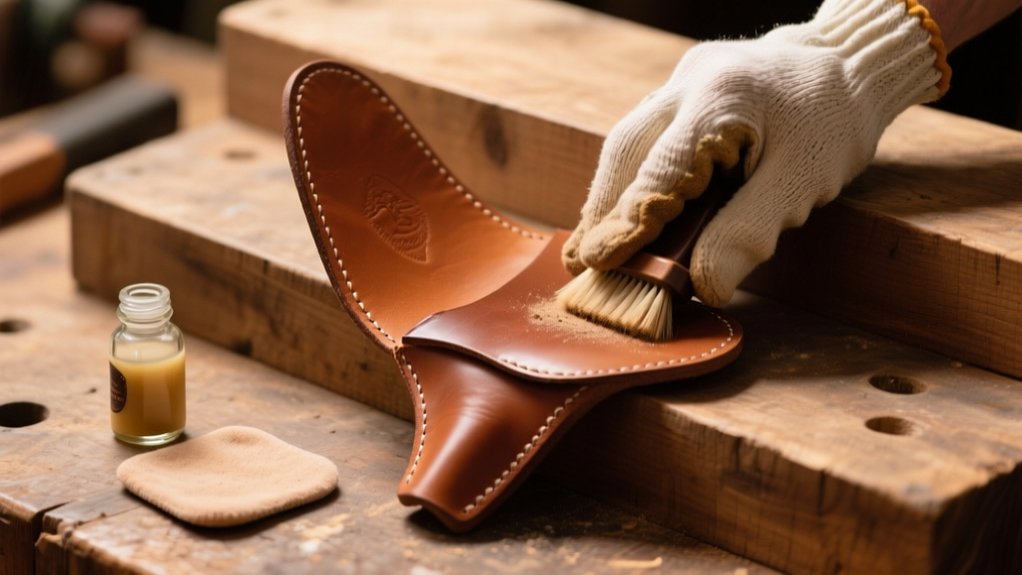
First, clean your holster interior gently with a soft cloth dipped in a mild glycerin soap solution, avoiding saturation. Next, apply a thin, even layer of carnauba or paste wax inside to repel moisture and dirt without softening the leather too much.
Finally, air dry it thoroughly in a shaded, well-ventilated spot with the trigger guard facing down to keep the shape and prevent damage. Follow these steps to maintain your holster’s performance and durability, then investigate deeper care techniques for lasting upkeep.
Cleaning and Preparing the Holster Interior
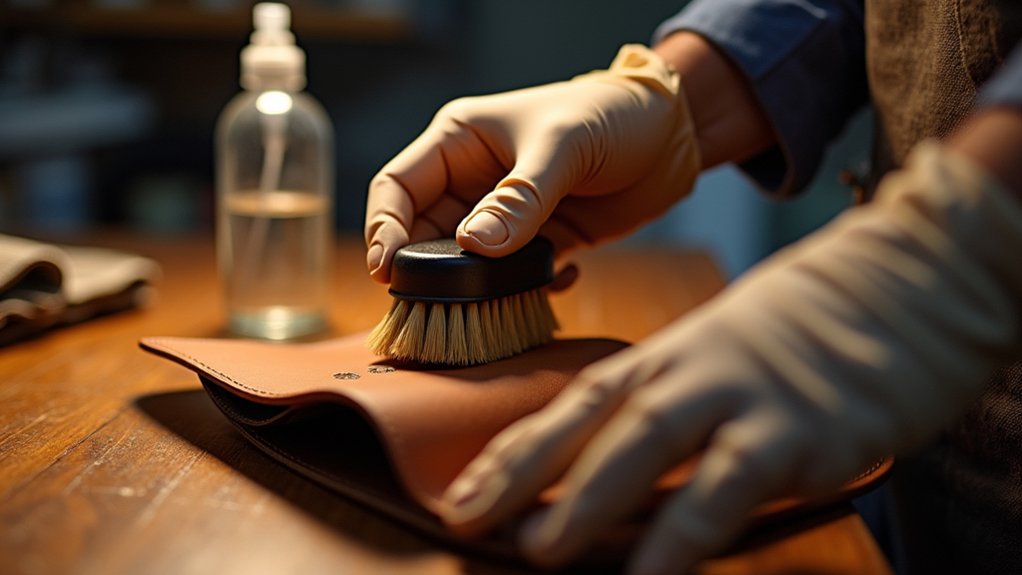
Before applying any treatments, start by gently wiping down the interior of your leather holster with a soft, damp cloth to remove dust and dirt without soaking the leather.
For more thorough cleaning, mix a small amount of glycerin soap with warm water and apply it using a soft brush, focusing on neutralizing contaminants while preserving the leather’s integrity.
Avoid saturating the leather and dry the holster in a cool, shaded area, steering clear of direct heat.
To treat the inside effectively, you can use the plastic bag method: lightly coat the interior with natural beeswax, then place the holster inside a sealed plastic bag to let the wax settle evenly.
This creates a slick surface, ensuring a smooth draw.
Schedule regular maintenance every 3-4 months to keep your leather holster in prime condition.
Regularly checking for wear and pressure points during cleaning can help you catch potential issues early and extend the life of your holster.
Applying Suitable Leather Treatment
Choose one of two reliable wax treatments, carnauba or Johnson & Johnson paste wax, to apply inside your leather holster.
After you regularly clean the interior with a soft, damp cloth, apply a thin layer of wax evenly using a soft cloth or your fingers.
Focus on covering all surfaces where the leather absorbs moisture or dirt. This wax layer will prevent moisture absorption, protecting the leather’s structure without softening it excessively.
Avoid leather conditioners, as they can compromise retention by overly softening the material.
Applying wax not only seals the leather but also maintains a slick surface for smooth reholstering.
Make certain you apply the wax sparingly; too much buildup can affect holster performance.
This treatment preserves durability and functionality in your leather holsters effectively.
Ensuring Proper Drying and Maintenance
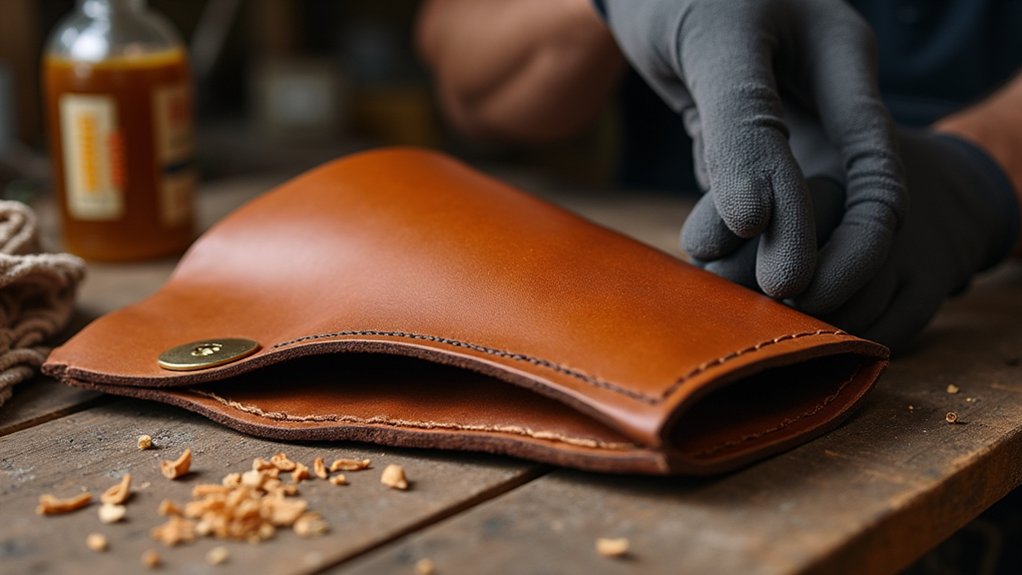
While cleaning your leather holster is essential, letting it air dry completely away from direct heat sources is just as important to maintain its shape and integrity.
After cleaning, position the holster so the trigger guard faces downward, allowing any trapped moisture to escape.
Avoid direct sunlight, which can dry out and crack the leather. Always air dry your holster in a well-ventilated area to prevent moisture buildup that leads to mold or mildew.
Once dry, apply a small amount of mink oil inside and out to nourish the leather without clogging pores.
Store your holster in a cool, dry place, wrapped in a soft cotton cloth, and never seal it in plastic, as leather needs to breathe.
Regularly wiping it down helps maintain its longevity and performance.
Frequently Asked Question
Can I Use Household Oils Instead of Leather Conditioner?
You shouldn’t use household oils instead of leather conditioner on your holster.
Oils like olive or vegetable oil can soften the leather too much, compromising its structure and retention. They attract dirt and cause grime build-up, which damages both the holster and firearm.
Instead, use a dedicated leather conditioner designed to maintain firmness and durability. This ensures your holster stays safe, functional, and long-lasting.
Always prioritize proper leather care products.
How Often Should I Treat the Holster Interior?
You’ll want to nurture your holster’s interior every 3 to 4 months to keep it feeling smooth and responsive.
During the first month, treat it every two weeks to gently coax the leather into lasting flexibility.
Avoid overdoing it. Too much conditioning can cause buildup and hinder your draw.
Always remember to test new products on a hidden spot first to guarantee your holster stays in top shape without surprises.
Will Treating the Interior Affect Holster Retention?
Yes, treating the interior can affect holster retention. When you apply lubricants or conditioners, you risk softening the leather too much, which reduces tension and compromises how securely your firearm fits.
To maintain retention, apply treatments sparingly and test the fit after each application.
Focus on balancing smoothness with firmness, and rely mostly on regular use and maintenance to keep draw performance ideal without sacrificing safety.
Can I Treat Synthetic or Faux Leather Interiors the Same Way?
Think of synthetic or faux leather as a well-armored knight, resilient yet sensitive to certain weapons.
You shouldn’t treat it like genuine leather; skip oils or waxes since they can degrade or make it sticky.
Instead, gently wipe with a damp cloth and avoid harsh chemicals that erode its surface.
Always follow the manufacturer’s care guidelines to maintain its protective qualities without compromising its integrity.
Is It Safe to Use Leather Treatments on Holsters With Metal Parts?
No, you shouldn’t apply leather treatments directly to holsters with metal parts without caution.
Many treatments contain moisture or chemicals that can cause metal corrosion or attract humidity.
You need to choose products specifically designed for leather that won’t soften or damage the structure.
Always avoid getting treatments on metal components, and clean the holster gently with a damp cloth to protect both leather and metal.
Conclusion
Think of your leather holster’s interior as the soil nurturing a growing seed. By cleaning away dirt, applying the right treatment, and letting it dry properly, you’re cultivating strength and longevity beneath the surface.
Just like a gardener tends to their garden, your attentive care guarantees the leather stays supple and durable. Follow these steps consistently, and your holster will remain a steadfast companion, ready to protect and perform whenever you need it.