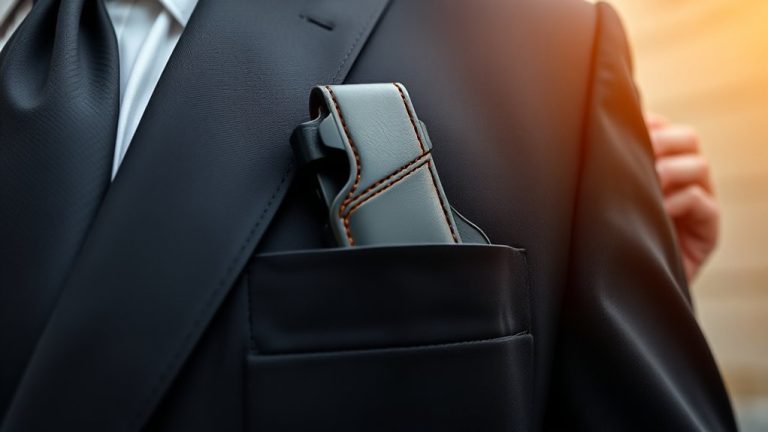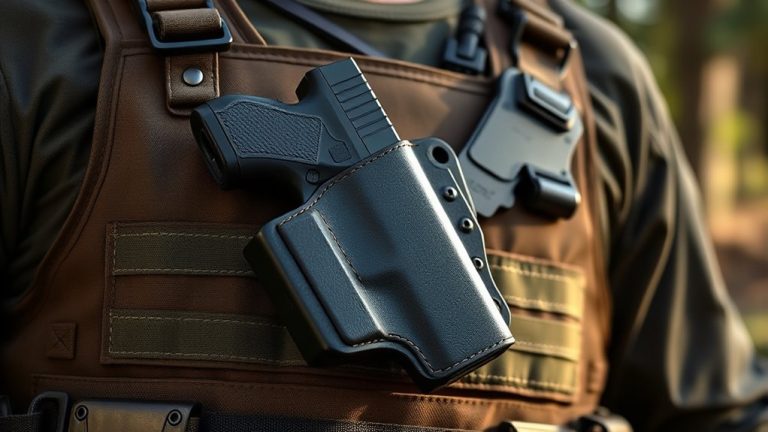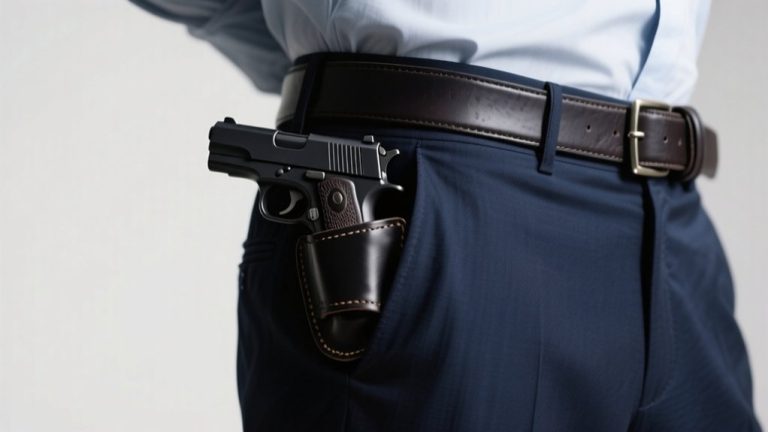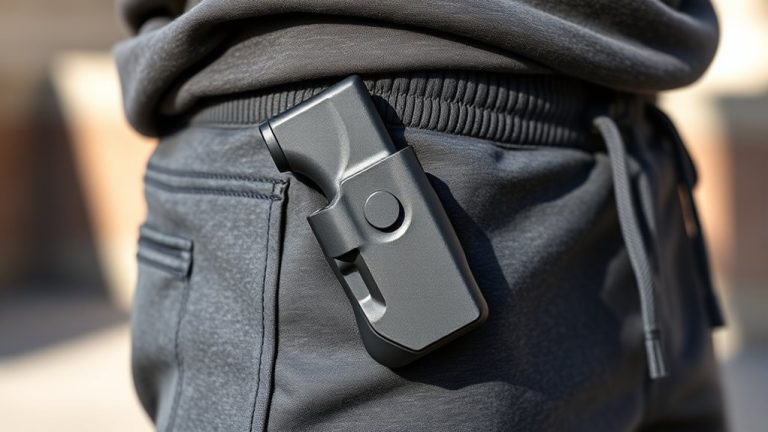
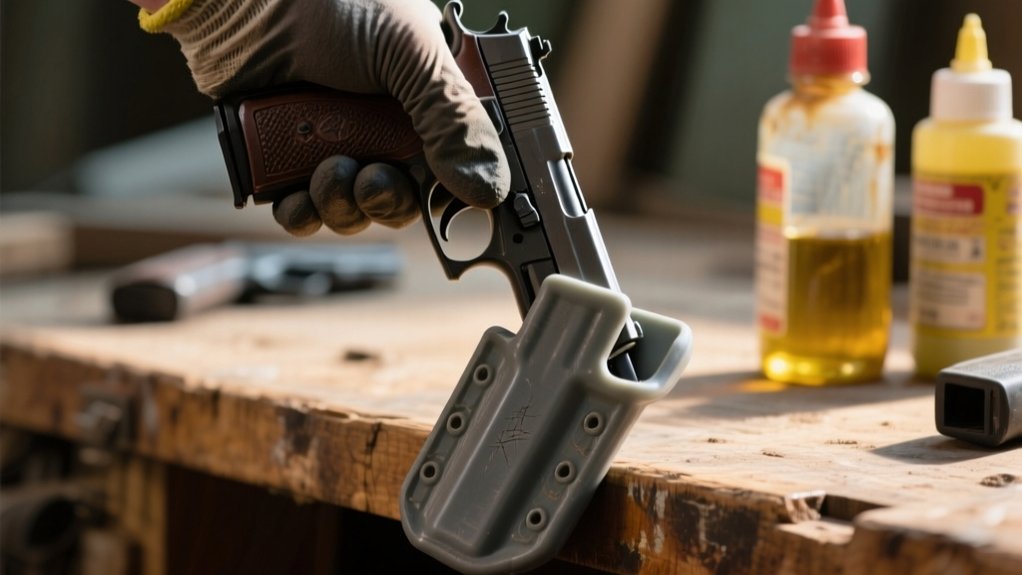
How to Break In a Plastic Holster in 5 Steps
To break in your plastic holster, first check the fit and retention by drawing your unloaded gun smoothly and ensuring it won’t fall out when inverted.
Next, carefully apply heat with a hairdryer around 200°F to soften and mold it around your firearm. Practice safe draws regularly to build muscle memory, then wear the holster daily to help it conform to your body’s shape.
Finally, adjust retention screws and position for comfort and secure carry. If you keep refining these steps, you’ll improve both comfort and function.
Assessing the Fit and Retention of Your Plastic Holster
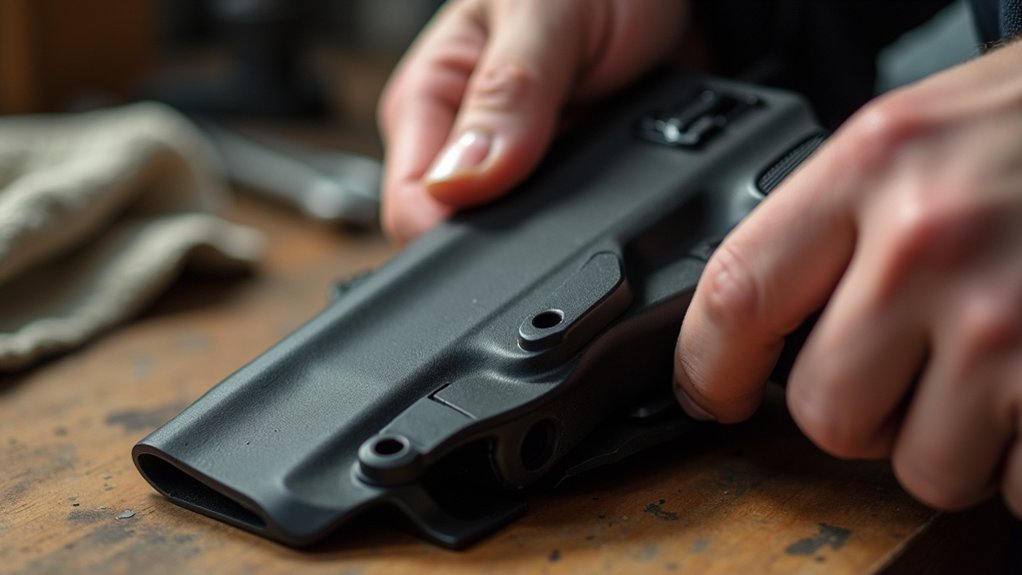
To properly assess the fit and retention of your plastic holster, start by drawing your firearm smoothly. Any excessive resistance usually means the holster needs breaking in.
Next, test retention by turning the holster upside down with the firearm inside. If it falls out, retention is too loose and requires adjustments.
Pay attention to any discomfort during carry, especially when sitting or bending. A stiff, tight fit signals the need to break the holster in.
Over time, as you practice the draw and re-holstering, the fit should become more customized and comfortable without compromising retention.
If the holster feels overly stiff or restricts movement, plan for careful adjustments to improve flexibility while maintaining safe retention.
Preparing the Holster Using Heat for Improved Flexibility
If your plastic holster feels too stiff or tight during use, applying controlled heat can help improve its flexibility.
Warm the Kydex material gently using a hairdryer or heat gun, aiming for about 200°F (93°C). Avoid overheating to prevent warping or damaging the holster.
Once warm, wrap an unloaded gun in a plastic bag and insert it into the holster. This helps the Kydex shape precisely around your firearm.
Let the holster cool down with the gun inside to lock in the new form.
This process boosts the fit and comfort, making the holster easier to break in.
Repeating this warming and shaping step as needed guarantees your plastic holster gains maximum flexibility and retains a secure, custom contour around your gun.
Practicing Safe Drawing and Reholstering Techniques
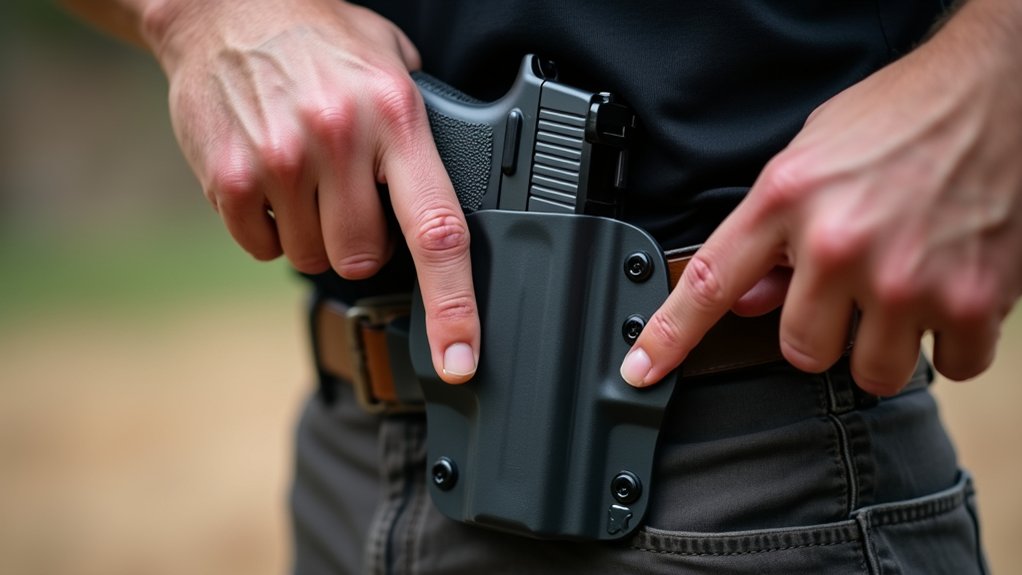
Many practice sessions focusing on safe drawing and reholstering will build the muscle memory you need for smooth, confident firearm handling. When breaking in a new plastic holster, always use a practice piece or unloaded gun inside to avoid accidents.
Conduct your draw and reholster drills in a safe environment with no distractions. Regular practice sharpens your technique and preserves the finish on your firearm, unlike using good leather that naturally molds but requires more time.
Incorporate these drills into your routine to develop quick, precise movements. For even better results, consider adjusting ride height to enhance comfort and concealment while practicing with your holster.
| Feeling | Reason |
|---|---|
| Confidence | Mastery of muscle memory |
| Safety | Unloaded gun and practice |
| Control | Smooth draw and reholster |
| Reliability | Regular practice sessions |
| Comfort | Familiarity with holster fit |
Wearing the Holster Regularly to Mold to Your Body
Although plastic holsters come rigid, wearing yours regularly helps it adapt to your body’s unique contours. This regular use is essential in the break-in process, allowing the holster to mold perfectly for comfort and fit.
To maximize this adaptation, wear the plastic holster during various daily activities to encourage natural movement. Allow consistent pressure to help it conform without compromising retention.
Use it regularly over weeks to achieve a superior fit tailored to your body. Notice how slight loosening in key areas improves draw smoothness without reducing security.
Monitoring and Adjusting the Holster for Optimal Comfort
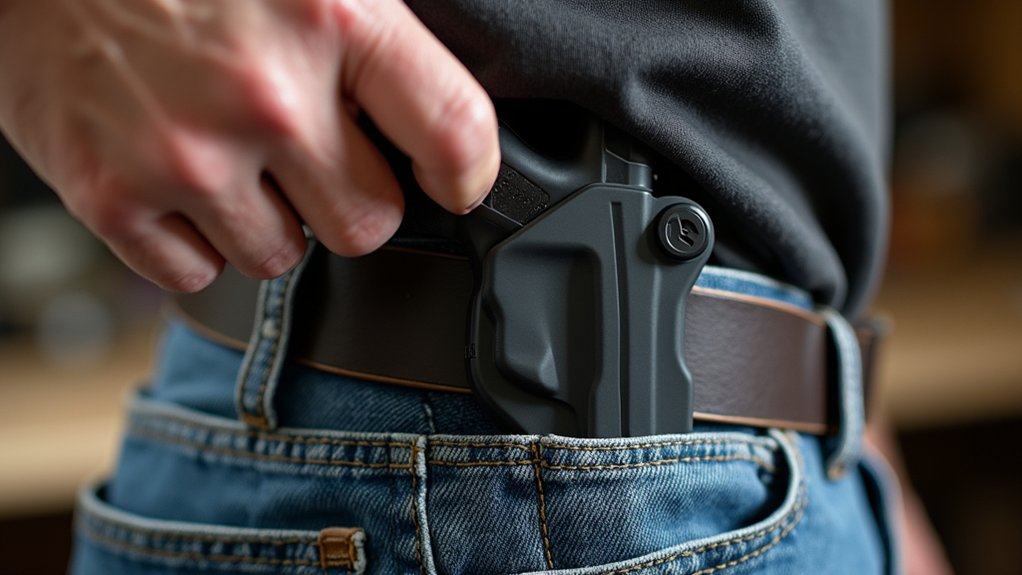
As you break in your plastic holster, regularly monitor its fit to confirm it remains comfortable and functional.
Check for tight spots or discomfort after multiple draws, signaling when you need to adjust retention screws for smoother, more reliable draw action.
Notice any tightness or discomfort after draws? Adjust retention screws to ensure a smooth, reliable draw every time.
Evaluate how the holster rides during various movements.
Adjust ride height and cant to match your holster needs, especially when sitting or bending.
Incorporate practice draws with an unloaded firearm to assess comfort and retention consistently.
If the holster rubs your skin, consider wearing an undershirt to reduce irritation.
This ongoing monitoring and adjustment confirm your holster fits perfectly, offering ideal comfort and retention while maintaining quick, efficient access.
Stay proactive in tuning your setup as you break it in for lasting performance.
Additionally, ensuring proper retention and trigger guard coverage is essential for safe and reliable everyday carry as your holster breaks in.
Frequently Asked Question
Can I Use Silicone Spray to Improve Holster Flexibility?
You shouldn’t rely on silicone spray for flexibility improvement techniques since its effectiveness on plastic holsters is limited.
Holster material compatibility is vital. Silicone may create a slippery surface, compromising retention and causing long-term performance impact.
Instead, consider alternative lubrication methods like gentle heating or using an unloaded firearm to mold fit.
Follow safety precautions advised and limit application frequency to avoid damage. User experiences shared generally discourage silicone use on these holsters.
How Long Does It Typically Take to Break in a Plastic Holster?
Breaking in a plastic holster typically takes about a week, depending on usage frequency and environmental factors.
Use breaking in techniques like dry-fire practice and repeated draws to improve holster fit.
Adjust retention screws regularly to balance security and comfort level.
Material types affect flexibility, so maintain your holster properly to prevent damage.
Consistent holster maintenance combined with mindful retention adjustment guarantees a snug, comfortable fit over time.
Is It Safe to Break in the Holster With a Loaded Firearm?
No, you shouldn’t break in a plastic holster with a loaded firearm. Holster safety and proper firearm handling demand you avoid unnecessary risks.
Using a loaded weapon increases the chance of accidental discharge during break-in techniques. Instead, focus on risk assessment and training practices with an unloaded firearm or dummy gun.
Prioritize safe storage and controlled environments to maintain holster durability and guarantee both your safety and the firearm’s integrity.
Will Exposure to Sunlight Help in Breaking in the Holster?
Like a sculptor warming clay under the sun, you might think sunlight exposure can improve your holster’s flexibility.
While gentle heat can aid fitting adjustments, be cautious. Excessive temperature effects risk compromising material durability and cause warping.
Monitor wear patterns closely to avoid long term maintenance issues.
Controlled methods outperform sunlight for preserving performance impact, ensuring your holster stays reliable without sacrificing shape or strength.
How Do Different Plastic Materials Affect the Breaking-In Process?
Different polymer types affect your break-in process by varying in flexibility characteristics and stiffness levels.
Thicker materials with higher temperature resistance and durability factors need more heat during molding processes to adjust fit.
For example, Kydex’s impact resistance and rigidity demand warming to soften it, while nylon’s flexibility and lower stiffness let you break it in through regular use.
Always consider material thickness and polymer type to tailor your approach effectively.
Conclusion
By following these five steps, you’ll transform your stiff plastic holster into a perfectly molded extension of your body. It will be so comfortable it feels like it was custom-made just for you. Forget struggling with tight retention or awkward draws; you’ll handle your firearm smoothly and confidently every time.
Don’t settle for discomfort or poor fit. Break in your holster properly, and you’ll wonder how you ever managed without that flawless, secure feel.