What Does a Holster Claw Do and How Does It Improve Concealment
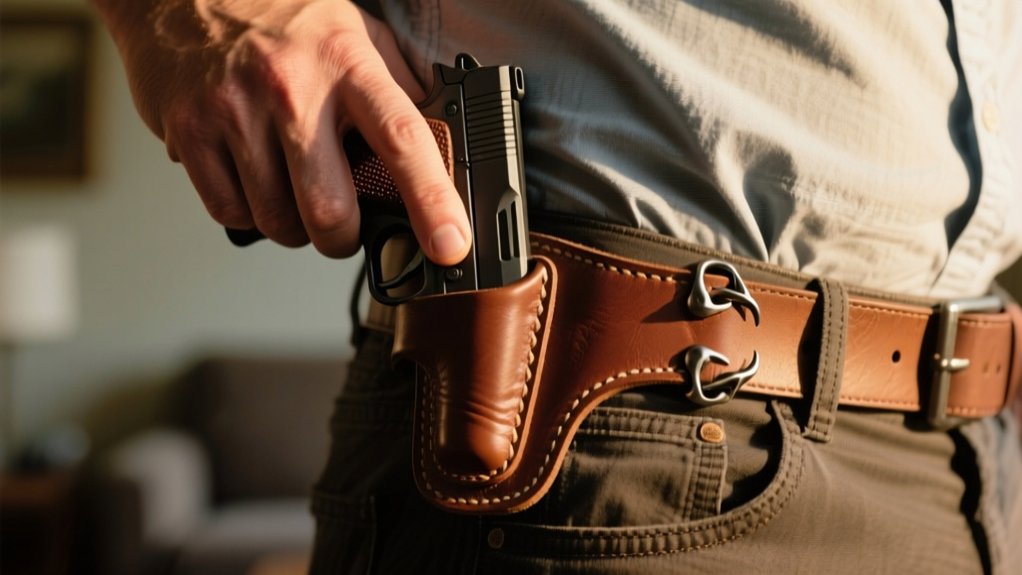
A holster claw presses your firearm’s grip inward toward your body, reducing the outward angle that causes printing. It attaches under the trigger guard and uses force against a stiff belt to hold the firearm flush against your torso, improving concealment and stability.
This adjustment also boosts comfort and guarantees a consistent draw. You’ll find that proper customization and carry position compatibility further optimize hidden carry effectiveness for your specific needs.
What Is a Holster Claw?
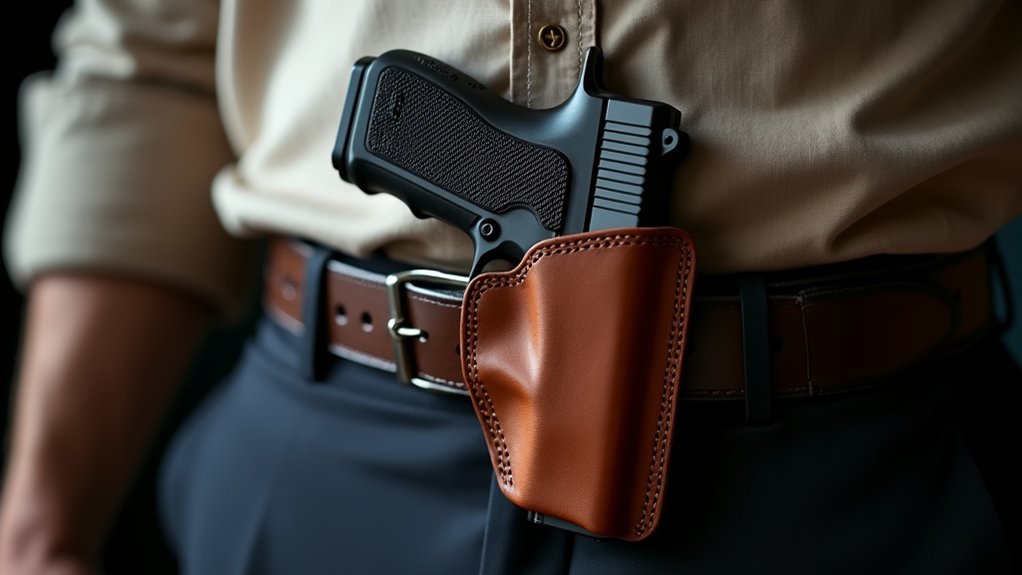
Although you mightn’t notice it at first glance, a holster claw plays an essential role in inside-the-waistband (IWB) holsters by pressing the firearm’s grip closer to your body. This L-shaped attachment mounts under the trigger guard and utilizes your stiff gun belt to reduce the outward angle of the grip.
By doing so, it minimizes printing, the visible outline of the firearm through clothing, thus enhancing concealment. Holster claws are especially effective for appendix carry but also benefit other carry positions like strong-side (3-5 o’clock).
Reducing firearm printing improves concealment, with holster claws excelling in appendix and strong-side carry positions.
Constructed from high-strength plastic polymer, they resist bending or breaking during daily use, maintaining reliable performance.
Installation usually takes less than ten minutes, making it an efficient upgrade that improves both comfort and confidence in concealed carry situations. Many holster claw kits come with customizable pads that allow you to adjust the pressure and fit for optimal comfort and concealment.
How a Holster Claw Works to Improve Concealment
When you attach a holster claw under the trigger guard, it uses force against your belt to press the firearm’s grip closer to your body, effectively reducing the gun’s outward angle.
Holster claws use advantage to adjust the grip’s position, minimizing the profile that typically causes printing.
This concealment claw aligns your firearm more securely against your torso, especially when using an IWB holster claw, enhancing stability and preventing shifting during movement.
By improving concealment, the claw guarantees a consistent draw stroke and reduces visibility under slim or tight clothing.
Properly installed, this mechanism not only improves concealment but also increases comfort and confidence, particularly with larger handguns that are otherwise difficult to carry discreetly.
Holster claws use precise pressure to optimize firearm positioning for everyday concealed carry.
A properly adjusted holster claw is especially effective when paired with a sturdy gun belt, as this combination supports the claw’s leverage and further reduces printing for confident concealed carry.
The Role of a Holster Claw in Reducing Printing
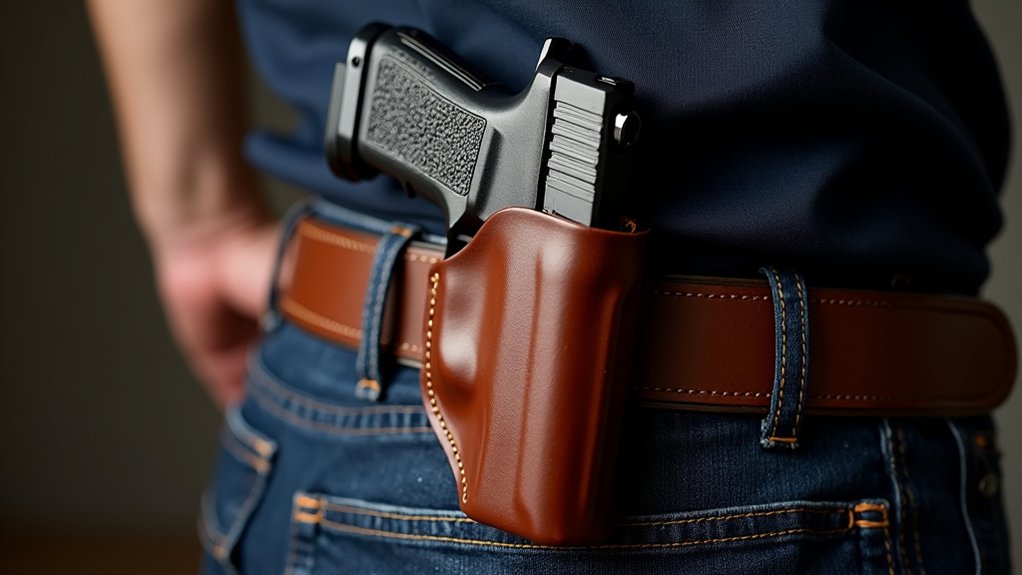
You’ll notice a holster claw reduces printing by pushing the firearm’s grip closer to your body.
It adjusts the grip’s outward angle, giving you a less visible profile. Basically, it changes how your gun sits so it’s not sticking out as much.
This adjustment uses your gun belt to stabilize the holster and redistribute the handgun’s weight inward.
So, the claw works with your belt to keep the firearm snug and secure.
Because of this, you get better concealment no matter where or how you carry.
It works well with different carry positions and clothing styles, making your firearm less noticeable overall.
Printing Reduction Mechanism
Since minimizing printing is vital for effective concealment, a holster claw plays an important role by pushing the grip of the firearm closer to your body.
This L-shaped device attaches inside your waistband holster and uses force against a stiff gun belt to rotate the handgun slightly.
By doing so, it aligns the grip more flush with your torso, which greatly reduces printing, especially with larger firearms.
The concealment benefits are notable: you can wear slimmer clothing without the gun’s outline showing through.
Proper installation guarantees the holster claw works efficiently, maintaining a reliable draw while maximizing printing reduction.
Grip Position Adjustment
The holster claw’s primary function in grip position adjustment lies in pushing the handgun’s grip closer to your body, effectively minimizing its outward angle.
By utilizing against your belt, the claw rotates the grip inward, which is critical for reducing printing, especially with larger handguns.
Mounted securely under the trigger guard, the claw guarantees consistent engagement with your belt, keeping the grip flush against your body during movement.
You can adjust the claw’s ride height and cant to tailor the grip position for your body shape and clothing, optimizing concealment.
Utilizing a sturdy gun belt improves this support, maintaining the grip’s position firmly against your body.
This precise grip positioning is a key factor in achieving discreet, comfortable carry without sacrificing accessibility.
Additionally, holster claws work in conjunction with IWB holster carry positions to further enhance concealment and stability for a wide range of body types and daily activities.
Concealment Benefits
Although concealing a handgun can be challenging, a holster claw considerably reduces printing by pressing the grip closer to your body. This adjustment minimizes the firearm’s outward angle, greatly improving concealment and comfort.
The holster claw’s influence on your belt keeps the grip flush, which is essential for appendix carry, where printing risks are higher.
Key benefits include:
- Reduces visible firearm outline through clothing
- Improves concealment in inside the waistband (IWB) carry
- Applies consistent pressure to maintain grip position
- Enables discreet carry of larger handguns
- Boosts confidence by minimizing printing in appendix carry
Incorporating a holster claw optimizes your concealment strategy, ensuring your firearm remains discreet without sacrificing comfort or accessibility. When using a holster claw, it’s also important to consider adjusting the holster’s cant and draw angle to further enhance concealment and drawing efficiency.
Different Carry Positions Compatible With Holster Claws
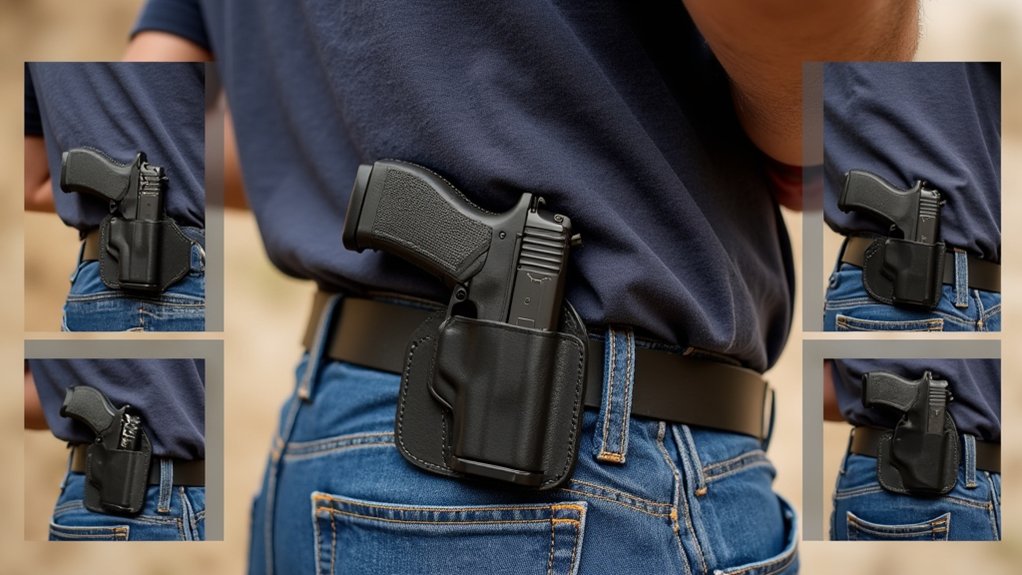
When you choose a holster claw, you gain compatibility with multiple carry positions such as appendix (AIWB), 3 o’clock, 4 o’clock, and 5 o’clock.
All of these benefit from the claw’s ability to push the firearm grip closer to your body.
Holster claws improve concealment by reducing printing and minimizing the gun’s outline through clothing in various carry positions.
Appendix carry sees the most notable concealment advantages, but strong-side positions, particularly 4 and 5 o’clock, also gain significant printing reduction.
The claw’s adjustable ride height and cant allow you to tailor the fit to your body shape and preferences.
Proper alignment of the claw with the belt clip guarantees the handgun grip remains flush against your body, optimizing concealed carry effectiveness across all compatible carry positions.
For even greater concealment techniques, pairing a holster claw with looser, dark-patterned clothing and a sturdy EDC belt can significantly reduce printing and enhance all-day comfort.
Importance of Wearing a Gun Belt With a Holster Claw
Three key factors make wearing a gun belt essential for maximizing the effectiveness of a holster claw: stiffness, benefit, and stability.
Without a properly stiff gun belt, the holster claw can’t push the firearm’s grip close enough to your body, which compromises concealment.
Regular belts lack the necessary support, causing discomfort and ineffective concealed carrying.
A high-quality gun belt boosts the holster claw’s performance by ensuring ideal advantage to reduce printing, consistent alignment with your body, increased stability during movement, improved comfort for extended wear, and secure, reliable retention for a smooth draw.
Additionally, choosing a sturdy gun belt designed specifically for holster use ensures the holster remains stable and prevents shifting during movement.
Materials and Strength of Holster Claws
Because the holster claw plays a critical role in concealing your firearm, its materials and strength must meet rigorous standards. Manufacturers typically use high-strength composite polymers, such as two-part resin, to guarantee durability and resistance to bending or breaking.
This choice of materials directly affects the claw’s ability to maintain strength over time, which is essential for pushing the grip closer to your body, enhancing concealment. A robust claw design not only improves stability during carry but also reduces draw errors by securely holding the firearm in position.
Moreover, selecting lightweight yet strong materials contributes to overall comfort, making your concealed carry setup more effective.
Choosing materials that are both lightweight and strong enhances comfort and effectiveness in concealed carry setups.
Continuous advancements in materials and design further optimize the claw’s performance, guaranteeing reliable durability and superior concealment.
Adjusting Ride Height and Cant With a Holster Claw
You can adjust the ride height of your holster claw to position the firearm higher or lower on your waist. This way, you can tailor comfort and accessibility to fit your body type perfectly.
Plus, controlling the cant angle lets you set how much the holster tilts. This helps optimize both concealment and draw speed.
By fine-tuning both the ride height and cant angle, you make sure the grip stays secure.
It also minimizes printing and keeps your firearm stable while you move around.
Ride Height Adjustment
When you adjust the ride height with a holster claw, you control how high or low the holster sits on your waist. This directly affects both comfort and firearm accessibility.
Proper ride height adjustment maximizes conceal carry by reducing printing and improving draw efficiency.
You’ll want to take into account these factors:
- Higher ride height increases quick access but may reduce comfort during movement
- Lower ride height improves comfort but can slow your draw
- Ideal ride height minimizes printing under clothing
- Adjustments should maintain a natural grip position for effective draw
- Tailor ride height to your body type and daily activities for best concealment and comfort
Cant Angle Control
Although adjusting ride height is essential, controlling the cant angle with a holster claw offers further customization to optimize your firearm’s grip position for concealment and comfort.
By adjusting the cant angle, you can fine-tune how the grip sits relative to your body, reducing printing and enhancing concealment.
The holster claw’s multiple mounting points allow you to set the ideal combination of ride height and cant angle tailored to your body type and carry style.
This precise control maintains a stable, secure fit during movement, preventing holster shift and ensuring a consistent draw stroke.
Furthermore, modifying the cant angle improves muzzle safety during appendix carry by directing the firearm away from your body while preserving a tactical grip position for rapid deployment.
Comfort Considerations When Using a Holster Claw
Since holster claws redistribute the firearm’s weight and push the grip closer to the body, they often improve overall comfort during carry.
This adjustment elevates concealment and reduces printing, which can boost your confidence and mental comfort.
However, comfort depends on several factors related to your body shape and holster setup.
Consider these key comfort considerations when using a holster claw:
- Weight distribution reduces pressure points
- Grip proximity minimizes firearm printing
- Adjustable ride height and cant tailor fit to body shape
- Potential discomfort during sitting or dynamic movement
- Psychological comfort from improved concealment
Holster Claws Versus Holsters Without Claws
Comfort improvements from holster claws naturally lead to comparing their performance against holsters without claws. Holster claws push the firearm grip closer to your body, greatly reducing printing and improving concealment, especially in appendix carry.
Without claws, holsters may feel sleeker but often increase outward firearm angle, leading to more visible printing. Claws also enhance stability by minimizing unwanted movement during activity.
| Feature | Holsters with Claws | Holsters without Claws |
|---|---|---|
| Printing Reduction | Significant | Moderate to High |
| Concealment Quality | Improved, especially appendix carry | Less effective |
| Stability | Enhanced | Standard |
| Comfort | Slightly less sleek | More streamlined |
Choosing holster claws optimizes concealment and reduces printing in demanding carry positions. For those seeking both security and comfort, retention holsters can be paired with holster claws to further minimize printing while ensuring the firearm remains secure and accessible.
Alternatives to Holster Claws for Enhanced Concealment
When you want to improve concealment without relying on holster claws, several effective alternatives exist that adjust firearm positioning and stability.
These concealment options focus on optimizing your setup and clothing to reduce firearm printing.
Use U.S. Duty Gear’s Negative Cant Plate 3 (NCP3) to fine-tune your IWB holster’s angle for better grip and concealment.
You can also employ the Holster Accessory Mount (HAM) for customizable holster positioning and cant adjustments.
Consider Drop Leg Platforms (DLP or DLP-QR) to boost stability and concealment without a claw.
Choosing softer or looser clothing helps obscure the gun’s outline naturally.
Rely on a well-designed IWB holster combined with a quality gun belt to maintain stable, concealed carry without holster claws.
Making adjustments for shoulder holster stability—such as securing tie-downs and anchoring to your belt—can also minimize printing and enhance overall concealment.
These alternatives provide technical, reliable methods to improve concealment effectively.
Impact of Holster Claws on Draw Speed and Stability
Although holster claws primarily improve concealment by pressing the firearm grip closer to your body, they also considerably impact draw speed and stability.
The holster claw stabilizes your carry by reducing the grip’s outward angle, minimizing snag risks on clothing during the draw. This design guarantees a consistent grip position, which boosts draw speed through a smoother, more reliable stroke.
Moreover, the claw maintains the firearm’s position during physical activity, preventing misalignment or fumbling. As a result, you experience improved stability and a secure feel when drawing.
With practice, you’ll adapt to the modified grip angle, further increasing efficiency. Ultimately, the holster claw refines both draw speed and stability, making it a critical component for concealed carry performance.
Customization and Installation of Holster Claws
The effectiveness of a holster claw depends heavily on its proper customization and installation. When fitting a claw to your Kydex holster, precise alignment with the belt clip is essential for ideal concealment.
Proper installation typically involves using manufacturer-provided screws and washers for secure attachment. You’ll want to adjust the height and cant to match your comfort and concealment preferences.
Make sure the claw sits firmly under the trigger guard for stability. If you prefer a lower profile, you can remove or replace the claw with shorter screws.
Additionally, selecting from various materials and designs offered can help improve function and suit your needs better.
Choosing the Right Holster Claw for Your Firearm
Selecting the right holster claw directly influences your firearm’s concealment and comfort during carry. You must guarantee the holster claw fits your specific IWB holster, aligns with the trigger guard, and suits your body type and carry position. This is especially important if you favor appendix carry.
Materials like composite polymers assure durability without bending. Designs such as the Mod Wing or Dark Wing offer varied grip angles to improve concealment by pressing the firearm closer to your body.
| Factor | Importance |
|---|---|
| Compatibility | Guarantees proper attachment and function |
| Material | Prevents breakage, maintains durability |
| Design Shape | Influences grip angle and concealment |
| Body Type | Determines best claw for comfort |
Choosing wisely maximizes concealment and carry comfort tailored to your needs.
When a Holster Claw Might Not Be Necessary
You mightn’t even need a holster claw if you carry a larger framed firearm at the 3 or 5 o’clock positions.
That’s because the grip tends to stay naturally concealed in those spots.
Also, your body shape and the kind of clothes you wear can help reduce printing without the need for any extra hardware.
Plus, some holster designs already come with features that minimize printing, so a claw mightn’t be necessary for effective concealment after all.
Carry Position Considerations
Although holster claws excel in appendix carry by minimizing printing, you might find them unnecessary in strong-side positions like 3 or 5 o’clock.
Natural body contours and clothing often provide sufficient concealment there.
When evaluating carry positions, consider these factors regarding holster claw use:
- 3 and 5 o’clock positions benefit from natural concealment due to body curvature.
- Clothing drape can reduce the need for a holster claw to control printing.
- Larger frames or looser garments typically minimize grip protrusion.
- Holster claws add bulk that may affect personal comfort during movement or sitting.
- Your choice should balance concealment efficiency with comfort and carry style.
Ultimately, holster claw necessity varies by carry position.
It’s all about tailored concealment solutions rather than one-size-fits-all approaches.
Body Type Factors
When your body shape naturally accommodates the firearm’s grip, a holster claw often becomes unnecessary for effective concealment. If your body type includes a pronounced waistline or contours that naturally obscure the grip, printing is minimized without extra claw support.
Likewise, carrying smaller firearms or using slim-profile holsters can reduce visible outlines, diminishing the need for a holster claw.
Moreover, if you prefer carry positions like 3 or 5 o’clock, a claw may interfere with comfort or draw angle, making it less practical.
Clothing choice also impacts concealment; looser garments can mask printing effectively without a claw.
Ultimately, your personal preference and comfort with your carry setup, combined with your body type, determine whether a holster claw improves or complicates concealment.
Holster Design Alternatives
While holster claws provide targeted grip concealment, many users find that holsters without claws offer a sleeker, more comfortable design, especially for carry positions like 3 or 5 o’clock.
A holster with a claw may add unnecessary bulk for larger frame firearms or looser clothing fits.
Alternative holster designs optimize concealment and comfort without relying on a claw.
Consider these points when choosing carry holsters:
- IWB holsters without claws improve comfort and streamline concealment.
- Built-in concealment features in some holsters reduce the need for a separate claw.
- Clawless holsters allow easier adjustment across multiple carry positions.
- Users with variable carry setups benefit from this versatile design.
- Systems like U.S. Duty Gear accessories offer concealment customization without claws.
This approach guarantees effective concealment without compromising comfort.
Frequently Asked Question
Can a Holster Claw Be Used With Revolvers?
Yes, you can use a holster claw with revolvers if your revolver holster compatibility supports it, typically designed for IWB carry.
Pay attention to claw design benefits, ensuring it properly aligns with your belt to optimize grip positioning. This improves concealment by reducing printing.
When selecting a claw, consider holster material choices and how they affect flexibility and comfort.
Mastering concealed carry techniques with a claw-equipped revolver holster boosts your overall concealment and draw efficiency.
Do Holster Claws Affect Firearm Retention Mechanisms?
Don’t put all your eggs in one basket. Holster claw retention doesn’t replace your firearm’s built-in retention mechanisms.
You’ll find the claw primarily improves concealment by pushing the grip closer to your body, but it doesn’t directly impact retention or firearm safety.
For tactical application, always verify your holster’s retention features remain effective alongside the claw.
Your user experience depends on regularly checking both retention and claw adjustments to keep your firearm secure.
Are Holster Claws Compatible With All Types of Clothing?
Holster claws aren’t universally compatible with all clothing styles. Their effectiveness depends on the materials of the holster claw and your chosen concealment techniques.
Rigid materials provide a better advantage but need fitted or structured clothing to work well. Loose or stretchy fabrics, like athletic wear, often reduce holster compatibility and can cause discomfort or printing.
To optimize concealment, pair holster claws with sturdy belts and tailored clothing that support the claw’s function precisely.
How Does Body Shape Influence Holster Claw Effectiveness?
Your body type greatly influences holster claw effectiveness by affecting holster positioning and concealment strategies.
Curvier body types benefit more, as the claw pushes the grip closer, reducing printing. Wider hips allow better grip flushness, improving concealment, while slimmer types may see less impact.
Also, your draw techniques must adapt; appendix carry often maximizes the claw’s benefits.
Tailor holster setup to your body shape for best concealment and quick access.
Can Holster Claws Cause Discomfort During Extended Wear?
Think of a holster claw like a tree branch pressing against your side. If the angle or material isn’t right, it can pinch or rub uncomfortably.
Yes, holster claws can cause discomfort during extended wear, especially if the holster design doesn’t suit your body shape or if the materials create extra bulk.
Adjusting the cant angle and choosing softer materials can improve comfort. This helps you wear it longer without pain.
Conclusion
Understanding how a holster claw improves concealment is essential for any concealed carrier. Studies show that holster claws can reduce printing by up to 40%, greatly enhancing your firearm’s discreetness.
By pressing the grip closer to your body, the claw minimizes visible outlines, especially in challenging carry positions. When paired with a quality gun belt, it maintains stability without compromising draw speed.
Choosing the right holster claw tailored to your firearm guarantees ideal comfort and concealment.