Understanding Eye Relief on a Rifle Scope
Understanding eye relief on a rifle scope is essential for your comfort and accuracy. Eye relief is the distance from the ocular lens to your eye, typically around 4 inches.
Proper eye relief prevents injuries like “scope eye” and guarantees you have a full sight picture. It’s affected by factors like magnification and cheek weld height.
Knowing how to check and set eye relief can greatly enhance your shooting experience.
Keep going to find out more about optimizing your setup!
Key Takeaways
- Eye relief is the distance from the scope’s ocular lens to the eye, typically around 3.5 to 4 inches for optimal viewing.
- Correct eye relief is crucial for accuracy, comfort, and preventing injuries from recoil, particularly with high-recoil firearms.
- To check eye relief, shoulder the rifle and confirm a full sight picture at the highest magnification setting.
- Eye relief often decreases with increased magnification, making precise positioning vital for a clear sight picture.
- Proper eye relief enhances target acquisition and reduces fatigue during extended shooting sessions, improving overall shooting performance.
What Is Eye Relief?
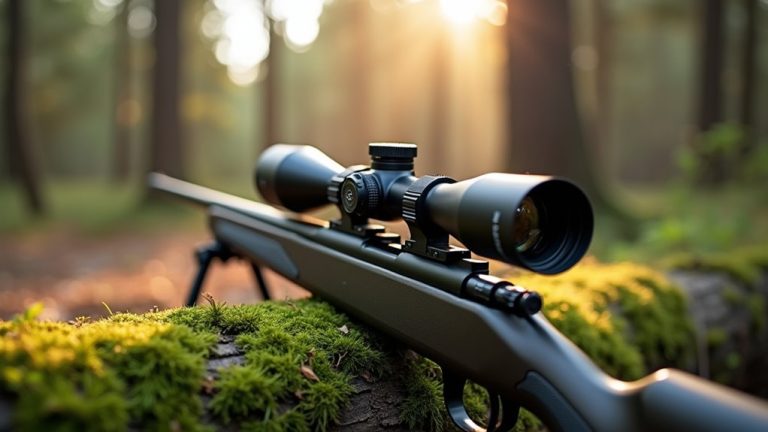
Eye relief is an essential aspect of using a rifle scope that directly affects your shooting experience. It’s defined as the distance between the ocular lens of the scope and your eye, ensuring you get a full field of view without distortion or vignetting.
Generally, modern scopes offer eye relief ranging from 3.5 to 4 inches, with some long eye relief scopes exceeding 4.5 inches. Achieving proper eye relief is vital to prevent injuries like scope eye, which can occur during recoil when the scope makes contact with your eye.
It’s significant to acknowledge that eye relief can vary with magnification settings, often decreasing as you increase magnification. So, make sure to adjust your scope’s position for a clear sight picture and comfort.
Why Is Correct Eye Relief Important?
Getting the correct eye relief is essential for improving your shooting accuracy and consistency.
It also helps prevent injuries from recoil, like “scope eye,” which can be quite painful.
Plus, proper eye relief guarantees you can maintain a comfortable position, allowing you to focus on your target without unnecessary adjustments.
Enhances Shooting Accuracy
When you’re aiming to hit your target with precision, the importance of correct eye relief can’t be overstated.
Proper eye relief, typically ranging from 3.5 to 4 inches, enhances your shooting accuracy by ensuring a full sight picture.
This distance helps maintain proper alignment of your head and cheek weld, allowing you to focus on the target without distractions.
Inadequate eye relief can compromise your aim and slow down your shooting speed, as you’d need to constantly adjust your position.
For high-recoil rifles, eye relief exceeding 4 inches is vital to maintain clarity during rapid firing sequences.
Ultimately, finding the right eye relief not only boosts your accuracy but also contributes to a more enjoyable shooting experience.
Prevents Recoil Injuries
Without proper eye relief, you risk serious injuries like “scope eye,” which happens when the scope’s eyepiece hits your face during recoil.
This is especially dangerous with heavy recoil rifles. To prevent injuries, guarantee you maintain correct eye relief.
Here are three key points to ponder:
- Distance Matters: Aim for an eye relief of 3.5 to 5 inches to avoid the eyepiece striking your face.
- Check Your Setup: New shooters may inherit incorrect settings; always verify and adjust your eye relief.
- Consistency is Key: Proper eye relief guarantees consistent head and cheek weld alignment, vital for managing recoil effectively.
Ensures Comfortable Positioning
Correct eye relief is vital for a comfortable shooting experience. It guarantees you can maintain a full sight picture while keeping your head and cheek weld aligned, which is important for best accuracy.
Adequate eye relief, typically between 3.5 to 4 inches, allows you to position your eye comfortably within the scope’s eye box, preventing any unnecessary strain.
If the distance is too short—less than 2 inches—you risk experiencing “scope eye,” where the scope can hit your face during recoil.
By verifying and adjusting your eye relief, especially as a new shooter, you improve your comfort and shooting speed.
This adjustment helps you aim effortlessly, enhancing your overall consistency and enjoyment while shooting.
How to Check Eye Relief: Eye Relief Test
Before you start the eye relief test, make sure your rifle is unloaded and the action is open for safety.
Next, set your scope to its highest magnification, as eye relief can change with different settings.
Finally, aim and check if you get a full sight picture without any vignetting or blackouts.
Safety First: Unload Rifle
One essential step in guaranteeing your safety when checking eye relief on a rifle scope is to always unload the rifle and keep the action open.
Safety first means taking these precautions seriously. Before you conduct the eye relief test, follow these steps:
- Unload the rifle: Confirm there’s no ammunition in the chamber or magazine.
- Adjust the scope: Set it to the highest magnification for a precise assessment.
- Perform the test: Close your aiming eye, bring the rifle to your shoulder, then open your eye to check for a full sight picture.
Wearing any shooting gear, like a hat or ear protection, helps confirm your adjustments are accurate.
Achieving a full sight picture indicates the eye relief is correctly set for maximum safety and comfort.
Adjust Scope Magnification
To accurately check eye relief on your rifle scope, it’s crucial to adjust the scope magnification before performing the test. Start by setting the scope to its highest magnification.
Verify your rifle is unloaded and the action is open for safety. Close your aiming eye, draw the rifle to your shoulder, and then open your eye to check for a full sight picture.
This test is best conducted while wearing any shooting gear you typically use. If you see a complete sight picture, it confirms that the eye relief is set correctly.
Good eye relief allows you to maintain a comfortable shooting position while keeping your eyes safely within the scope’s eye box, enhancing both accuracy and safety.
Achieve Full Sight Picture
How can you guarantee your eye relief is correct? Follow these steps to achieve a full sight picture with your rifle scope:
- Safety First: Verify your rifle is unloaded and the action is open before starting the test.
- Set Magnification: Adjust your variable scope to its highest magnification setting for an accurate assessment.
- Test Your Setup: Close your aiming eye, draw the rifle into your shoulder, and then open your eye to look through the scope.
Make sure to wear any shooting gear you’ll use, as this can impact your eye relief setup.
Achieving that full sight picture confirms you’ve got the correct eye relief, guaranteeing a comfortable and safe shooting experience.
How to Set Eye Relief on a Rifle Scope
Setting the eye relief on a rifle scope is essential for achieving an ideal shooting experience.
First, mount the scope in rings that are snug but not fully torqued, allowing for adjustments.
Wear any shooting gear, like a helmet or glasses, to accurately assess the eye relief in your shooting position.
Adjust the scope’s position forward or backward until you have a full sight picture.
Before tightening the scope rings, verify the reticle is level.
Finally, torque the rings to the manufacturer’s specifications to secure the scope.
| Step | Action | Note |
|---|---|---|
| 1. Mount Scope | Use snug rings without full torque | Allows adjustments |
| 2. Wear Gear | Include helmet/glasses | Confirms proper fit |
| 3. Adjust Position | Move forward/backward | Aim for full sight picture |
| 4. Level Reticle | Check before tightening | Maintains shooting accuracy |
Other Factors That Can Affect Eye Relief
While adjusting eye relief is crucial for a comfortable shooting experience, several other factors can influence its effectiveness. Here are three key considerations you should keep in mind:
1. Cheek Weld: The height of your scope can require adjustments to your cheek weld.
If the scope sits too high, you might need to change your shooting position or consider lower rings for proper alignment.
2. Mounting Options: Limited mounting slots on your rifle can restrict your ability to achieve the desired eye relief.
Utilizing a Picatinny rail may give you more flexibility for adjustments.
3. Ring Placement: Avoid tight rings against bends on the scope tube, and make sure the objective doesn’t touch the barrel.
This will help maintain proper eye relief and prevent damage.
Eye Relief and Magnification
Adjusting eye relief isn’t the only consideration when setting up your rifle scope; magnification plays a significant role in this equation.
As you increase magnification, eye relief typically decreases, with ranges dropping from about 3.5-4 inches at minimum to 2.5-3 inches at maximum.
This means your shooter’s eye must be precisely positioned to maintain a clear sight picture, especially at higher settings.
Some scopes maintain consistent eye relief across magnification levels, which can be more forgiving for varying shooting positions.
Understanding this relationship is vital for comfort and safety, particularly with high-recoil firearms.
Recognizing the link between eye relief and magnification is crucial for both comfort and safety, especially with powerful recoil firearms.
If you switch magnification levels frequently, adjusting the mounting position of your scope can help accommodate these changes in eye relief effectively.
Eye Relief’s Impact on Accuracy
When you achieve the right eye relief on your rifle scope, it greatly enhances your accuracy.
Proper eye relief not only provides a full sight picture but also helps maintain consistent alignment.
Here’s how it impacts your shooting:
- Prevents Scope Shadow: Adequate eye relief eliminates visual disturbances, allowing you to focus on your target without distractions.
- Enhances Consistency: By adjusting for different magnifications, you guarantee a stable shooting position, which is essential for accuracy.
- Reduces Recoil Injuries: A well-set eye relief prevents scope bite, keeping you focused on the shot rather than dealing with discomfort.
Optimizing your eye relief is imperative for achieving better shot placement in both hunting and competitive scenarios.
Difference Between Eye Relief and Exit Pupil
Understanding the difference between eye relief and exit pupil is essential for optimizing your shooting experience.
Eye relief is the distance from the ocular lens to your eye, typically around 4 inches, ensuring you have a comfortable position while aiming.
Eye relief, usually about 4 inches, is crucial for a comfortable aiming position while shooting.
On the other hand, the exit pupil is the diameter of the light beam that exits the scope, calculated by dividing the objective lens diameter by the magnification.
A larger exit pupil provides a brighter image and a full field of view, while a smaller one can lead to dimmer visuals and a less forgiving eye box.
Eye Relief in Different Optics
Different types of optics come with varying eye relief measurements, which can greatly impact your shooting experience.
Understanding these differences helps you choose the right equipment for your needs. Here’s a quick breakdown:
- Rifle Scopes: Average eye relief is about 4 inches, but some long eye relief scopes, like scout optics, need 8-14 inches.
- Prism Scopes: These typically offer 2-6 inches of eye relief, with 3.6 inches being ideal for viewing.
- Reflex Sights: They provide effectively infinite eye relief, allowing for flexible positioning without precise alignment.
Choosing the right eye relief is essential, especially when using long eye relief optics for comfortable shooting.
Frequently Asked Questions
What Is a Good Eye Relief for a Scope?
A good eye relief for a scope typically ranges between 3.5 to 4 inches for most situations.
If you’re using a high-recoil rifle, it’s smart to look for something around 4.5 inches or more to avoid getting hurt.
For tactical setups, you might find eye relief between 2.5 to 4 inches works best.
Always remember, choosing the right eye relief is essential for your comfort and aiming accuracy while shooting.
Is Higher Eye Relief Better?
Yes, higher eye relief is generally better, especially if you’re using a high-recoil rifle.
It helps prevent scope bite and lets you maintain a comfortable shooting position.
With more eye relief, you can adjust your head and cheek weld without losing your sight picture.
However, keep in mind that while it enhances comfort and safety, it might affect your field of view and image brightness, particularly at higher magnifications.
What Is a Good Eye Relief Distance?
Did you know that a good eye relief distance for standard rifle scopes is typically between 3.5 to 4 inches?
This range strikes a balance between comfort and protection from recoil.
If you’re using a high-magnification scope, keep in mind that eye relief usually decreases, so it’s essential to check it at different settings.
For heavy-recoil firearms, look for 4.5 inches or more to guarantee safety and clarity while shooting.
What Does 4 Inch Eye Relief Mean?
A 4-inch eye relief means you should position your eye about 4 inches away from the scope’s ocular lens to get the best view.
This distance helps you avoid vignetting or blackouts, ensuring a clear sight picture.
It’s particularly important if you’re using a high-recoil firearm, as it protects you from potential injuries like scope bite.
Properly mounting your scope at this distance enhances your shooting experience, making it more comfortable and safer overall.
Conclusion
In the world of rifle scopes, understanding eye relief is like finding the perfect seat at a concert—too close, and you’re overwhelmed; too far, and you miss the magic.
By ensuring you have the right eye relief, you’re not just enhancing comfort; you’re maximizing accuracy and performance.
So, take the time to check and adjust your scope.
Your next shot could be the difference between hitting the bullseye and watching your target disappear into the distance.
Remember, proper eye relief is essential for a successful shooting experience.