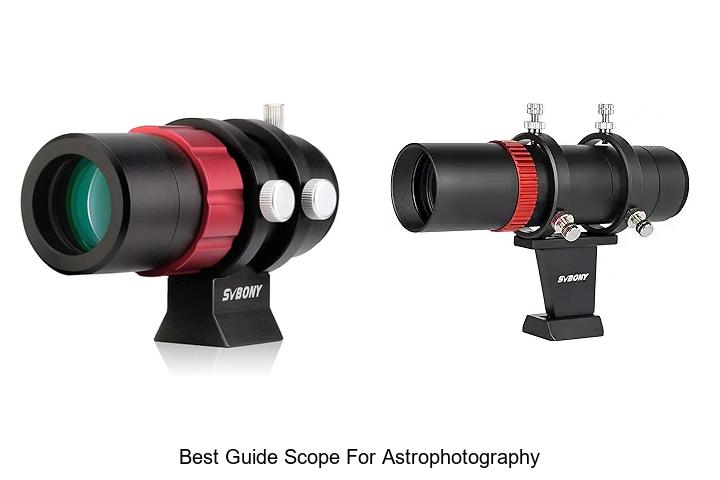
Best Guide Scope for Astrophotography: Unlock Stunning Views!
Astrophotography requires precise tracking to capture clear images of distant stars and galaxies. Without the right equipment, long exposure shots often come out blurry or misaligned, making it frustrating to achieve satisfying results. This is where choosing the best guide scope for astrophotography plays a vital role.
This is where choosing the best guide scope for astrophotography plays a vital role. A guide scope helps keep your telescope locked on target during long exposures, improving image sharpness and detail. Whether you are an amateur stargazer or an intermediate photographer looking to upgrade your setup, selecting the right guide scope can significantly enhance your photos.
Key benefits include better tracking accuracy and ease of integration with your existing gear. This review will cover several popular guide scopes, discussing their features, compatibility, and performance. By focusing on practical information, you’ll be able to make an informed choice that fits your astrophotography needs.
Unlocking the Secrets to Capturing Stunning Night Sky Images
| Image | Product | Price |
|---|---|---|
Our Top Picks 1  | SVBONY SV165 Mini Guide Scope 30mm F4 Finder and Guide | Buy Now |
Our Top Picks 2  | SVBONY SV165 40mm Mini Guide Scope, F4 Finder Scope with | Buy Now |
Our Top Picks 3  | SVBONY SV106 Guide Scope with Helical Focuser Finder and Guide | Buy Now |
1. SVBONY SV165 Mini Guide Scope 30mm F4 Finder and Guide
Experience precise and reliable guiding for your astrophotography sessions with the SVBONY SV165 Mini Guide Scope 30mm F4. Designed to deliver clear, sharp images and ease of use, it enhances your ability to track celestial objects accurately. Its compact size and quality optics make it a solid choice for upgrading your astro setup.
The guide scope offers compatibility with popular auto guiding cameras, ensuring versatility across various models including SV305C Pro, Orion, ZWO, and QHY series. Featuring a 25-inch and M42 mount interface, it supports seamless integration without complicated adjustments.
25-inch and M42 mount interface, it supports seamless integration without complicated adjustments. The ultra-wide band fully multilayer coated lenses minimize reflections, providing bright and crisp views of the night sky.
Crafted with high-level CNC metal processing technology, this guide scope combines durability with an elegant finish. The 30mm achromatic optics and f/4 aperture produce a broad field of view, helping users quickly locate targets during observations.
With a 45mm back focus distance, precise focusing is straightforward, offering improved performance even with slight variations in camera positioning.
Additional features such as nylon-tipped thumbscrews protect the scope tube from damage and allow flexible positioning within mounting rings. While the image appears inverted with an eyepiece, this is typical for guide scopes and does not impact guiding accuracy. The lightweight design makes it convenient to carry and attach, complementing both beginner and intermediate astrophotographers seeking reliable guiding assistance.
This mini guide scope stands out as a practical tool for those looking to enhance their guiding setup without excessive complexity. Its compatibility and solid build quality offer confidence during long exposure imaging, maintaining steady tracking across sessions.
Pros
- Compatible with a wide range of auto guiding cameras
- Sharp, bright images thanks to multilayer coated optics
- Durable build with protective nylon-tipped thumbscrews
Cons
- Cannot be used with Dielectric Mirror Star Diagonal
The SVBONY SV165 Mini Guide Scope offers a dependable combination of optical clarity, compatibility, and build quality. It provides essential features to support accurate auto guiding that benefits astrophotographers aiming for sharp, stable tracking. Compared to similar guide scopes, it balances functionality and ease of integration well for its price.
Compared to similar guide scopes, it balances functionality and ease of integration well for its price.
| Specification | Details |
|---|---|
| Eye Piece Lens Description | Kellner |
| Mount | Fixed Mount |
| Focus Type | Manual Focus |
| Finderscope | Reflex |
| Compatible Devices | Camera |
| Coating | Fully Multi-Coated |
| Focal Length | 120 millimeters |
| Field Of View | 2.86 Degrees |
| Zoom Ratio | 4 |
| Additional Features | 45mm back focus, Nylon-tipped thumbscrews, Quality craftsmanship, Ultra wide band fully multilayer coated lens |
2. SVBONY SV165 40mm Mini Guide Scope, F4 Finder Scope with
Explore the night sky with precision using the SVBONY SV165 40mm Mini Guide Scope. Designed specifically for telescopes with focal lengths up to 700mm, it ensures sharp, clear images that enhance your astrophotography experience. Its compact size and thoughtful features make it a reliable companion for your astronomical observations.
Its compact size and thoughtful features make it a reliable companion for your astronomical observations.
Built with fully multi-coated, achromatic optical glass, the scope delivers bright and crisp visuals. The front focuser includes a scale, allowing easy and repeatable adjustments while the locking ring secures the focus position during long exposure sessions. Compatibility with popular guide cameras such as SV305 Pro and Orion ZWO QHY makes this guide scope versatile for various setups, paired with two T2 extension tubes to aid in precise focusing.
Compatibility with popular guide cameras such as SV305 Pro and Orion ZWO QHY makes this guide scope versatile for various setups, paired with two T2 extension tubes to aid in precise focusing.
SVBONY’s SV165 stands out with its six-point adjustable guide ring, allowing exact alignment with the main telescope. Its lightweight and compact design make mounting straightforward without adding unwanted bulk.
Manual focus type gives users direct control over fine-tuning, improving tracking performance during astrophotography.
It suits beginners and experienced users aiming for reliable guiding without complicated adjustments. The 25-inch and M42 threaded interface increases compatibility across a wide range of guide cameras.
Overall, it balances optical clarity, ease of use, and flexibility beautifully, making it a sound choice for those seeking precise auto-guiding on a budget.
Pros
- Sharp and clear vision from achromatic, fully multi-coated optics
- Adjustable six-point guide ring ensures precise alignment
- Compatible with popular guide cameras and comes with extension tubes
Cons
- May require tube length adjustments if the paired eyepiece cannot focus
The SVBONY SV165 Mini Guide Scope offers an excellent blend of optical quality and user-friendly design, making it a practical upgrade for many amateur astronomers. Its versatile compatibility and reliable performance stand out in its category, positioning it as a trustworthy companion for clear and stable astrophotography guidance.
| Specification | Details |
|---|---|
| Eye Piece Lens Description | Kellner |
| Mount | Altazimuth Mount |
| Focus Type | Manual Focus |
| Finderscope | Reflex |
| Compatible Devices | SV305 Pro, Orion ZWO QHY cameras |
| Coating | Fully Multi-Coated |
| Focal Length Description | 700 millimeters |
| Field Of View | 18.4 Degrees |
| Additional Features | Six-point guide ring |
3. SVBONY SV106 Guide Scope with Helical Focuser Finder and Guide
Capturing stunning astrophotography requires precision and reliable equipment. The SVBONY SV106 Guide Scope offers a perfect blend of versatility and accuracy, helping elevate your imaging sessions to new heights. Its compact design and innovative focuser make it an essential addition for those seeking better tracking and guiding capabilities.
Its compact design and innovative focuser make it an essential addition for those seeking better tracking and guiding capabilities.
More than just a guide scope, the SV106 doubles as a highly functional finder scope, simplifying star alignment and target acquisition. Its build and features cater to both casual observers and dedicated astrophotographers aiming for sharper, cleaner shots.
At the heart of the SVBONY SV106 is a 60mm aperture paired with a 240mm focal length, delivering bright and clear views of guide stars. Unique to this model is the built-in helical focuser that moves the attached guide camera in and out without rotating the field. This ensures the star alignment stays consistent while you make precise focus adjustments.
This ensures the star alignment stays consistent while you make precise focus adjustments.
The versatile design allows use as a straight-through finder scope when combined with a 25 eyepiece.
6×60 finder scope, or you can opt for illuminated crosshairs for easier aiming in dark conditions. This multi-use functionality adds practical value beyond guiding alone.
The focuser offers 8 mm of travel with an additional 35mm of back-travel via a telescoping drawtube, reducing the need for extension tubes regardless of your autoguider setup. A compression ring fitting protects your cameras or eyepieces from scratches.
Compatible with equatorial and altazimuth mounts, it fits well into many configurations and gear setups.
Users highlight the SV106’s strong build quality and adaptability. One reviewer successfully used it for solar and lunar photography alongside wide-field views of star clusters, demonstrating its functionality beyond typical guide scope roles.
5x focal reducer broadens its applications. This guide scope combines practical features with reliability, making it suitable for various astrophotography needs.
Pros
- Helical focuser maintains star orientation during focusing
- Multi-use as both guide scope and finder scope
- Wide compatibility with autoguider cameras and mounts
Cons
- Lacks motorized or electronic focusing options
Overall, the SVBONY SV106 Guide Scope is a versatile and thoughtfully designed tool for capturing higher quality astrophotos. It balances solid construction with flexible features, supporting both precise guiding and straightforward finder scope use. Its precise manual focuser and multi-coated optics offer a dependable performance for hobbyists and advanced users alike.
| Specification | Details |
|---|---|
| Aperture | 60 mm |
| Focal Length | 240 mm |
| Focus Type | Manual Helical Focuser |
| Field of View | 2.39 Degrees |
| Mount Compatibility | Equatorial and Altazimuth Mounts |
| Eyepiece Lens | Kellner |
| Coating | Fully Multi-Coated |
| Additional Features | Compression Ring, T-Threads for Autoguider Attachment |
4. SVBONY SV905C Guide Camera, 1.23MP CMOS Sensor, 1.25″ USB2.0 Astrophotography

Capture the night sky with remarkable precision using the SVBONY SV905C Guide Camera. Designed to assist with meticulous autoguiding and planetary imaging, this compact astrophotography camera boasts a sensitive 23-megapixel color CMOS sensor, making it a reliable tool for tracking faint celestial objects.
Its ecological design and compatibility with popular guiding software enhance its appeal for dedicated star tracking. Whether paired with guide scopes or off-axis guiders, the SV905C offers portability without compromising function.
The SV905C Guide Camera features a 1/3” CMOS sensor delivering 1280×960 resolution with 75-micron pixels, supporting fine details in astrophotography. High peak quantum efficiency of 80% alongside low read noise facilitates accurate tracking of dim guide stars.
High peak quantum efficiency of 80% alongside low read noise facilitates accurate tracking of dim guide stars. This ensures stable exposure times and sharp results during long observation sessions.
Equipped with a USB 0 interface and ST4 guide port, it easily integrates with software like PHD2, MDL, NINA, and SKY-X.
The front CS interface and included CS-C adapter allow mounting of standard CS or C-mount lenses, enhancing its versatility. With its slim 25-inch diameter, the camera fits various guide lenses and off-axis guiders to adapt to different telescope configurations.
Construction includes a snap ring and scale mark ensuring consistent focus and positioning when using the same guide lens repeatedly. Its design supports multiple platforms through ASCOM and INDI drivers on Windows, Linux, and possibly macOS. The SV905C balances performance, size, and ease of use, making it best suited for hobbyist astronomers aiming for precise autoguiding without a hefty investment.
Pros
- High sensitivity sensor with 1.23MP resolution and 80% peak QE for faint star tracking
- Wide compatibility with popular guiding software and platforms
- Compact 1.25″ size fits various lenses and telescopes easily
Cons
- Not compatible with ASI AIR control unit
The SVBONY SV905C Guide Camera provides a focused solution for astrophotography guiding needs. Its blend of sensitive imaging, software compatibility, and user-friendly design connect well with both beginner and intermediate astronomers.
| Specification | Details |
|---|---|
| Sensor | 1/3” CMOS, 1280×960 resolution |
| Pixel Size | 3.75 microns |
| Resolution | 1.23 Megapixels |
| Interface | USB 2.0, ST4 Guide Port |
| Lens Mount | CS Interface with CS-C adapter |
| Dimensions | 1.42 x 1.42 x 2.56 inches |
| Weight | 8 ounces |
| Software Support | PHD2, MDL, NINA, SKY-X, ASCOM, INDI |
| Compatibility | Windows, Linux, macOS (possible) |
5. SVBONY SV106 Guide Scope with Helical Focuser Finder and Guide

Discover the SVBONY SV106 Guide Scope, crafted for astrophotographers aiming to capture sharper and clearer celestial images. Its 50mm lens paired with a smooth helical focuser offers a reliable and versatile tool suitable for many astronomical setups.
Enhance your observational experience with a device designed to bring precision and ease to your night sky adventures.
Engineered with a built-in helical focuser, the SV106 ensures steady and zero-flexure focusing. This allows for crisp and accurate adjustments to your guide stars, making the process straightforward even during long exposure sessions. The machined, knurled ring includes a locking thumbscrew, securing the focus in place after achieving optimal sharpness.
The machined, knurled ring includes a locking thumbscrew, securing the focus in place after achieving optimal sharpness. The scope’s 8 mm helical focus range, combined with an additional 30 mm telescoping drawtube, offers compatibility with a wide range of autoguider devices, allowing flexibility for various setups.
Included are two robust guide scope rings and a 5-inch dovetail mounting bar that connects effortlessly to standard finder scope bases.
Fully multi-coated optics with a 190mm focal length and 4-degree field of view support high-quality imaging.
Whether used as a primary guiding device or a finder scope for solar and deep-sky photography, the SVBONY SV106 delivers solid performance with a durable build and thoughtful design.
Pros
- Zero-flexure helical focuser with lock-down thumbscrew for stable focusing
- Versatile mounting options with included dovetail bar and guide rings
- Compatible with various autoguider cameras due to extended back-travel capacity
Cons
- Manual focus requires steady hands for precise adjustments during longer sessions
The SVBONY SV106 Guide Scope combines affordability with reliable performance, making it a dependable accessory for capturing detailed astrophotos. Its precise focuser and adaptable mounting system accommodate both beginners and experienced photographers aiming for enhanced tracking accuracy. Practical design and solid construction make this a valuable addition to any telescope setup.
| Specification | Details |
|---|---|
| Lens Diameter | 50mm |
| Focal Length | 190mm |
| Focus Type | Manual Helical |
| Field of View | 3.4 Degrees |
| Mount Type | Altazimuth Mount |
| Coating | Fully Multi-Coated |
| Finderscope Type | Reflex |
| Mounting | Dovetail Bar with Threaded Sockets |
| Compatible Devices | Astronomical Telescopes and Cameras with Female T-Threads |
6. SVBONY SV238 Off-Axis Guider (OAG), Astronomy OAG 8x14mm Large Prism,

Explore new horizons in astrophotography with the SVBONY SV238 Off-Axis Guider. Designed to enhance guiding accuracy, it elevates your imaging experience by providing clearer and more stable star tracking.
Its large 8x14mm prism broadens the field of view, making it easier to locate guide stars even in sparse regions of the sky. This makes astrophotography sessions smoother and more productive.
The SV238 Off-Axis Guider offers excellent compatibility with popular guide cameras, such as SV605CC, ZWO ASI 533MC Pro, and QHY5III585M, among others. This flexibility allows seamless integration with a variety of setups.
Built with precision CNC-machined aluminum alloy, the guider is both sturdy and weather-resistant. Its dual helical focuser ensures ultra-fine, smooth adjustments that lock securely in place, reducing blur caused by guiding errors. Users can quickly achieve sharp focus on guide stars for stable long-exposure imaging.
Users can quickly achieve sharp focus on guide stars for stable long-exposure imaging.
Compatibility extends across multiple thread standards including M54, M48, and M42, making it adaptable to most telescopes and configurations. While it supports APS-C and smaller sensors, it is important to note that it only fits guide cameras with sensors positioned in the barrel section.
This off-axis guider is ideal for astrophotographers seeking improved star tracking with a versatile and finely tuned device.
Pros
- Wide compatibility with numerous popular guide cameras and telescopes.
- Large 8x14mm prism provides a wider field of view for easier guide star acquisition.
- Precision dual helical focuser enables stable and ultra-fine focusing adjustments.
Cons
- Setup can be challenging and may require adding spacers to achieve proper back focus.
The SVBONY SV238 Off-Axis Guider delivers accuracy and adaptability for astrophotographers focused on stable guiding performance. While setup requires some care, the robust build and versatile compatibility offer value for those serious about enhancing their imaging results.
| Specification | Details |
|---|---|
| Prism Size | 8 x 14 mm Large Prism |
| Focus Type | Dual Helical Focuser |
| Material | Aluminum Alloy with CNC Machining |
| Compatibility | Supports M54, M48, M42 interfaces; Compatible with guide cameras having barrel-style CMOS sensors |
| Compatible Cameras | SV605CC, SV405CC, ZWO ASI 533MC Pro, QHY5III585M, and more |
| Additional Features | Height adjustable prism, universal compatibility, large field of view |
7. Alstar Guide Scope 50mm Telescope Finder Scope, Equipped with FMC

Discover the Alstar Guide Scope 50mm Telescope Finder Scope, designed to elevate your astrophotography experience. This compact and lightweight guide scope offers sharp, bright optics suitable for a wide range of telescopes. Its precision focus system simplifies locating and tracking celestial objects with ease.
Its precision focus system simplifies locating and tracking celestial objects with ease.
Boasting a 200mm focal length and advanced FMC multi-coated lenses, this guide scope enhances visibility while minimizing optical distortions. It is an ideal tool for both beginners and experienced astrophotographers looking for a reliable guiding solution.
The Alstar Guide Scope stands out with its built-in worm focuser featuring a brass compression ring and dual thumbscrews. This system provides a smooth 40mm focusing range and about 10mm of micro-focusing via a helical focuser, allowing precise focus adjustments.
A fixed scaled drawtube further aids accuracy.
Mounting is effortless thanks to the included Synta-style plate and matching pipe clamps, which make installation compatible with most astrophotography telescopes up to 1500mm focal length. The compact mini design fits comfortably on your setup without overly increasing the center of mass.
Constructed from black anodized aluminum, the guide scope’s sturdy metal housing ensures longevity while resisting harsh outdoor conditions. Its wide field of view, approximately
17 degrees, increases the chances of finding suitable guide stars quickly. Visual and photographic users benefit from the large, comfortable viewfinder and fast focusing capabilities.
Whether used with a camera or an autoguider, this manual focus guide scope offers excellent optical clarity and stability. Its multi-coated lenses further improve light transmission for sharper images.
Pros
- Precise worm focuser with brass compression ring and micro helical focus
- Wide field optics to easily locate guide stars
- Durable anodized aluminum housing for long-lasting use
Cons
- Manual focus may require adjustments during long sessions
The Alstar Guide Scope combines durability, precision, and optical quality to enhance astrophotography setups. Its ease of installation and compatibility with a variety of mounts make it a valuable tool for detecting and tracking celestial objects.
| Specification | |
|---|---|
| Focal Length | 200 millimeters |
| Field of View | 1.17 Degrees |
| Coating | Multi-Coated |
| Focus Type | Manual Focus with Worm & Helical Focuser |
| Mount | Altazimuth Mount with Synta Style Plate |
| Eyepiece Type | Kellner |
| Compatible Devices | Camera, Autoguider |
| Power Source | manual operation |
8. Astromania Guide Scope 60mm FMC Compact Finder Guide Scope Kit

Astromania Guide Scope 60mm FMC Compact Finder Guide Scope Kit offers an exceptional blend of precision and convenience for anyone involved in visual astronomy or astrophotography. Its compact and sturdy design ensures quick location of celestial objects and guide stars without hassle.
Engineered to deliver crisp optics and smooth focusing, this kit suits both beginners and experienced skywatchers. Its balanced features help save time on setup and improve guiding accuracy.
This guide scope features a 60mm fully multi-coated achromatic lens with a 240mm focal length, perfect for telescopes with up to 1500mm focal length. The wide
Built-in worm focuser with brass compression ring and double thumbscrews provides precise manual adjustments without rotation issues on the camera or eyepiece.
The solid black anodized aluminum housing enhances durability and protects optics during field use. Users benefit from a milled, knurled ring for fine focusing control and a dovetail bracket that quickly mounts onto nearly any astrophotography telescope.
Assembly and installation are straightforward thanks to included pipe clamps and a Synta-style mounting plate. The scope supports use with autoguider cameras and other equipment that feature female T-threads.
Its thoughtfully designed features, such as locking thumbscrews and adjustable aim capability, ensure steady operation under various observing conditions. This scope strikes a great balance between performance and compactness, making it ideal for prolonged observing sessions or guiding exposures.
Pros
- Fully multi-coated 60mm lens offers clear and bright views.
- Worm focuser and helical unit allow fine and coarse focusing with stability.
- Sturdy anodized aluminum body provides long-lasting durability.
Cons
- Requires insert of Barlow lens to focus at infinity with a diagonal.
Overall, the Astromania 60mm Guide Scope is a reliable instrument that enhances both visual and astrophotography experiences. Its precise focusing mechanisms and rugged build quality offer excellent value in its class.
| Specification | Details |
|---|---|
| Eye Piece Lens | Kellner |
| Mount Compatibility | Equatorial or Altazimuth Mount |
| Focus Type | Manual with Worm & Helical Focuser |
| Power Source | Battery Powered |
| Finderscope Type | Reflex |
| Compatible Devices | Autoguider Cameras, Accessories with Female T-Threads |
| Coating | Fully Multi-Coated |
| Focal Length | 240 mm |
| Field of View | 2.7 Degrees |
| Zoom Ratio | 6.25x |
| Additional Features | Helical Focuser |
9. Astromania Upgrated Guide Scope 70mm FMC with Double Helical Focuser,

Experience precise and reliable astrophotography guidance with the Astromania Upgraded Guide Scope 70mm FMC. Designed to enhance your celestial imaging, it combines a bright, wide-field view with a compact build for effortless star tracking and object finding. Whether capturing long-exposure images or visual observing, this guide scope delivers consistent results.
Whether capturing long-exposure images or visual observing, this guide scope delivers consistent results.
Equipped with a 400mm focal length and a double helical focuser, it offers smooth, accurate adjustments without any backlash. Its sturdy construction ensures durability while maintaining ease of use for both beginners and advanced users.
This scope simplifies star acquisition and steady autoguiding during your astrophotography sessions.
The guide scope boasts bright optics with a wide field of view, letting you spot numerous guide stars quickly. Its built-in worm focuser features a brass compression ring and multiple thumbscrews, preventing any unwanted rotation of your camera or eyepiece.
The 25-inch eyepiece compatibility also allows straightforward integration with various autoguiding cameras.
Durability is evident in its black anodized aluminum housing, paired with milled and knurled rings for fine focusing control. The lock thumbscrew and hex screws securely hold all components in place, minimizing any movement during long exposure times. Conveniently, the dovetail bracket fits most astrophotography telescopes, providing quick and stable installation.
Performance-wise, the 70mm objective and 400mm focal length are ideal for use with longer focal length main scopes, offering up to 1/6th to 1/10th focal length ratios essential for high-precision guiding. Its build quality and optical design eliminate slop in focusing mechanisms, resulting in stable, accurate star tracking.
Pros
- Bright, wide-field optics with a 400mm focal length for clear guide star visibility
- Double helical focuser with multiple lock screws for precise, slop-free adjustments
- Sturdy anodized aluminum construction with easy mounting on most astrophotography setups
Cons
- Heavier and larger than smaller guide scope models, which may challenge mounts with limited payload capacity
The Astromania Upgraded Guide Scope 70mm FMC delivers dependable performance in guiding and finding stars. Its combination of rugged build, precise focusing, and wide-field optics makes it a valuable companion for astrophotographers using medium to long focal length main scopes. Compared to smaller guide scopes, it provides enhanced precision but may require a sturdy mount to support its weight comfortably.
Compared to smaller guide scopes, it provides enhanced precision but may require a sturdy mount to support its weight comfortably.
| Technical Specifications | |
|---|---|
| Focal Length | 400 millimeters |
| Objective Diameter | 70mm |
| Eyepiece Size | 1.25 inch |
| Focusing Mechanism | Double Helical Manual Focuser |
| Field of View | 39.6 Degrees |
| Mount Compatibility | Altazimuth and Dovetail Guide Scope Bracket |
| Materials | Black Anodized Aluminum Housing |
| Additional Features | Mini-guide tube, brass compression ring, lock thumbscrews |
10. Sky-Watcher Sky-Watcher EvoGuide 50DX – 50mm Guide Scope APO Doublet

Discover clear, sharp guidance for your astrophotography projects with the Sky-Watcher EvoGuide 50DX. This compact 50mm apochromatic doublet refractor is crafted to provide strikingly crisp images and dependable performance under dark skies.
Its lightweight design makes it an excellent companion for precise tracking during long exposure sessions.
Ideal for both visual observation and astrophotography, the EvoGuide 50DX offers versatility and easy integration with various mounts and accessories. Whether setting up for guiding or capturing deep-sky objects, it delivers consistent results every time.
The Sky-Watcher EvoGuide 50DX combines expert optical engineering with practical features suited for astrophotography. Its 50mm aperture paired with ED glass produces vivid, high-contrast views, minimizing chromatic aberrations that often affect images.
With a focal length of 242mm and an f/8 ratio, it balances field of view and magnification perfectly for guide scopes.
Mounting options include a machined aluminum finder stalk compatible with all Sky-Watcher finder brackets, plus a V-style mounting rail for flexible attachment. The included 25” helical focuser allows smooth, precise adjustments to fine-tune focus without delays.
25” helical focuser allows smooth, precise adjustments to fine-tune focus without delays.
Built-in T-threads expand functionality by letting you attach an optional adapter, converting the EvoGuide into a fast, low-focal length astrograph. Its lightweight build and fully coated lenses enhance portability and image brightness, while fully coated optics reduce glare and improve contrast.
Many users appreciate its adaptability, with applications spanning from guiding to electronically assisted astronomy. Some note challenges with facer backlash affecting autofocus, but overall, it integrates well with cameras, smartphones, and guide cameras. It works well with additional accessories like field flatteners and electronic focusers for more advanced setups.
It works well with additional accessories like field flatteners and electronic focusers for more advanced setups.
Pros
- High-quality ED glass for sharp, contrast-rich views
- Multiple mounting options for easy attachment
- Lightweight and compact design for portability
Cons
- Focuser may experience backlash, limiting autofocus functionality
The Sky-Watcher EvoGuide 50DX stands out as a reliable, versatile guide scope that benefits both beginners and experienced astrophotographers. Its matched optics and user-friendly mounts help simplify setup and enhance tracking accuracy.
While minor focusing issues exist, the overall value and adaptability make it a strong choice among similar guide scopes in its category.
| Specification | Details |
|---|---|
| Aperture | 50mm |
| Focal Length | 242mm |
| Focal Ratio | f/4.8 |
| Optical Design | Apochromatic Doublet Refractor |
| Focuser | 1.25” Helical |
| Mounting Options | Finder stalk, V-style rail |
| Coatings | Fully coated lenses |
| Compatibility | Guide cameras, smartphones |
| Additional Features | Built-in T-threads for adapters |
11. Astromania Guide Scope 50mm FMC Compact Finderscope Guide Scope Kit

Discover precision and clarity with the Astromania Guide Scope 50mm FMC Compact Finderscope Guide Scope Kit. Designed for quick object location and accurate star tracking, this scope enhances both visual observation and astrophotography experiences.
Its compact design and reliable features make it a practical addition to any telescope setup.
Experience seamless focusing with the built-in worm focuser that prevents camera and eyepiece rotation. The 200mm focal length suits astrophotography telescopes up to 1500mm, offering a wide field of view to easily locate guide stars. Durable construction and precise adjustments ensure consistent performance during your night sky explorations.
The Astromania Guide Scope serves as an effective mini-guide tube to rapidly find objects and guide stars essential for astrophotography. Its worm-focuser adds fast, smooth focusing without rotation, providing a large, comfortable viewing field that reduces the time needed to locate celestial objects visually. This combination benefits both beginners and experienced stargazers alike.
This combination benefits both beginners and experienced stargazers alike.
Engineered with high-quality fully multi-coated optics, it delivers bright and clear images with minimal distortion. The solid black anodized aluminum housing guarantees durability and robustness under field conditions. Additionally, the dovetail guide scope bracket allows quick mounting to most astrophotography telescopes, accommodating setups efficiently without hassle.
Additionally, the dovetail guide scope bracket allows quick mounting to most astrophotography telescopes, accommodating setups efficiently without hassle.
Adjusting focus is effortless thanks to the milled, knurled ring allowing fine tuning with precision. The built-in worm focuser offers a wide 40mm focusing range supported by a micro focusing helical focuser. Plus, the locking thumbscrew keeps the guide scope securely in place during use.
Plus, the locking thumbscrew keeps the guide scope securely in place during use. This kit includes robust pipe clamps and a Synta-style mounting plate for straightforward installation and reliable operation.
While some similar guide scopes come with crosshairs, this model’s adapter supports 25 eyepieces, enabling personalized magnification choices.
Its functionality and build quality offer exceptional value for those focused on precision astrophotography and night sky observation.
Pros
- Fast and precise worm focuser for effortless focusing without rotation.
- Wide field optics ideal for locating guide stars with telescopes up to 1500mm focal length.
- Sturdy anodized aluminum housing ensures durability and stable mounting.
Cons
- Lacks built-in crosshairs, requiring users to add their own for nighttime centering.
The Astromania Guide Scope 50mm FMC is a reliable and adaptable accessory tailored for accurate object finding and star guiding. Its robust design combined with smooth, precise focusing enhances astrophotography setups, making it a valuable tool for astronomers seeking dependable performance.
For those who want customizability in magnification and installation, this guide scope stands out as a practical solution.
| Specification | Details |
|---|---|
| Eye Piece Lens Description | Kellner |
| Mount | Equatorial or Altazimuth |
| Focus Type | Manual Focus, Helical Focuser |
| Power Source | Battery Powered |
| Finderscope Type | Reflex |
| Compatible Devices | Astronomical Telescopes |
| Coating | Fully Multi-Coated |
| Focal Length | 190 millimeters |
| Field Of View | 13.68 Degrees |
| Additional Features | Helical Focuser |
12. NEEWER Telescope Finderscope Mount Adapter All Metal with Cold Shoe

Enhance your astrophotography setup with the NEEWER Telescope Finderscope Mount Adapter, designed for seamless integration and precision. It offers a sturdy mounting solution for guide scopes or finders, allowing you to quickly lock onto celestial targets with ease.
Crafted from durable aluminum alloy, this adapter combines lightweight design with robust functionality. Its universal compatibility makes it a practical addition to any astrophotography kit.
The NEEWER finderscope mount features a 3-inch (33mm) standard dovetail clamp that easily attaches to your camera or telescope.
Its dual locking system includes a knurled screw and thumb screw, giving firm and adjustable hold without the need for extra tools.
Constructed with CNC machined aluminum alloy and treated with black anodizing, the adapter withstands regular use and supports up to 2 pounds (1 kilogram). Despite its strength, it weighs only 45 grams (
Despite its strength, it weighs only 45 grams (59 ounces), so it won’t add bulkiness to your setup.
Versatility sets this mount apart; it allows mounting of red dot finders, lasers, or telescope lenses onto tripods, light stands, or flash brackets using its 1/4-inch threaded hole. This flexibility helps capture accurate images of stars and faint astronomical objects with better ease compared to unaided vision.
Ideal for astrophotographers seeking a reliable and sturdy support for their guide scopes, the adapter is simple to install and adjust. It provides value by improving setup stability and aiming precision, making night sky photography more effective and enjoyable.
Pros
- Universal dovetail clamp fits most guide scopes and finders
- Dual lock system offers secure and tool-free adjustments
- Lightweight yet durable all-metal aluminum alloy construction
Cons
- May require compatibility check with some non-standard flash shoe mounts
The NEEWER Telescope Finderscope Mount Adapter combines rugged build quality and versatile mounting options for photographers focusing on celestial imaging. Its secure locking and lightweight design stand out from many similar mounts, making it a practical investment for improving aiming precision in astrophotography.
| Specification | Detail |
|---|---|
| Brand Name | NEEWER |
| Model Number | 33000043 |
| Material | Aluminum Alloy |
| Weight | 45g / 1.59oz |
| Load Capacity | Up to 2.2 lb / 1 kg |
| Mount Type | 1.3in/33mm Dovetail Clamp with Cold Shoe |
| Thread Size | 1/4 inch |
| Compatibility | Camera flash shoes, tripods, light stands |
| Customer Ratings | 4.4 out of 5 stars |
Top Guide to Best Scopes for Astrophotography 2024
Guide camera compatibility
Choosing a guide camera that works seamlessly with your astrophotography setup involves understanding sensor size and resolution requirements that match your guiding needs. Cameras with smaller sensors can be effective for capturing fine details in guide stars, while those with higher resolution allow for more accurate tracking, especially when working with longer exposure times.
Some popular guide camera models known for broad compatibility include the ZWO ASI series, QHYCCD cameras, and Orion StarShoot devices, each offering a balance of sensitivity, ease of use, and reliable driver support. Evaluating how these cameras integrate with your existing equipment and software ensures smooth operation during night sky imaging sessions and helps maintain precise telescope tracking for clear, detailed astrophotographs.
Budget and build quality
When selecting the best guide scope for astrophotography, it helps to balance budget and build quality carefully. Price range considerations play a significant role since investing in a model that fits your financial plan without compromising essential features is key.
Opting for reputable brands often brings peace of mind through reliable performance and support, along with warranties that protect your purchase. These warranties usually cover manufacturing defects and add value by offering repair or replacement options.
By evaluating these factors together, you can find a guide scope that matches both your astrophotography needs and your budget while providing long-lasting use in your stargazing adventures.
Compatibility and mounting options
When selecting the best guide scope for astrophotography, paying attention to mount types and stability plays a significant role in achieving clear and steady images. A guide scope must be compatible with your main telescope to work seamlessly during long exposure sessions, as this ensures the guiding system accurately tracks celestial objects.
Many guide scopes come with standard mounting options such as dovetail bars or ring mounts, which offer straightforward attachment to various telescopes. Stable mounts reduce vibrations and make it easier to maintain focus over time, contributing to better tracking accuracy.
Choosing a guide scope that matches the size and weight constraints of your telescope setup helps maintain balance while simplifying transportation. Pay attention to features like adjustable focusing mechanisms and low-profile designs that aid in smooth alignment without adding unnecessary bulk. By keeping these factors in mind, you can find a guide scope that integrates effectively with your astrophotography setup and enhances your imaging experience.
Understanding guide scopes for astrophotography
A guide scope is a small auxiliary telescope attached to the main telescope and plays a significant role in astrophotography by helping to maintain precise tracking of celestial objects during long exposure sessions. Unlike the primary telescope, which captures detailed images of stars, planets, and other deep-sky objects, the guide scope focuses on monitoring a specific guide star to correct any slight movements or drift caused by the mount’s tracking errors. This correction is crucial for producing clear and sharp images without star trails.
This correction is crucial for producing clear and sharp images without star trails. When selecting a guide scope, factors like aperture size, focal length, and weight influence its compatibility and effectiveness alongside the main imaging setup. Typically, a compact and lightweight model with a suitable focal length that matches the field of view needed for guiding works best.
Understanding the purpose of a guide scope and how it differs from the main telescope can help beginners make informed choices and set up reliable astrophotography systems that enhance image clarity and detail.
Key specifications to consider
Selecting a scope suitable for astrophotography involves paying close attention to several specifications that affect image quality and the ease of capturing celestial objects. A larger aperture allows more light to enter the scope, which is beneficial for photographing faint stars and deep sky objects, resulting in clearer and brighter images. Equally important is the focal length, as it determines both the magnification and the field of view: a longer focal length provides greater detail on smaller objects like planets, while a shorter one captures broader views of expansive star clusters and nebulae.
Equally important is the focal length, as it determines both the magnification and the field of view: a longer focal length provides greater detail on smaller objects like planets, while a shorter one captures broader views of expansive star clusters and nebulae. The optical quality, including the materials used in lenses and mirrors as well as the coatings applied to them, influences sharpness and color accuracy while minimizing reflections and distortions. Prioritizing scopes with well-crafted optics and multi-layer coatings can improve contrast and reduce chromatic aberration, enhancing final photographs.
Considering what kind of celestial targets you intend to capture and balancing aperture size, focal length, and optical performance will help in choosing a scope that fits your astrophotography goals and budget.
Additional features and accessories
Choosing the best guide scope for astrophotography involves understanding features that enhance precision and usability during long exposure photo sessions of celestial objects. A built-in focuser offers convenience by allowing quick and smooth adjustments to focus without having to manually handle external components, which can be particularly helpful when aligning and fine-tuning the guide scope under the night sky. On the other hand, a manual focuser provides more tactile control and may be preferred by those who enjoy a hands-on approach and don’t mind occasional adjustments.
On the other hand, a manual focuser provides more tactile control and may be preferred by those who enjoy a hands-on approach and don’t mind occasional adjustments. Carrying cases and protective covers help safeguard the scope from dust, bumps, and moisture while transporting or storing it, extending the lifespan of the equipment and maintaining optical clarity. Selecting a guide scope that comes with a durable and custom-fit case is advantageous for those frequently traveling to dark-sky locations.
Software and electronic aids designed for guiding can automate the tracking process by correcting minor errors in the telescope’s movement, ensuring stars remain steady in the frame throughout exposures. Options include standalone guiding units or computer-compatible devices that interface with astrophotography software, making the guiding process smoother and more accurate.
Frquently Asked Questions
What Is The Difference Between Using A Guide Scope And An Off-Axis Guider?
A guide scope is a small, separate telescope mounted alongside the main telescope to track guide stars and send corrections to the mount. It offers a wider field of view, making it easier to find and lock onto guide stars. However, it can suffer from flexure—the slight movement between the guide scope and main scope—which may cause guiding errors. An off-axis guider (OAG), on the other hand, uses a prism or mirror inside the main telescope’s optical path to pick off guide stars. This eliminates flexure issues since both imaging and guiding share the same optical train, resulting in more accurate and stable guiding, especially over long exposures.
How Do I Properly Set Up And Align A Guide Scope For Accurate Astrophotography Tracking?
To properly set up and align a guide scope for accurate astrophotography tracking, begin by securely mounting the guide scope parallel to your main telescope. Ensure both scopes are firmly attached to reduce flexing. Next, perform a rough polar alignment of your mount to prepare for guiding. After this, attach your guide camera to the guide scope and connect it to your guiding software. Use the software to calibrate the guide scope by selecting a guide star and letting the system learn the mount’s response. Finally, fine-tune the alignment by adjusting the guide scope to minimize star movement, ensuring precise tracking during long exposures.
Which Brands Are Known For Producing Reliable Guide Scopes For Astrophotography?
Several brands are well-regarded for producing reliable guide scopes for astrophotography. Orion is popular for its affordable and durable guide scopes, often praised for good optics and ease of use. ZWO is another leading brand, known for its high-quality, compact guide scopes and dedicated guide cameras that integrate well with astrophotography setups. Additionally, brands like Sky-Watcher and iOptron offer dependable and precise guide scopes suitable for both beginners and experienced astrophotographers. These companies focus on robust build quality and optical performance, ensuring accurate guiding during long exposure imaging sessions.
What Features Should I Look For In The Best Guide Scope For Astrophotography?
When choosing the best guide scope for astrophotography, several key features are essential. Look for a guide scope with high optical quality, such as an apochromatic refractor, to ensure sharp and clear star images for accurate tracking. A focal length between 50mm and 100mm is ideal, balancing field of view and sensitivity. Additionally, a sturdy and stable mounting system is crucial to minimize vibrations and maintain precise alignment during long exposures. Another important aspect is compatibility with your autoguider camera and mount. Ensure the guide scope has the appropriate adapters and that it fits securely on your setup. Lightweight and portable designs are also beneficial for ease of use during field sessions. Lastly, consider a guide scope with good collimation adjustment options, allowing fine-tuning for optimal performance in varied astrophotography conditions.
How Does The Size Of A Guide Scope Affect Astrophotography Performance?
The size of a guide scope directly impacts astrophotography performance by influencing tracking accuracy and image quality. Larger guide scopes generally provide better light-gathering capabilities and higher resolution, allowing for more precise detection of guide stars. This precision helps in minimizing tracking errors, resulting in sharper and clearer long-exposure images. However, bigger guide scopes can add weight and may cause balance issues on the main telescope setup. Smaller guide scopes are more portable and easier to manage but might struggle with faint stars, potentially reducing guiding effectiveness. Thus, choosing the right size depends on balancing accuracy needs with practical considerations.
Conclusion
Choosing the best guide scope for astrophotography involves balancing precision, reliability, and ease of use. While some models offer exceptional tracking accuracy and durable construction, they may come with higher costs or a steeper learning curve.
Conversely, more affordable options might sacrifice some performance but remain suitable for beginners or casual users. The ideal guide scope ultimately depends on your experience level and specific imaging goals. Those seeking consistent, sharp star tracking for long-exposure shots will find the best guide scope for astrophotography invaluable for improving image quality.
Despite minor drawbacks, investing in the right guide scope enhances your ability to capture detailed celestial objects with fewer errors. Thoughtful selection will provide confidence and satisfaction in your astrophotography pursuits.