10 Reasons Nikon Does Not Still Make Rifle Scopes
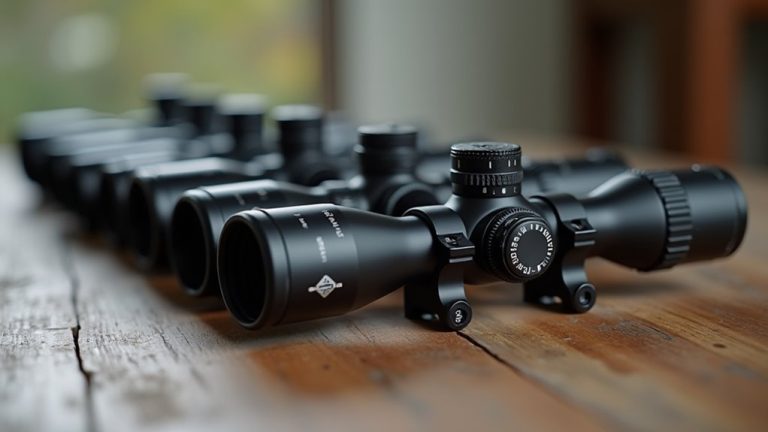
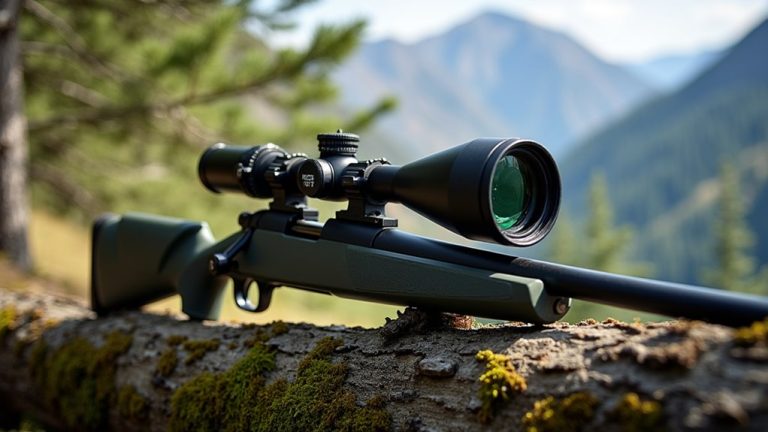
Nikon doesn’t make rifle scopes anymore because of fierce competition and shifting consumer preferences in the optics market.
They faced challenges from brands like Vortex and Leupold that offer appealing features and warranties.
Internal politics pushed the company to focus on binoculars, moving away from hunting products.
Cultural reluctance towards blood sports in Japan further complicated matters.
Plus, changes in their distribution model limited consumer access.
If you’re curious about more reasons behind their exit, there’s plenty more to uncover.
Key Takeaways
- Nikon exited the riflescope market due to fierce competition from over 57 rival brands, making differentiation challenging.
- Internal company politics prioritized binocular sales over firearms-related products, leading to a strategic shift away from riflescopes.
- Cultural reluctance towards hunting in Japan influenced Nikon’s marketing strategy, discouraging engagement with hunting products.
- Changes in the distribution model limited access to riflescopes, reducing consumer availability and interest in the category.
- Increasing demand for advanced precision scopes made it difficult for Nikon to compete effectively in the evolving market.
Increased Market Competition
As the riflescope market becomes increasingly competitive, companies like Nikon find themselves maneuvering a landscape filled with over 57 rival brands.
With the market valued at around $900 million, many competitors focus on entry-level to mid-level pricing, which can be appealing to budget-conscious consumers.
Brands like Vortex and Leupold have upped their game with attractive warranties and features that resonate well with shooters.
You may notice that differentiation is tough for Nikon scopes, especially since many brands source from the same factories.
This intense competition has squeezed Nikon’s margins, making profitability a challenge.
Additionally, Nikon’s historical avoidance of hunting imagery in its marketing may have further distanced itself from consumers who increasingly prioritize tactical and precision shooting gear.
Shifting Consumer Preferences
As a consumer, you’ve probably noticed the rising demand for precision scopes with advanced features like first-focal plane reticles.
With brands catering specifically to long-range and tactical needs, it’s clear that preferences are shifting away from Nikon’s traditional offerings.
You might find yourself drawn to companies that not only meet these expectations but also embrace a strong hunting culture in their marketing.
Demand for Precision Scopes
With the rise of long-range shooting, consumers are increasingly drawn to high-precision scopes that offer advanced features like first-focal plane reticles and tactical milling turrets.
The demand for these sophisticated rifle scopes reflects a shift in preferences, and here’s what you should know:
- Knowledgeable shooters seek extensive adjustment ranges.
- There’s a growing interest in larger diameter options (30mm, 34mm, 35mm).
- Whitetail and mule deer hunting participation fuels diverse scope needs.
Many consumers desire versatility for both hunting and competitive shooting.
Over 57 brands are competing, leading to a focus on precision and adaptability.
This evolving landscape has influenced Nikon’s decision to exit the rifle scope market, as they couldn’t meet the heightened expectations of today’s discerning consumers.
Rise of Competitor Brands
The competitive landscape of the riflescope market has intensified, driven by shifting consumer preferences toward brands that deliver innovative features and value.
With over 57 brands competing, budget-conscious buyers are attracted to lower-priced options.
Vortex and Leupold stand out, offering superior brightness, clarity, and warranties like Vortex’s no-fault guarantee.
| Brand | Key Features | Market Appeal |
|---|---|---|
| Vortex | No-fault warranty | Budget-friendly options |
| Leupold | Exceptional clarity | High-quality performance |
| Nikon | Traditional offerings only | Struggling to compete |
As knowledgeable consumers favor precision scopes with tactical features, the demand for versatile optics that blend hunting and competitive shooting further challenges Nikon’s place in the market.
Internal Company Politics
When you consider Nikon’s exit from the riflescope market, internal company politics played a significant role in shaping management decisions and strategy.
The leadership’s focus on boosting binocular sales over firearms-related products highlights the challenges of market positioning.
As you explore this shift, it’s clear that profitability discussions and cultural perceptions influenced Nikon’s path forward.
Management Decisions and Strategy
Although internal company politics often shape strategic decisions, Nikon’s exit from the riflescope market showcases how these dynamics can drive significant shifts in focus.
Management decisions prioritized growth in other segments, particularly binoculars in Europe, sidelining riflescopes.
This shift stemmed from:
- A historical avoidance of hunting imagery in marketing
- Increased competition and squeezed margins in the riflescope segment
- Lack of domestic support in Japan for blood sports products
- Resource reallocation aimed at profitability
- Restructuring efforts, including factory closures and layoffs
These factors collectively influenced Nikon to pivot towards a smaller business model, effectively withdrawing from the riflescope market and emphasizing their commitment to other product categories.
Market Positioning Challenges
While maneuvering internal company politics, Nikon faced significant market positioning challenges that ultimately influenced its decision to exit the riflescope sector.
The company prioritized expanding binocular sales in Europe, sidelining gun-related products. Additionally, the lack of domestic support in Japan for blood sports made it tough to sustain its riflescope line.
With over 57 brands competing fiercely in the riflescope market, profit margins tightened, adding pressure on Nikon to withdraw.
Historical avoidance of hunting imagery in marketing further demonstrated an internal strategy misaligned with the aggressive promotion necessary in this segment.
As Nikon restructured towards more profitable optical categories, discontinuing riflescopes became a rational choice amidst declining performance in that area.
Focus on More Profitable Product Lines
Nikon’s recent exit from the riflescope market underscores their commitment to focusing on more profitable product lines.
This strategic shift was driven by several reasons, including the need to adapt to increasing competition and declining profit margins.
They’ve redirected their focus to products that yield higher returns, such as:
- Binoculars for outdoor enthusiasts
- Rangefinders for precise measurements
- Spotting scopes for wildlife observation
- Expansion efforts in the European market
- Streamlined operations for better efficiency
Changes in Distribution Model
As Nikon shifts its focus to more profitable product lines, the changes in their distribution model for riflescopes have become apparent.
They’ve moved from an open supply chain to a registered dealer-only program, which limits access for traditional wholesale channels.
This strategic move aims to streamline distribution and strengthen direct relationships with dealers.
However, it greatly impacts the availability of Nikon riflescopes, making them less accessible to consumers.
Dealers are now instructed to sell existing inventory without expectations of new orders or replenishment, which further restricts options for buyers.
These changes in distribution model reflect Nikon’s commitment to reallocating resources to more lucrative optical products, leaving riflescope enthusiasts with fewer choices in the market.
Restructuring and Downsizing
In light of shifting market demands, Nikon has undergone significant restructuring and downsizing, scaling back to a business model operating at half its previous volume from 7-8 years ago.
This strategic move aimed to reallocate resources towards more profitable optical products. Here are some key aspects of Nikon’s restructuring:
- Closure of factories and layoffs of overseas workers
- Focus on core product categories like binoculars and rangefinders
- Shift to a registered dealer-only program for distribution
- Limiting market presence for riflescopes
- Response to internal politics and increased market competition
These decisions reflect Nikon’s commitment to streamline operations and concentrate on areas with better profitability potential, ultimately leading to the discontinuation of riflescope production.
Decline in Domestic Support for Hunting Products
While many companies in the optics industry still embrace hunting products, Nikon has faced a growing decline in domestic support for these items, particularly in Japan.
The primary reason for this decline stems from the cultural reluctance towards hunting and blood sports in their home market.
Nikon’s historical avoidance of hunting imagery in marketing reflects this sensitivity.
Nikon’s marketing strategy has long shunned hunting imagery, showcasing their sensitivity to cultural attitudes.
As public sentiment surrounding firearms has shifted, the company found it increasingly problematic to promote riflescopes.
Additionally, internal politics and a strategic pivot towards more profitable categories, like binoculars, have further discouraged engagement with hunting-related products.
This decline in domestic support ultimately influenced Nikon’s decision to exit the riflescope market altogether, marking a significant change in their product lineup.
Rise of Alternative Brands
As you explore the riflescope market, you’ll notice a surge in alternative brands like Vortex and Leupold that are making waves with their innovative features and customer-friendly warranties.
This shift isn’t just about new products; it’s reshaping market share and pushing established names like Nikon to rethink their strategies.
Understanding these competitor innovations can give you insight into the evolving landscape of riflescope choices.
Competitor Innovations and Strategies
With the riflescope market valued at around $900 million, competition has intensified as brands like Vortex and Leupold innovate to capture consumer interest.
You’ll notice these competitor innovations are changing the landscape, with features aimed at modern shooters. Vortex offers competitive pricing and robust warranty options.
Leupold is praised for brighter optics and lighter weight. Many brands share factories, making differentiation essential.
First-focal plane reticles are becoming increasingly popular. Tactical milling turrets are now standard in many new models.
This shift not only showcases how brands are adapting to consumer preferences but also highlights the challenge Nikon faces in remaining relevant in a rapidly evolving market.
Market Share Redistribution Trends
As Nikon exits the riflescope market, a significant redistribution of market share is underway, creating opportunities for alternative brands like Leupold and Vortex to thrive.
With over 57 brands competing, the market’s saturation makes it tough for newcomers to stand out. However, Vortex’s no-fault warranty has become a game-changer, drawing in consumers who value reliability and service.
As the market, valued at approximately $900 million, evolves, brands targeting entry-level to mid-level consumers are well-positioned to capture the void left by Nikon.
Furthermore, the rise of knowledgeable shooters demanding precision scopes further enhances the appeal of these alternative brands.
Ultimately, this shift in market share could redefine the landscape of riflescopes for years to come.
Challenges in Differentiation
Given the fierce competition in the riflescope market, differentiating your brand can be a challenging task.
With over 57 brands vying for attention, standing out is tough, especially when many products come from the same factories, resulting in similar features.
To navigate these challenges, consider:
- Emphasizing unique product features
- Developing a strong brand narrative
- Investing in innovative marketing strategies
- Engaging with knowledgeable consumers
- Responding to evolving market demands
Nikon’s historical avoidance of hunting imagery may have limited its appeal, while consumers now expect advanced features and precision.
As preferences shift, the need for effective differentiation becomes essential in maintaining relevance against competitors like Vortex and Leupold.
Evolving Trends in Riflescope Features
While the riflescope market evolves, consumers are increasingly drawn to precision scopes that cater to both hunting and competitive shooting.
You’ll notice that these evolving trends emphasize advanced features like first-focal plane reticles and tactical milling turrets.
There’s a growing demand for extensive adjustment ranges, with many preferring larger diameter scopes—30mm, 34mm, or even 35mm—for improved light transmission and accuracy.
As a knowledgeable consumer, you benefit from a more competitive landscape, with over 57 brands vying for your attention, especially at lower price points.
The trend toward personalization and versatility in riflescope features marks a significant shift, steering away from traditional designs and reflecting the diverse needs of modern shooters.
Adaptability is key in today’s market.
Frequently Asked Questions
Are Nikon Scopes Being Discontinued?
Yes, Nikon scopes are being discontinued.
In December 2022, Nikon officially announced it would cease production of its riflescopes, including popular models like Buckmaster and ProStaff.
While you might feel disappointed, it’s worth noting that Nikon is shifting its focus toward more profitable products, like binoculars and rangefinders.
If you own a Nikon scope, you can still access warranty support for discontinued models, but no new inventory will be available.
Did Nikon Make Good Rifle Scopes?
Yes, Nikon made good rifle scopes, especially the ProStaff and Monarch lines, which received positive reviews for their clarity and durability. Many users appreciated the quality glass and overall performance.
However, you might’ve noticed some criticism regarding the limited reticle options, which could affect your choice. Overall, if you value quality and reliability, Nikon scopes were a solid option, though competition in the market has certainly changed the landscape.
Will Nikon Still Repair Rifle Scopes?
Nikon won’t repair rifle scopes anymore, but they do offer warranty vouchers for discontinued models.
If your scope’s deemed unrepairable, you’ll receive a voucher that you can use on other Nikon products like cameras or binoculars.
This voucher’s valid for a year on their website, ensuring you can still benefit from Nikon’s quality, even if your scope can’t be fixed.
It’s a great way to support existing customers.
Is Nikon or Leupold Better?
Oh, you’re really asking if Nikon or Leupold is better?
Well, if you want a scope that’s as bright as your future, Leupold’s your go-to.
It’s like comparing a luxury sports car to a bicycle.
Leupold’s lighter, clearer, and their warranty is practically a lifetime pass to happiness.
Nikon? Let’s just say they’ve taken a long vacation from the riflescope scene.
Conclusion
In the end, Nikon’s decision to step back from rifle scopes makes sense when you look at the bigger picture.
With fierce competition and shifting consumer tastes, they’ve gotta focus on what brings home the bacon.
Plus, with hunting losing steam and new brands popping up like daisies, it’s tough to stand out.
So, while it might feel like a bummer now, it’s just a sign of the times—like trying to use a rotary phone in a smartphone world.
As Nikon moves away from rifle scopes, it’s essential to recognize the changing landscape of the industry.