How to Break in a Leather Holster?
To break in your leather holster, start by wearing it with an unloaded firearm so your body heat gently softens and shapes the leather to your gun. Insert and remove the firearm regularly to encourage flexibility without overstretching.
Avoid soaking or using oils, which can damage the leather. Over time, this gradual process will give you a comfortable, snug fit and smooth draw. If you want tips on faster methods and proper care, keep exploring these techniques.
Understanding Leather Holster Fit and Retention
Although a leather holster might feel tight at first, this snug fit is essential for proper retention and security. You want your firearm to stay firmly in place, reducing any risk of shifting or falling out during movement.
Leather naturally molds to your firearm’s shape over time, so expect that initial tightness to ease with regular use. However, if your holster feels excessively tight, you might need to make minor adjustments to avoid difficulty drawing with one hand.
The break-in process helps the leather stretch and conform to your gun’s contours, making reholstering smoother and more comfortable.
After breaking it in, check your holster’s fit regularly, since changes in the leather can impact both comfort and how securely your firearm stays in place.
Signs Your Leather Holster Needs Breaking In
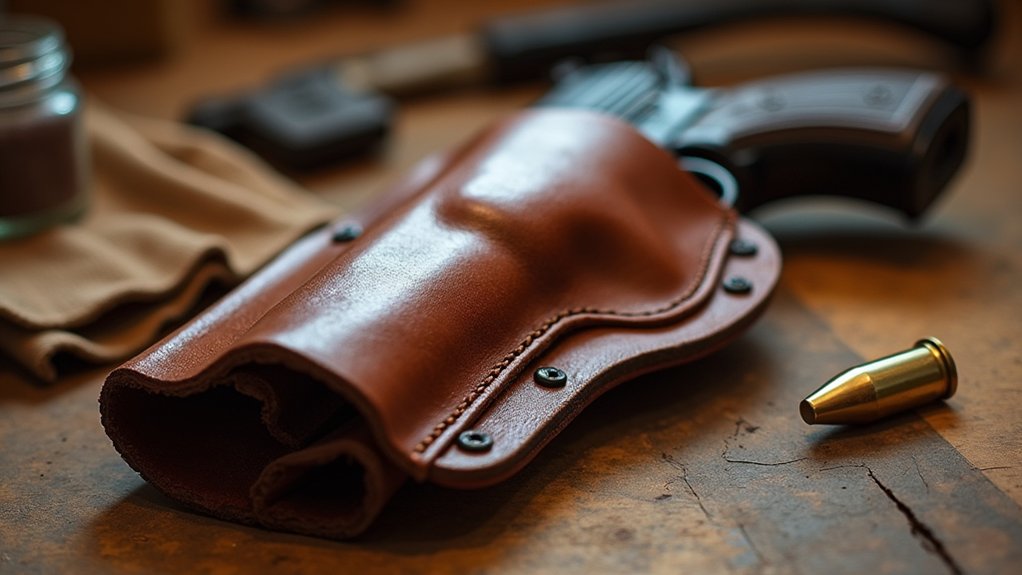
If you find it hard to draw your gun or feel the holster pinching the firearm, that’s a clear sign it needs breaking in.
You might also notice some squeaking or stiffness when you move around. That usually means the leather hasn’t softened up enough for smooth use yet.
Tight Fit Indicators
When your leather holster feels too tight, you’ll notice it’s hard to draw your firearm smoothly, often needing two hands to remove it. This tight fit can also cause discomfort while the gun’s holstered, signaling the need for a break-in period.
Listen for squeaking noises during drawing or reholstering; they indicate the leather isn’t fully adjusted yet. You might also feel resistance when inserting or removing your firearm. This means the leather hasn’t conformed to your gun’s shape.
After repeated use, check for creasing or tension marks at contact points on the leather. These signs show your holster still needs breaking in to achieve a comfortable, secure fit.
Addressing these indicators early will help you break in your holster effectively.
Difficulty Drawing Gun
Several signs point to your leather holster needing a break-in, especially if you struggle to draw your firearm smoothly.
If the holster feels overly tight and you have to use significant effort to draw your gun, it’s a clear signal that breaking it in will improve performance.
Difficulty reholstering or the firearm getting stuck during the draw also shows the interior shape isn’t yet accommodating your gun properly.
You might notice squeaking noises when drawing or reholstering because the leather hasn’t softened enough.
Furthermore, if you see wear around the trigger guard or barrel areas, it suggests tight spots that need breaking in.
Addressing these issues through a break-in routine will refine your holster’s fit, comfort, and function.
Leather Stiffness Signs
Struggling to draw or reholster your firearm often points to stiffness in your leather holster. Recognizing the signs early helps you know when it’s time to break it in.
- The holster feels overly tight, requiring significant effort to insert or withdraw your firearm.
- You notice creasing or stiffness, especially around contact points like the trigger guard and slide.
- Squeaking noises occur during the draw or reholstering, signaling rigid leather.
- Reholstering is difficult; you need two hands, or the firearm doesn’t slide in smoothly.
If your leather looks shiny or feels tough, it also means it needs softening.
Identifying these signs guarantees you take action to make your holster comfortable and functional.
The Body Heat Method for Breaking In
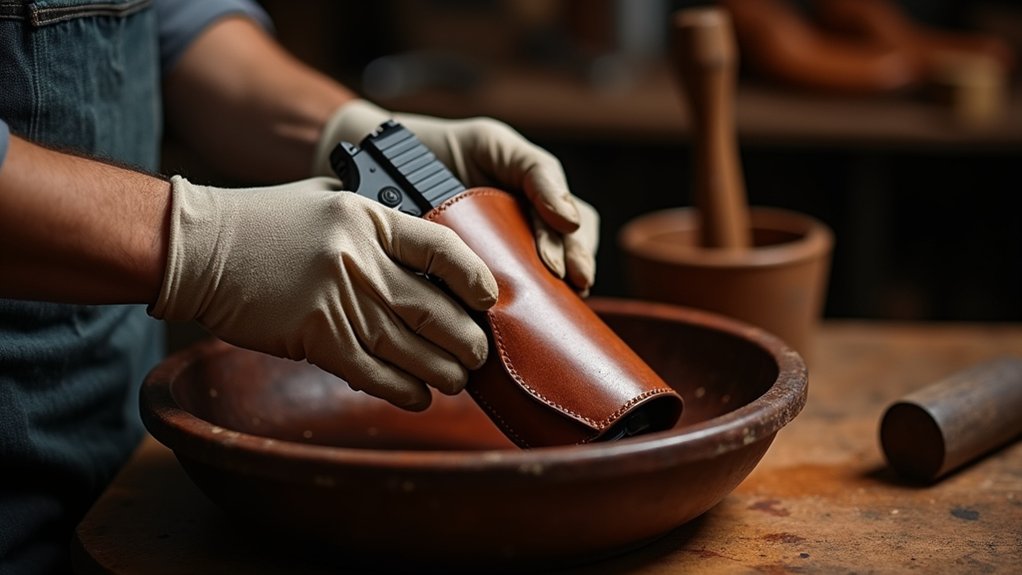
Although breaking in a leather holster can seem challenging, using your body heat offers a natural and effective way to shape the leather to your firearm. To do this, wear the holster with your unloaded firearm inside, allowing your body heat to gradually soften and stretch the leather.
This process helps the holster conform precisely to your gun’s shape over time. Remember to check the fit regularly to avoid over-stretching and guarantee the right balance of comfort and retention.
Depending on how tight the holster is initially, it may take up to a week for the break-in to complete. This method is safe and gentle, making it ideal for snug holsters that need a personalized fit.
Using Plastic Wrap or Bags to Stretch Leather
A simple way to stretch your leather holster is by using plastic wrap or bags around your unloaded firearm before insertion. This technique lets the holster gradually conform to your gun’s shape without causing damage.
Here’s how to do it:
- Wrap your unloaded firearm tightly with plastic wrap or place it in a plastic bag.
- Insert the wrapped firearm into the leather holster carefully.
- Leave it inside for several hours or overnight to allow the leather to stretch.
- Check the fit every 24 hours to avoid overstretching, as leather types and holster designs vary.
This method offers a practical, damage-free approach to breaking in your holster effectively.
Wax Paper Technique for Smoother Fit
When you wrap your firearm in wax paper with the waxy side facing out before placing it in your leather holster, you help stretch the leather for a smoother, more customized fit. This technique softens and molds the leather within 24 to 48 hours without damage. Check the fit occasionally to avoid overstretching.
| Benefit | Details |
|---|---|
| Improved Fit | Wax smooths the leather interior |
| Ease of Use | Requires only wax paper and your firearm |
| Time Efficiency | Noticeable fit improvement within 1-2 days |
This method’s simplicity and effectiveness make it a preferred choice for many firearm owners seeking a reliable, non-invasive way to break in their holster.
Conditioning Fluids and Their Effects on Leather
While conditioning fluids can soften your leather holster and make it more flexible, using them too much can weaken its firmness and affect how well it holds your firearm.
You might think applying oils or creams helps break in your holster faster, but over-conditioning can cause it to lose shape and reduce retention.
Here’s what you need to know:
- Excessive conditioning fluids can compromise your holster’s structure and fit.
- Oils and creams may attract dirt, which degrades the leather over time.
- Many users find these fluids ineffective compared to other break-in methods.
- Keeping your holster dry helps preserve its shape and performance.
Use conditioning fluids sparingly, if at all, to guarantee your holster stays reliable and secure.
Manual Flexing and Elbow Grease Approach
You’ll want to use manual flexing to gently stretch the leather.
Just repeatedly insert and remove your unloaded firearm. This elbow grease technique helps the holster gradually conform to your gun’s shape for a snug fit.
Manual Flexing Benefits
Although breaking in a leather holster might seem tedious, manually flexing it by repeatedly inserting and removing your unloaded firearm helps the leather mold precisely to your gun’s shape.
This simple method offers several benefits:
- It stretches the leather gradually, ensuring an even fit without damaging the material.
- It smooths out contact points, reducing binding and discomfort during use.
- It personalizes the holster’s fit, making it more comfortable and accessible.
- It works best over several days, allowing the leather to adjust naturally.
Elbow Grease Technique
The Elbow Grease Technique calls for repeatedly inserting and removing your unloaded firearm from the holster to stretch and mold the leather precisely to your gun’s shape. This hands-on approach helps you spot and smooth out high spots causing binding or discomfort.
You’ll want to do this over several sessions, slowly increasing the draws to avoid overstretching. Regularly checking the fit guarantees your holster keeps proper retention while becoming more comfortable and accessible.
| Step | Purpose |
|---|---|
| Insert firearm | Begin molding leather |
| Remove firearm | Stretch and relax leather |
| Identify pressure points | Pinpoint discomfort areas |
| Smooth high spots | Improve draw and reholster ease |
| Check fit regularly | Maintain retention and comfort |
Gradual Leather Stretching
When you manually insert and remove your unloaded firearm repeatedly, you help the leather gradually stretch and mold to fit your gun perfectly. This gradual leather stretching method, also known as the “elbow grease” approach, guarantees a personalized, comfortable fit by addressing tight contact points.
To break in your holster effectively:
- Insert and remove the unloaded firearm multiple times daily.
- Inspect the holster regularly to track progress and prevent damage.
- Repeat this process over several days to avoid over-stretching.
- Focus on high-quality leather holsters that benefit most from this technique.
Avoiding Common Mistakes in Breaking In
If you want your leather holster to last, you need to avoid common mistakes during the break-in process. Don’t soak it in water or use oils, as these harm the leather’s shape and durability. Avoid harsh chemicals and excessive force when inserting your firearm to prevent damage. Regularly check the fit to keep the holster’s shape intact and guarantee proper retention.
| Mistake | Why to Avoid It |
|---|---|
| Soaking in water | Causes wrinkles, mildew, and warping |
| Using oils | Attracts dirt, weakens leather |
| Forcing firearm | Tears and irreparable damage |
| Harsh chemicals | Degrades leather and retention |
Stick to gentle, consistent care to guarantee your holster breaks in perfectly.
Maintaining and Caring for Your Leather Holster
Because leather holsters face daily wear and exposure, you’ll need to inspect them regularly to keep their shape and function intact. Proper maintenance guarantees your holster lasts and performs well.
Follow these key steps:
- Check for wear and pressure points often to catch issues early.
- Avoid soaking or oiling your holster; these can weaken the leather.
- Use paste wax for weatherproofing instead of oils, which attract dirt.
- Store your holster in a dry place to prevent mildew and rot.
Additionally, apply specialized leather care products periodically to maintain its finish and durability.
Frequently Asked Question
Can a Leather Holster Be Broken in Without a Firearm Inside?
Ever tried breaking in a leather holster without your actual firearm and wondered if it really works? It’s a common question among gun owners who want to soften up their holsters before carrying.
With leather holsters being prized for their durability and comfort, getting that perfect fit is crucial for safe and easy access. In fact, a well-broken-in holster can improve retention and reduce wear over time.
But here’s the catch: while you can try using objects with similar shapes or even plastic bags to stretch the leather, it usually doesn’t do the job as well as your real gun.
Without the exact contours of your firearm, the leather tends to stretch unevenly, which can mess with how securely it holds. For the best fit and retention, breaking in your holster with the actual firearm is the way to go.
Curious about the best methods and products to help you break in your leather holster properly? Here are the top options that stood out after extensive testing.
How Long Does It Typically Take to Break in a Leather Holster?
Struggling with a stiff, uncomfortable leather holster that just won’t fit right? You’re not alone. Breaking in a leather holster can feel like a slow process, but it’s essential for comfort and secure firearm retention.
With the rise of leather holsters in both everyday carry and professional use, knowing how to speed up that break-in period matters more than ever—especially since a well-broken-in holster can improve your draw time and overall safety.
Typically, it takes about a week to break in a leather holster fully. However, some folks notice it softening and molding to their firearm in just 24 to 48 hours by using tricks like the wax paper method and consistently drawing and re-holstering their gun.
High-quality holsters tend to break in faster, so patience paired with regular use really pays off.
To make this easier for you, we’ve gathered the best tips and techniques to help your leather holster fit comfortably and securely sooner. Here are the top options that stood out after extensive testing.
Is It Safe to Use Water to Soften the Leather Holster?
Worried about your leather holster feeling stiff or uncomfortable? It’s tempting to reach for water to soften it quickly, but that can actually do more harm than good.
Leather is a natural material, and while it needs some breaking in, water can make it soft in all the wrong ways—leading to wrinkles, loss of shape, and even mildew.
With leather gear becoming more popular for its durability and classic look, knowing how to care for it properly is key.
In fact, using the wrong methods can shorten your holster’s life significantly. That’s why leather conditioners, specially designed to nourish and maintain leather’s firmness and shape, are the better choice.
If you’re looking to keep your holster in top condition without risking damage, this guide will walk you through the best ways to soften and break in leather the right way.
We’ll help you avoid common pitfalls and show you effective products that protect your gear.
Here are the top options that stood out after extensive testing.
Can Breaking in a Holster Affect Firearm Draw Speed?
Ever felt like your holster is holding you back when you need a quick draw? It’s frustrating when your firearm doesn’t come out as smoothly or fast as you’d expect.
With more people carrying firearms for personal safety and sport, having a holster that works seamlessly is more important than ever. Did you know a properly broken-in leather holster can significantly reduce friction, making your draw faster and more fluid?
Breaking in a holster isn’t just a one-time step—it’s key to shaping the holster perfectly around your firearm. This process helps eliminate stiffness and ensures your draw feels natural and confident when it counts. Skipping this step could mean a slower, more awkward draw.
To help you get the best performance from your gear, we’ve put together a roundup of top holsters that break in well and deliver smooth, quick draws.
Here are the top options that stood out after extensive testing.
Are There Any Holster Brands That Require Less Breaking In?
Tired of struggling with stiff holsters that take forever to break in? Finding a holster that fits comfortably from day one can make all the difference in how quickly you can carry with confidence.
With more gun owners prioritizing comfort and convenience, holsters designed to minimize break-in time have become increasingly popular.
Brands like Galco, CrossBreed, and Mitch Rosen use high-quality, flexible leather that molds to your firearm almost immediately. Alien Gear even offers holsters that are “ready out of the box,” cutting down wait time.
If you want to skip leather altogether, Kydex holsters require almost no breaking in and provide great retention right away. Adjustable retention systems, like those from Safariland, also help customize the fit without the usual hassle.
To help you find the perfect holster that fits comfortably and securely with minimal break-in, we’ve gathered the best options available. Here are the top picks that stood out after careful review and testing.
Conclusion
Breaking in your leather holster takes patience, but it’s worth the effort to achieve a perfect fit. Remember, “practice makes perfect.” The more you use and care for your holster, the better it molds to your firearm and comfort.
Use gentle methods like body heat and conditioning fluids. Avoid rushing and maintain it regularly. With proper care, your leather holster will serve you reliably for years to come.