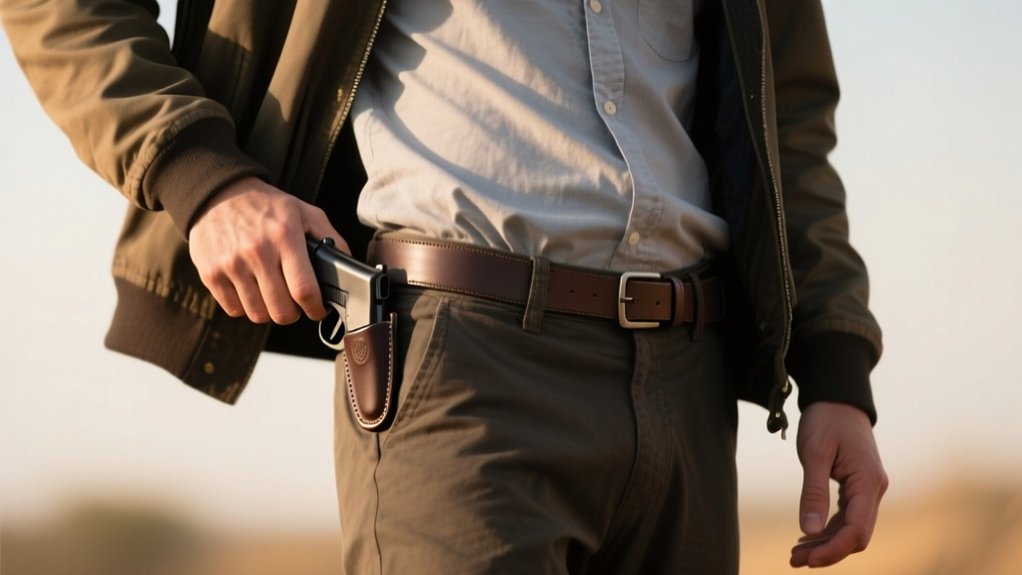
How to Conceal an OWB Holster Using Essential Techniques and Setup
To conceal an OWB holster effectively, you’ll want to pick a slim, well-fitted holster designed for your firearm and pair it with a sturdy gun belt to keep it stable. Position the holster with a slight forward cant and high ride to reduce printing.
Choose loose, longer clothing or layer shirts and jackets for added coverage. Practice your draw technique regularly while adjusting holster settings for comfort and quick access.
Investigate additional tips to optimize your concealment and performance.
Understanding Outside-the-Waistband (OWB) Holsters
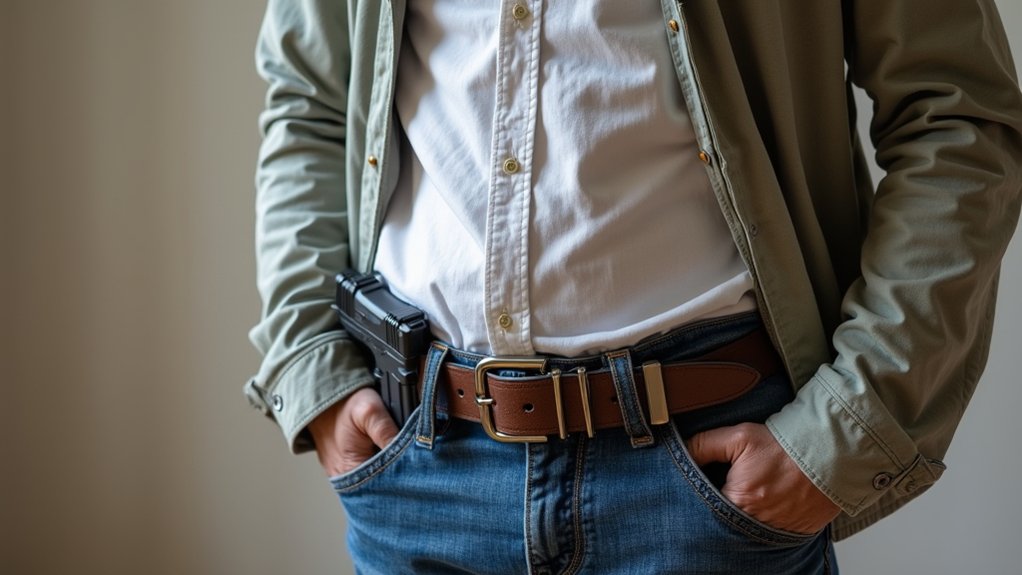
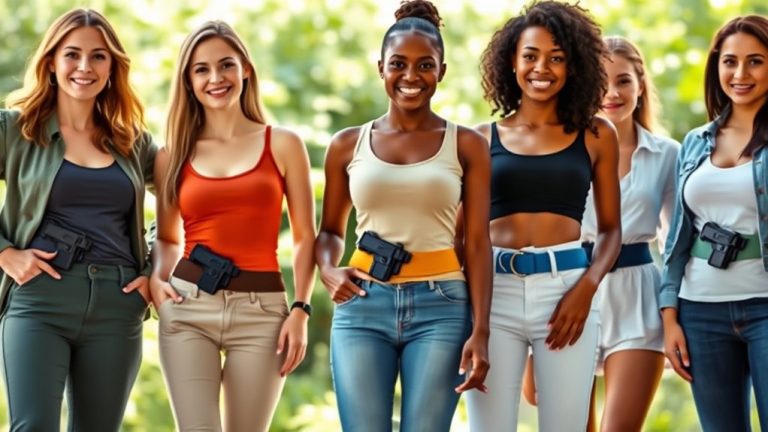
Although OWB holsters sit outside your waistband, they offer quick access and comfort, especially for larger pistols. An outside the waistband holster positions your firearm externally, enhancing draw speed compared to inside-the-waistband options.
OWB holsters provide quick access and comfort, ideal for larger pistols worn outside the waistband.
To maintain effective concealment with an OWB holster, your clothing choices are vital. Layering and wearing looser fits help mask the firearm’s outline.
Attachment methods, such as belt slide or paddle, affect how securely the holster stays in place and how easily you can remove it. Retention features are similarly significant; they prevent accidental loss while ensuring a smooth draw.
Understanding these factors helps you balance accessibility and concealment, allowing you to carry confidently with an OWB holster tailored to your practical needs. For those considering even greater concealment, it’s important to understand the impact on printing under clothing and how different holster accessories can minimize visibility.
Selecting the Right OWB Holster for Concealed Carry
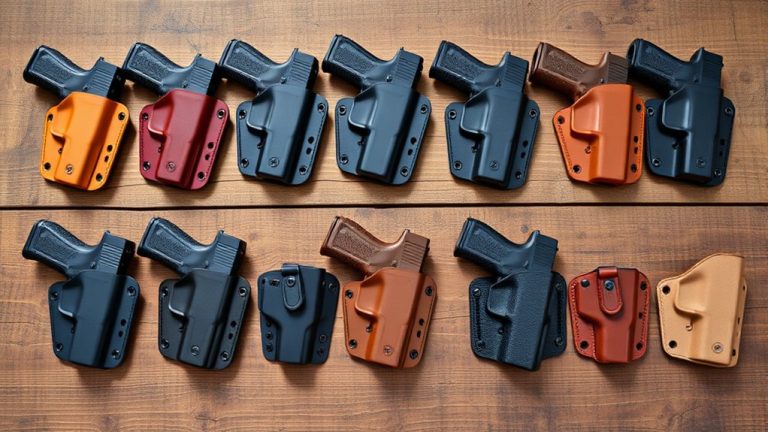
When you’re picking out an OWB holster for concealed carry, think about materials like leather or Kydex.
These offer a good balance between durability and comfort.
Also, keep an eye on design features such as adjustable retention, ride height, and cant.
These let you customize how the holster fits your body and works with your clothing.
At the end of the day, the right holster should feel comfortable and keep your firearm well concealed, but still easy to access when you need it.
For the best results, make sure to choose a holster designed for your specific make and model of firearm to ensure a secure fit and reliable retention.
Material Choices Impact
Many factors influence your choice of OWB holster material, but prioritizing comfort, durability, and concealment is key.
Material choices impact how well your OWB holster performs in concealed carry.
Kydex holsters offer a precise fit and moisture resistance, maintaining shape and adjustable retention for secure, discreet carry.
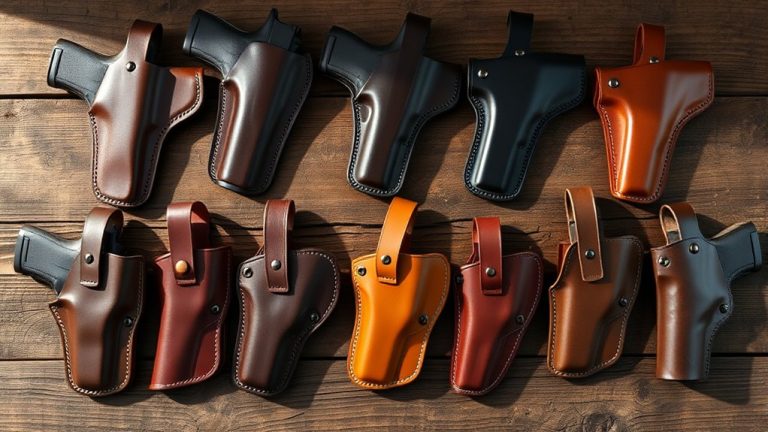
Leather OWB holsters conform closely to your body over time, enhancing comfort but needing upkeep to avoid moisture issues.
Hybrid holsters blend leather’s comfort with Kydex’s durability, improving both concealment effectiveness and accessibility.
Selecting a slimmer design that sits close to your body reduces printing, a critical aspect of concealment.
Additionally, adjustable retention is a crucial feature to look for in OWB holsters, as it ensures your firearm is both secure and easily accessible when needed.
Holster Design Features
Choosing the right OWB holster design plays a crucial role in achieving effective concealment. Focus on holster design features that improve concealability, such as a slim profile and minimal bulk to reduce printing.
Investigate different types of OWB holsters, like paddle, pancake, or belt slide. Each offers distinct advantages in comfort and accessibility. Prioritize adjustable ride height and cant settings to position your firearm close to your body, enhancing concealment without sacrificing ease of draw.
Use high-quality materials like Kydex for durability and a precise fit or leather for comfort and style. Incorporate retention devices such as thumb breaks or retention screws to secure your firearm firmly, yet still allow a quick and smooth draw when needed.
These elements guarantee your OWB holster balances security with efficient concealed carry. When selecting your holster, ensure it’s compatible with a sturdy gun belt to maintain stability and prevent shifting during movement.
Comfort Versus Concealment
Balancing comfort and concealment shapes how effective your OWB holster will be for daily carry. Prioritize a holster that offers secure retention while maintaining comfort.
Materials like Kydex provide a slim profile, and leather offers traditional craftsmanship.
Adjusting ride height and forward cant can dramatically reduce printing, enhancing concealment without sacrificing comfort. Choose a holster style—paddle, pancake, or belt slide—that fits your body and draw preferences.
A quality gun belt is essential; it prevents sagging and keeps your holster stable, ensuring consistent concealment.
Finally, pair your setup with loose-fitting garments or layers to mask the holster’s outline effectively. When selecting an OWB holster, considering the retention level can further increase both security and comfort for concealed carry.
Clothing Choices to Optimize OWB Concealment
When you wear loose-fitting clothing, you minimize printing and make it much harder for others to spot your OWB holster. Your clothing choices directly impact concealment effectiveness.
Opt for longer shirts that extend past the waistband to cover the holster, especially when combined with darker colors that help disguise the firearm’s outline. A high ride height and forward cant on your holster position the grip closer to your body, reducing printing.
While layering clothing is effective, avoid bulk that restricts access. Prioritize garments that drape naturally over your holster without clinging.
Layering Techniques for Effective Holster Coverage
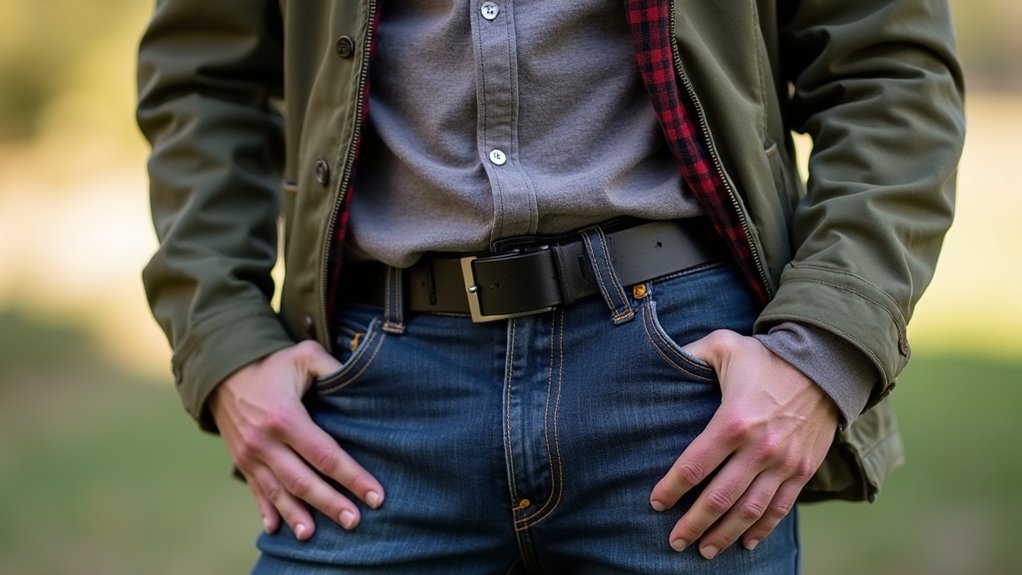
Layering your clothing provides a reliable way to mask an OWB holster without sacrificing quick access. Start by choosing loose-fitting garments that won’t cling to your firearm, ensuring effective concealment.
Incorporate light jackets, cardigans, or vests as a cover garment to obscure the holster’s outline and prevent printing. Selecting high-ride holsters positions the firearm closer to your body, making it easier to conceal under layers.
In warmer weather, lightweight button-up shirts offer airflow while maintaining concealment. Experimenting with layering clothing is important—you need to find the ideal balance between comfort, accessibility, and coverage.
Positioning Your OWB Holster for Minimal Printing
Position your OWB holster between the 4 and 5 o’clock positions. This helps it better conform to your body and reduces printing.
Also, choose clothing that’s loose or layered. That way, you can effectively conceal the firearm’s outline.
Optimal Carry Positions
Although finding the ideal spot for your OWB holster depends on several factors, placing it between the 4 and 5 o’clock positions usually offers the best balance between concealment and quick access for right-handed shooters.
To improve your carry position, consider these key points:
- Use a forward cant to angle the holster, bringing the grip closer to your body and reducing printing.
- Adjust ride heights; higher positions improve concealment but may slightly slow draw speed, so find your sweet spot.
- Secure your holster on a sturdy gun belt to prevent sagging and shifting, ensuring consistent positioning and comfort.
Mastering these ideal carry positions boosts concealment while maintaining rapid draw capability with your OWB holster.
Clothing Choices Impact
Clothing choices play an essential role in minimizing printing when carrying an OWB holster. Start by selecting clothing that’s one size larger to provide extra room for your setup without sacrificing comfort.
Layering clothing, like a loose button-up shirt over your holster, effectively obscures the firearm, enhancing concealment even in warmer weather. Opt for garments with patterns or textures to distract the eye and mask the outline of your gear.
Position your holster with a high ride height and a forward cant to bring the grip closer to your body, reducing printing.
Finally, invest in a quality gun belt to keep your holster secure and prevent sagging or shifting during movement.
These clothing choices guarantee reliable concealment and confidence throughout your day. If you ever consider other holster types, shoulder holster adjustments can also improve both comfort and concealment based on your chosen carry method.
The Role of a Quality Gun Belt in OWB Carry
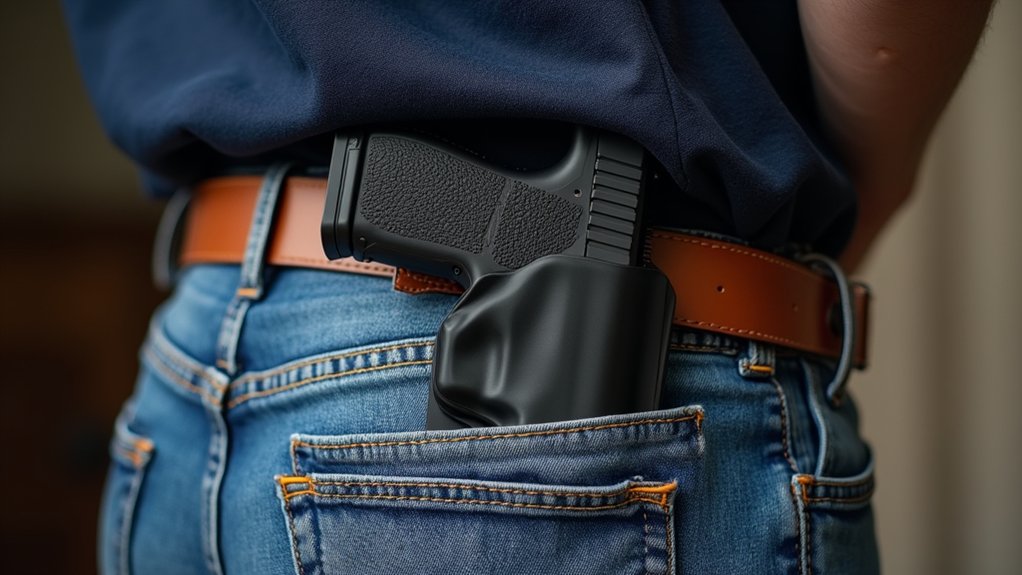
When you carry an OWB holster, a quality gun belt plays an essential role in maintaining stability and comfort. A sturdy gun belt supports the weight of your firearm and holster, preventing sagging that can ruin concealment and your OWB carry setup.
A properly fitted gun belt keeps your weapon in place, allowing for a quick draw without fumbling. Here are three key benefits:
A well-fitted gun belt ensures your weapon stays secure for a smooth, quick draw every time.
- Enhanced comfortable carry. The belt’s stiffness reduces movement and discomfort.
- Improved concealment. Consistent positioning minimizes printing under clothing.
- Reliable drawing your weapon. A firm belt guarantees the holster doesn’t shift during your draw.
Investing in a quality gun belt with reinforced materials assures durability and peak performance for everyday carry.
Adjusting Holster Cant and Height for Comfort and Concealment
You’ll want to fine-tune your holster’s cant angle somewhere between 10 and 30 degrees. This helps keep the grip close to your body, which not only improves concealment but also makes for a smoother draw.
It’s all about finding that sweet spot that feels natural to you.
Next up, adjusting the ride height on your waistband can make a big difference. Raising it higher helps minimize printing by keeping your firearm tucked in more securely.
When you balance these settings just right, you’ll enjoy both comfort and effective concealment throughout your daily activities.
Optimal Cant Angles
Although adjusting the cant angle of your OWB holster might seem minor, it plays an essential role in balancing comfort, concealment, and draw speed.
Finding the best cant angles, typically between 10 to 30 degrees forward, can improve how naturally you draw your firearm while enhancing concealment under clothing.
Consider these key points:
- Align the cant with your carry position, commonly 4-5 o’clock, for smoother access and better concealment.
- Adjust the cant to reduce printing by angling the firearm closer to your body without sacrificing comfort.
- Pair your cant angle with appropriate height settings to keep the firearm accessible yet concealed.
Regularly experiment with these adjustments to maintain comfort and effectiveness as your carry style or clothing changes.
Ride Height Adjustments
Since ride height directly affects both comfort and concealment, adjusting your OWB holster’s position can make a significant difference in how discreetly you carry. Lower ride heights usually improve draw efficiency but may reduce concealment, especially with layered clothing.
Using an adjustable cant, tilt your holster forward to position the grip closer to your body, minimizing printing. Experiment with ride height adjustments to find a balance that suits your body type and wardrobe. Regular practice drawing from your adjusted setup will guarantee comfort and quick access without compromising concealment.
| Ride Height | Concealment Impact | Comfort Level |
|---|---|---|
| High | Best with layered clothing | Moderate |
| Medium | Balanced concealment | High |
| Low | May print easily | Best for draw efficiency |
Balance Comfort Concealment
When you adjust your holster’s cant between 15 and 30 degrees forward, you bring the firearm’s grip closer to your body. This reduces printing and improves concealment.
Balancing comfort and concealment in your OWB holster setup requires precise adjusting of cant and ride height. Focus on these techniques:
- Position the holster at the 4-5 o’clock spot to align the firearm behind your hip. This enhances comfort and concealment.
- Raise the ride height to keep the firearm above your waistband. This makes it easier to conceal under clothing while maintaining quick draw access.
- Choose a slim profile holster design to minimize bulk and printing, especially with tighter clothing.
Regularly reassess your holster setup to optimize comfort, concealment, and accessibility based on your daily needs.
Practicing Draw Techniques With an OWB Holster
Mastering your draw technique with an OWB holster requires consistent practice, especially with an empty firearm at home. Start by focusing on a firm, high grip with your dominant hand to guarantee control and accuracy when drawing your gun.
Use a natural reference point, like a clothing seam, to guide your non-dominant hand in achieving proper grip and utilization. Practice drawing with simultaneous hand movement to increase speed and efficiency. Your non-dominant hand should assist by applying friction while your dominant hand raises the weapon.
Guide your non-dominant hand using natural reference points and practice simultaneous movement for a faster, efficient draw.
Regularly rehearse these draw techniques while wearing different clothing layers to simulate concealed carry access challenges.
This consistent, focused practice will help you execute a smooth, reliable draw from your OWB holster under real-world conditions.
Seasonal Considerations for OWB Concealment
Practicing draw techniques with your OWB holster builds confidence, but concealing it effectively requires attention to seasonal clothing choices.
Seasonal changes impact OWB concealment, demanding adjustments in cover garments and layering techniques to keep your firearm discreet. Use these tips:
In warmer months, wear loose-fitting clothing and lightweight layers like button-ups or vests to prevent printing while maintaining comfort.
Cold weather naturally aids concealment; multiple layers obscure your holster and guarantee the firearm stays close to your body.
Always invest in quality gun belts to prevent sagging, guaranteeing your firearm stays in the correct position for effective concealment year-round.
Maintaining Your OWB Holster for Longevity and Performance
Consistent care plays an essential role in extending the life and reliability of your OWB holster.
Maintaining your OWB holster begins with regular cleaning to remove dirt and debris that can impair holster performance.
For leather models, apply a high-quality leather conditioner every few months to prevent cracking and material degradation.
If you use a Kydex holster, routinely check the retention system and adjust screws to keep your firearm secure.
Don’t overlook hardware clips and screws. Ensure they’re tight and use thread locker if needed to avoid loosening.
Finally, store your holster in a cool, dry place away from direct sunlight to preserve its shape and materials.
Regularly check for wear and pressure points to catch issues early and maintain optimal performance.
These straightforward steps will keep your holster dependable and effective for years to come.
Frequently Asked Question
Can OWB Holsters Be Used for Open Carry Legally?
Yes, you can legally use OWB holsters for open carry, but it depends on your state laws. Some states allow open carry without a permit, while others require specific licenses.
You need to check local regulations carefully to guarantee you’re compliant.
Remember, open carrying with an OWB holster means your firearm might be visible, so be aware of public display rules.
Always stay informed about any changes in firearm laws where you live.
How Do I Prevent Discomfort During Long OWB Carry Periods?
Don’t let discomfort steal the show during long OWB carry sessions. You’ll want to invest in a sturdy gun belt to keep your holster stable and prevent sagging.
Choose a hybrid holster that balances comfort and function. Experiment with the 4-5 o’clock position to ease pressure, and wear loose clothes to reduce friction.
Finally, practice drawing regularly to build muscle memory, minimizing awkward movements that cause irritation.
Are There Specific Holsters Recommended for Different Handgun Models?
Yes, you should choose holsters tailored to your handgun model for the best fit and function.
Kydex holsters offer precise retention for compact and full-size guns, while leather holsters provide comfort and mold well to larger firearms.
Hybrid holsters blend both materials, giving you durability and comfort.
Always match the holster style like paddle, pancake, or belt slide to your gun’s size and shape to guarantee accessibility and effective concealment.
How Does Body Type Affect OWB Holster Concealment Effectiveness?
Did you know over 60% of concealed carriers struggle with printing because of their body shape? Your body type directly impacts OWB holster concealment.
You’ll find it trickier if you carry more waist fat since the firearm prints more easily. Muscular builds often conceal better because clothes fit tighter around the torso.
You should experiment with holster position and clothing. Looser garments help hide outlines, and your height influences ideal ride height and cant adjustments.
What Are Common Mistakes When Transitioning From IWB to OWB Carry?
When moving from IWB to OWB carry, you often underestimate the need for looser clothing to prevent printing.
You might skip upgrading to a sturdy gun belt, which is essential for support and holster stability.
Also, you may neglect practicing your draw stroke, which differs from IWB.
Choosing a holster without proper retention and ignoring adjustments in cant and ride height are common mistakes that compromise comfort, security, and accessibility.
Conclusion
Concealing an OWB holster might seem challenging, but with the right setup, it becomes second nature. While OWB holsters offer quick access and comfort, they demand thoughtful positioning and clothing choices to stay discreet.
By mastering layering, adjusting cant, and practicing your draw, you balance visibility with readiness. Remember, the key isn’t just hiding your firearm; it’s carrying confidently without compromise, blending practicality with subtlety every time you step out.