
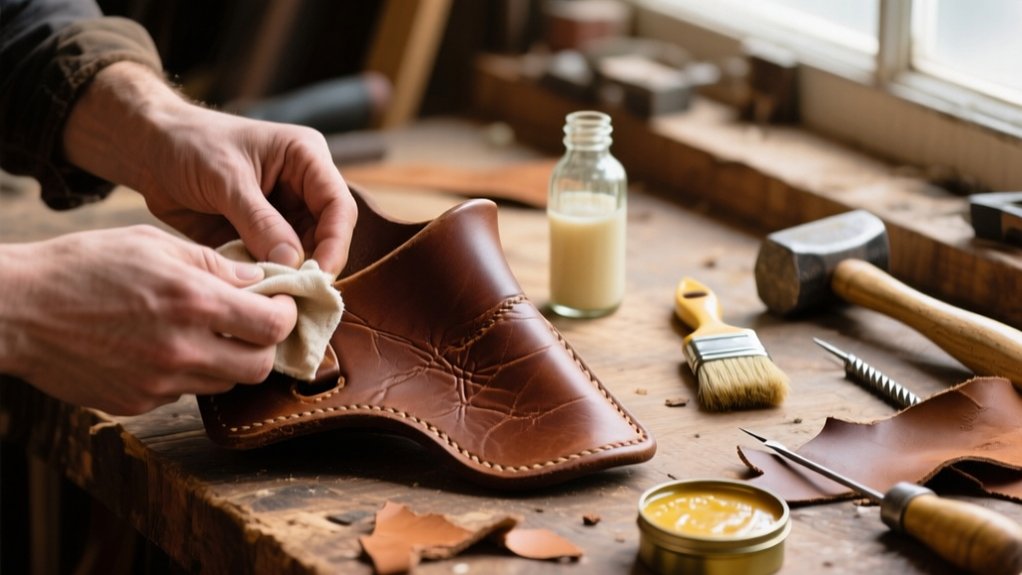
10 Simple Steps to Soften a Leather Holster Safely
To safely soften your leather holster, start with a custom-fit full-grain or top-grain leather piece and guarantee your firearm is unloaded. Wear the holster daily to use body heat for gentle stretching.
Insert the gun wrapped in wax paper for 24-48 hours to smooth and shape. Try a hot water-soaked sock wrapped around the gun inside the holster for deeper softening without damage. Avoid over-soaking, then condition the leather with neatsfoot oil regularly.
This method carefully balances comfort and durability while maintaining your holster’s integrity, and there are more tips to optimize fit and care.
Choose the Right Leather Holster
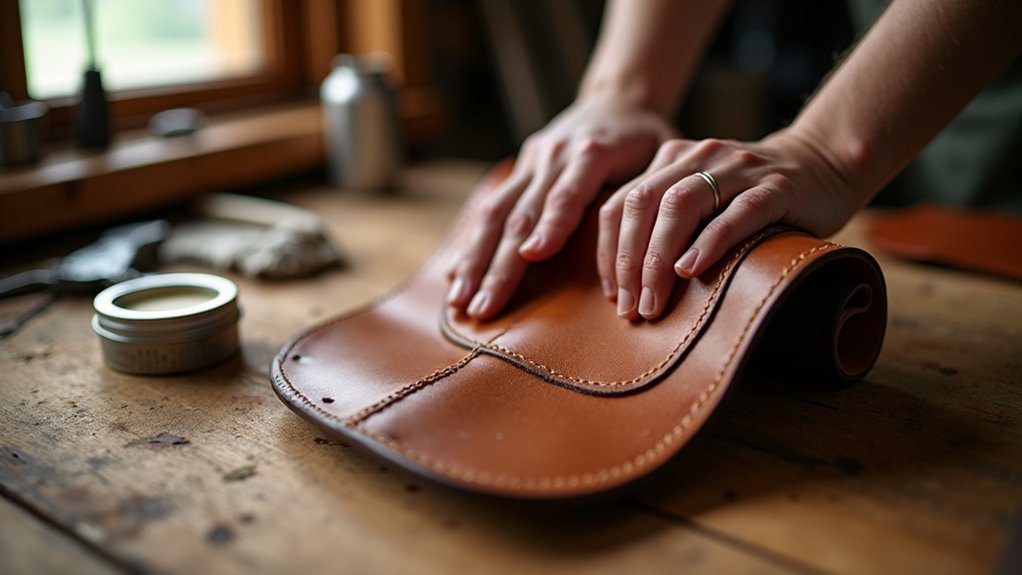
How do you guarantee your leather holster lasts while providing a comfortable, secure fit? Start by choosing full-grain leather, renowned for its durability, excellent retention, and ability to age gracefully.
Choose full-grain leather for a durable, secure holster that improves with age.
If you want a balanced option, top-grain leather offers strength and flexibility. It’s ideal for holsters that need to flex without compromising durability.
Suede, while softer and comfortable against the skin, sacrifices some longevity, so select it only if comfort outweighs wear concerns.
Similarly significant is ensuring your leather holster offers a custom fit tailored to your firearm model. This snug fit improves safety and accessibility.
Finally, opt for holsters with smooth or lined interiors from reputable makers to boost comfort and ease of draw, ensuring a holster that’s both reliable and user-friendly.
Prepare Your Firearm and Holster
Before you begin softening your leather holster, take five essential preparatory steps to guarantee safety and effectiveness.
First, thoroughly prepare by ensuring your firearm is completely unloaded and free of any ammunition. This step is vital for safety.
Next, consider using a plastic airsoft pistol or similar replica to shape the holster without risking damage to your actual firearm.
Inspect the holster carefully for rough edges or areas needing attention; this prevents unnecessary wear during softening.
Clean the holster with a damp cloth to remove dust and debris that could interfere with the process.
Finally, choose a well-ventilated area to work in, allowing the leather to breathe and preventing moisture buildup or mildew growth.
These steps prepare you and your holster for the softening process safely.
Use Body Heat to Gradually Soften
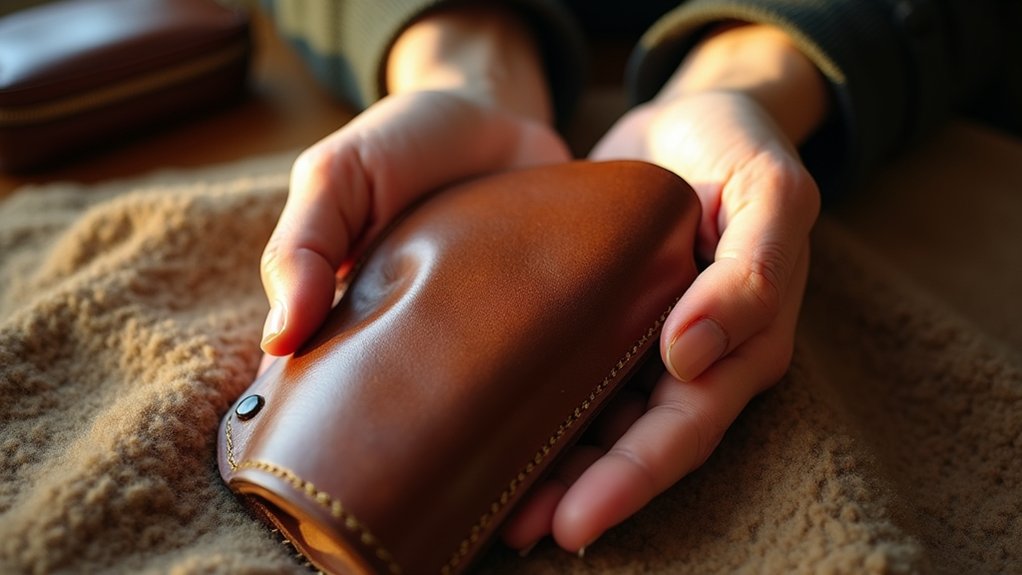
Wear your holster daily with the unloaded firearm inside. This lets your body heat gently soften and stretch the leather.
Over time, the holster will start to mold to your shape and the firearm’s contours without losing its structure.
If you keep this up for about a week, you’ll notice a comfortable fit that still holds the firearm securely.
It’s a simple, gradual process that really pays off.
Wearing Holster Daily
Why does daily use make such a difference when breaking in a leather holster?
Wearing your holster daily with the firearm inside uses your body heat to gradually soften the leather. This process lets the holster mold perfectly to your gun and body shape over about a week, ensuring a safe break-in.
To maximize this effect, focus on these steps:
- Wear the holster consistently during your normal activities to apply steady warmth and movement.
- Allow the leather to flex naturally, which reduces stiffness without losing structural integrity.
- Use daily wear to encourage natural shaping, enhancing comfort, retention, and accessibility.
Regular wear also helps prevent over-stretching during the process by allowing you to check the fit as the leather gradually adapts.
Gradual Leather Stretch
Although leather starts out stiff, you can gradually soften your holster by wearing it with the firearm inside. Let your body heat work over time to mold the leather precisely to your gun and shape.
This gradual leather stretch method allows the material to conform naturally, reducing the risk of overstretching or losing shape.
Expect this break-in process to take up to a week for ideal results. Regularly check the holster’s fit during wear to verify it remains secure and functional.
To improve the softening and stretching effect while preserving structural integrity, combine wearing with occasional conditioning.
This approach guarantees your holster becomes flexible and comfortable while maintaining durability. It gives you a perfectly molded fit without harsh treatments or damage.
As you break in your leather holster, it’s important to regularly assess positioning for both comfort and concealment, just as you would when fine-tuning your IWB holster setup.
Apply Wax Paper for Improved Fit
If you want to get a better fit for your holster, try wrapping your firearm in wax paper first.
Make sure the waxy side is facing out before you slide it into the holster. Then, just leave it inside for about 24 to 48 hours.
During that time, the wax helps smooth out the leather on the inside and reduces friction.
It’s a pretty simple trick that gently stretches the leather, so over time, your holster will fit your firearm more precisely and offer better protection.
Wax Paper Benefits
A simple yet effective technique for improving your leather holster’s fit involves using wax paper. This method helps soften the leather without risking damage or distortion.
By wrapping your firearm in wax paper with the waxy side out before inserting it into the holster, you allow the leather to stretch and conform precisely to your gun’s shape.
Here are key benefits of using wax paper:
- Softens the leather gently, enhancing flexibility and comfort.
- Reduces friction between the firearm and holster interior, minimizing wear on both.
- Provides a safe, moisture-free alternative to oils or other treatments.
Using wax paper is a straightforward, practical way to achieve a custom, improved fit while preserving your holster’s durability and appearance.
Application Techniques
When you want to improve the fit of your leather holster, start by wrapping your firearm in wax paper with the waxy side facing outward. This layer helps reduce friction and allows the leather to mold smoothly to your gun’s contours.
Insert the wrapped firearm into your custom holster and leave it for 24 to 48 hours. This technique softens the leather gradually without risking damage from moisture or oils.
Regularly check the fit to avoid overstretching. Once the desired shape forms, remove the wax paper and let the holster dry naturally to preserve its integrity.
| Emotion | Experience |
|---|---|
| Satisfaction | Perfect custom fit |
| Confidence | Secure firearm hold |
| Relief | No leather damage |
| Anticipation | Ready for use |
Fit Improvement Timeline
Improving the fit of your leather holster with the wax paper method follows a clear timeline that typically spans 24 to 48 hours. This fit improvement timeline complements the natural break in period, gently stretching and smoothing the leather without damaging retention.
Here’s how to proceed: Wrap your firearm in wax paper, making certain the waxy side faces out, then insert it into the holster. Leave the setup undisturbed for 24 to 48 hours, allowing the wax to soften the leather and improve flexibility.
Periodically check the fit to prevent overstretching and confirm the holster maintains its intended shape.
Following this timeline guarantees a snug, comfortable fit while preserving the holster’s durability and function during its break in period.
Try the Hot Water-Soaked Sock Method
Soak a clean sock in hot water, just hot enough to avoid damaging the leather, and wrap it snugly around your firearm before sliding it into the holster.
Using hot water softens the leather gently, encouraging it to stretch and mold to your gun’s contours without risking warping.
Make sure the sock is damp, not soaking wet, to prevent excess moisture damage.
Leave the firearm wrapped in the sock inside the holster for several hours or overnight, allowing the leather to adapt gradually.
Afterward, remove the sock and firearm, and let the holster air dry completely.
This method provides a controlled way to soften the leather, especially for tight-fitting holsters, ensuring improved comfort and fit without compromising the leather’s integrity or durability.
Work the Leather With Gentle Hand Pressure
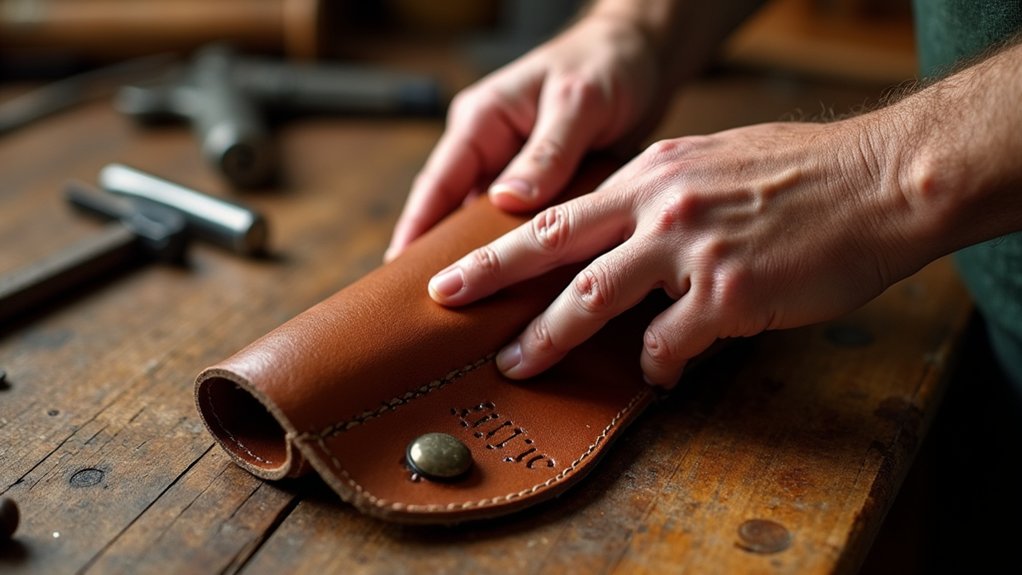
Apply gentle, consistent pressure with your hands to the leather holster, focusing on areas that feel stiff or tight. This technique helps break down stiffness and gradually softens the material without risking damage.
To effectively work the leather and soften it:
- Concentrate on the holster’s contact points where your firearm rests to improve fit and retention.
- Use slow, firm hand movements to massage the leather, smoothing rough spots and enhancing flexibility.
- Repeat this process regularly to promote even softening and preserve the holster’s structural integrity.
Avoid Over-Soaking to Prevent Damage
While working the leather holster with gentle pressure helps break in stiffness, you should be careful not to overdo moisture exposure.
Avoid soaking the holster too long, as excessive moisture can damage the leather, causing warping, mildew, and rot.
Instead of fully submerging it, use a damp cloth or lightly mist the surface to control hydration.
Use a damp cloth or light mist to gently hydrate without fully submerging the leather.
If you choose to soak, opt for cold water, since hot water may harden and damage the leather fibers.
Keep a close eye on the holster during this process, checking frequently for any signs of distortion or over-saturation.
Remember, your goal is to gently soften the leather, not saturate it.
Usually just a few minutes of soaking is enough to achieve the desired flexibility without risking damage.
Condition the Leather With Appropriate Products
You’ll want to pick conditioners like neatsfoot or mink oil because they deeply moisturize without messing up the leather’s structure.
Just apply a thin, even layer—don’t go overboard or you might lose the shape and flexibility.
It’s a good idea to test the product on a hidden spot first, just to be safe.
And remember, reconditioning your holster every few months helps keep it from drying out and cracking.
Choosing Suitable Conditioners
How do you guarantee your leather holster stays supple without compromising its durability? Choosing the right conditioner is essential. Opt for products that nourish and soften while preserving structure. Here’s what to take into account:
- Use neatsfoot oil or mink oil for effective leather conditioning. They penetrate deeply, restoring flexibility without weakening the holster.
- Avoid saddle soap on lighter leathers to prevent discoloration and long-term damage.
- Think about specialized conditioners like Lexol, formulated to maintain leather integrity and provide balanced moisture.
These conditioners guarantee your holster remains both pliable and durable. Steer clear of over-saturating, which can distort shape.
Selecting suitable conditioning products sets the foundation for safe, effective softening, extending your holster’s life and performance.
Application Techniques
After selecting the right conditioner, focus on applying it correctly to preserve your holster’s shape and functionality. Use leather conditioners like neatsfoot or mink oil sparingly, applying a light, even coat with a soft cloth.
Avoid over-saturating; excessive oil attracts dirt and weakens the leather over time.
Consider specialized products like “Hot Glove” for quick, effective softening without compromising retention. Steer clear of saddle soap on lighter leathers to prevent discoloration.
Once conditioned, protect your holster with a thin layer of wax, such as Johnson’s Paste Wax, to shield it from moisture.
Frequency and Cautions
Regularly conditioning your leather holster with appropriate products guarantees it remains supple and durable without losing its shape.
To effectively soften leather while preserving its integrity, follow these guidelines:
- Use leather conditioners like neatsfoot oil or lanolin sparingly. Focus on high-friction areas to improve flexibility without over-softening.
- Avoid soaking the holster in water. Excessive moisture can cause warping or mildew, reducing longevity.
- Inspect the holster frequently for signs of wear. Apply conditioners only as needed to maintain ideal retention and structure.
Regularly Check Fit and Retention
Since softening leather can alter its shape and firmness, you should frequently check your holster’s fit to confirm your firearm remains securely held and easily accessible.
After each softening session, test how well the holster retains your firearm; retention is critical for safety and quick draw.
Watch for signs of excessive stretching or loosening that could compromise the fit, especially during the break-in period when leather responds to conditioning and shaping.
Make adjustments gradually, and reassess the fit every time to avoid over-stretching, which weakens retention.
Regularly monitoring these factors guarantees the holster maintains peak performance, balancing a snug fit with reliable retention, so your firearm stays secure without sacrificing accessibility.
This careful approach protects both your equipment and your readiness.
Maintain the Holster for Long-Term Use
Maintaining your leather holster properly involves a combination of cleaning, conditioning, and careful storage to preserve its durability and function.
To maintain your holster for long-term use, follow these key steps:
- Clean the leather regularly with a damp cloth to remove dirt and prevent buildup that can degrade the material.
- Condition the holster periodically using quality products like neatsfoot oil or Lexol to keep the leather supple and prevent cracking.
- Store the holster in a cool, dry place with a dummy gun inside to maintain its shape.
Avoid exposure to excessive moisture or humidity because that causes mold and distortion.
Frequently Asked Question
Can I Use Leather Softener Sprays on My Holster?
Yes, you can use leather softener sprays on your holster, but you need to follow proper softener application techniques.
Choose products made specifically for leather and apply sparingly to avoid over-saturating.
Conduct a patch test first to prevent damage.
Incorporate leather maintenance tips by conditioning regularly rather than relying solely on softeners.
This approach preserves your holster’s shape and functionality while safely softening the leather without compromising its integrity.
How Long Does It Take for a Holster to Soften Naturally?
It typically takes anywhere from a few weeks up to several months for your holster to soften naturally due to natural leather aging.
Leather flexibility factors like thickness, type of leather, humidity, and frequency of use influence this timeline.
Full-grain leather holsters usually take longer to break in compared to top-grain or suede.
Regularly wearing and conditioning your holster helps speed up the softening process, ensuring it molds comfortably to your firearm and body.
Is It Safe to Use Heat Guns to Soften Leather?
Using heat guns to soften leather carries significant heat application risks, so you should avoid direct, intense heat to prevent hardening or warping.
Instead, opt for alternative methods like using a hairdryer on low or placing the holster near a warm spot.
Always heat gradually, checking frequently, and test a small area first.
These safer approaches help you soften leather effectively without damaging its integrity or compromising your holster’s durability.
Will Softening Affect the Holster’s Durability?
Yes, softening can raise durability concerns if done improperly.
When you over-soften leather, you risk compromising its structural integrity, which directly impacts leather longevity.
Excessive oils or heat may cause the holster to lose shape and retention, reducing its usefulness.
To maintain durability, you should soften the holster gradually through regular use and careful conditioning, avoiding harsh treatments that can weaken the leather over time.
Can I Soften a Holster Without a Firearm Inside?
Yes, you can soften a holster without a firearm inside, and it’s actually safer for holster maintenance tips.
You might worry the leather won’t break in properly, but using leather care techniques like applying conditioner, saddle soap, or gently heating and massaging the leather will help maintain flexibility without risking damage.
Regularly working the empty holster by hand also gradually softens it, ensuring it molds comfortably when you eventually insert your firearm.
Conclusion
Now that you’ve mastered these steps, remember: the real secret lies in patience. Rushing can ruin your leather holster, but gentle, consistent care molds it perfectly to your firearm.
Each time you wear it, your holster softens more, tailoring itself distinctively to you. So don’t rush the process. Welcome the gradual transformation, and soon enough, you’ll have a holster that fits like it was made just for you because, in a way, it was.


