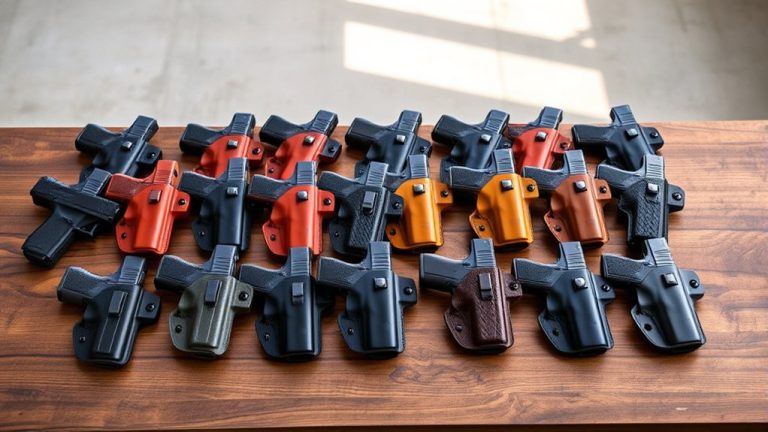
How to Wear Iwb Holster With Claw?
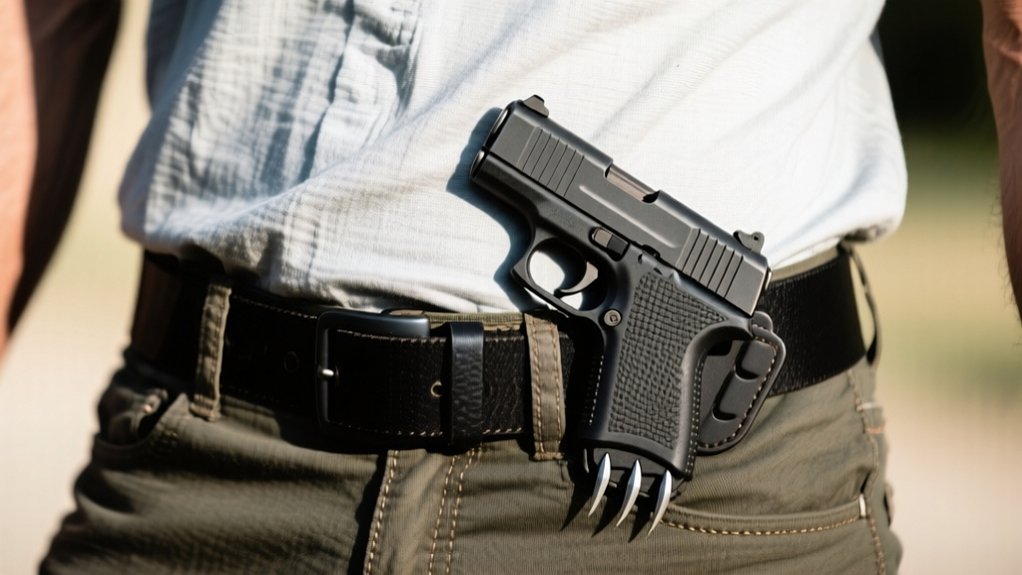
To wear an IWB holster with a claw, first secure a sturdy gun belt and position the holster inside your waistband at your preferred carry spot. Adjust the claw so it presses firmly against your belt and torso, reducing printing by leveraging your body’s curve.
Set your ride height and cant for both comfort and concealment, tighten your belt just enough to keep everything stable, then insert your unloaded firearm securely. You’ll find more tips to optimize comfort and concealment as you refine your setup.
Understanding the Purpose of a Holster Claw
Although many people focus on the holster itself, you shouldn’t overlook the holster claw, a small but essential attachment that keeps your firearm close to your body.
The claw presses against your belt by leveraging your body’s natural curve, pushing the grip of your gun inward to reduce printing when you carry concealed.
Mounted under the trigger guard, you can adjust the claw for various positions like appendix or strong-side hip carry, tailoring it to your comfort and concealment needs.
Made from durable composite polymers, it resists bending or breaking even during daily use.
Besides enhancing concealment, the claw redistributes your firearm’s weight, making your carry more comfortable and secure throughout the day.
Selecting the Right Holster for Your Firearm
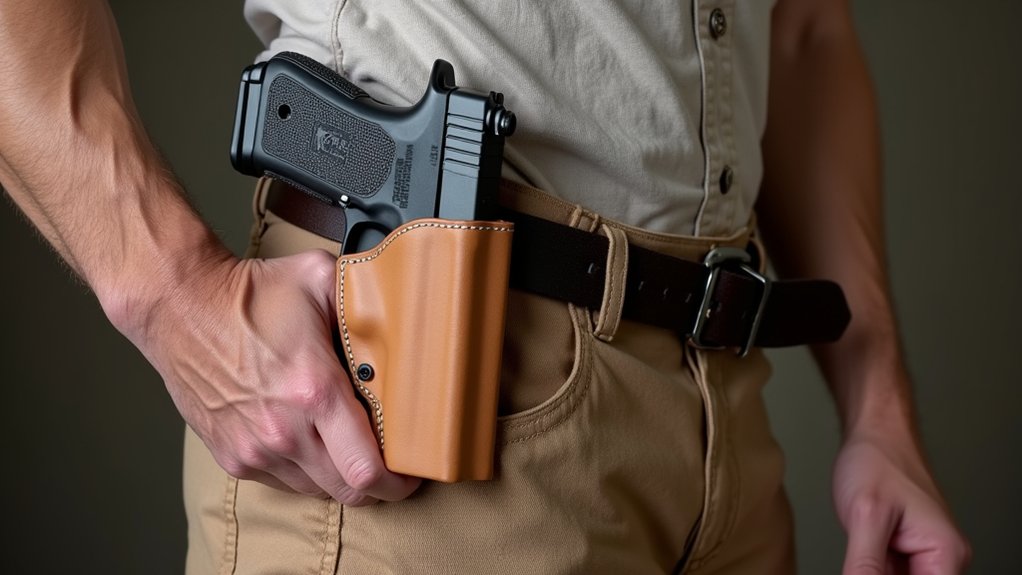
When choosing the right IWB holster for your firearm, you’ll want to think about several key factors that affect both comfort and concealment. Consider the material, retention method, and coverage from grip to muzzle to guarantee safety without sacrificing quick access. An adjustable claw helps tailor concealment to your body type. Test various holsters and positions to find your perfect fit that balances durability, comfort, and lifestyle needs.
| Factor | What to Look For | How It Feels |
|---|---|---|
| Material | Leather, KYDEX, Hybrid | Durable yet comfortable |
| Coverage | Grip to muzzle protection | Secure, no pressure points |
| Retention | Secure but quick draw | Confident, natural movement |
| Claw Adjustment | Fits body shape | Concealed, comfortable |
Preparing Your Belt and Waistline for Holster Placement
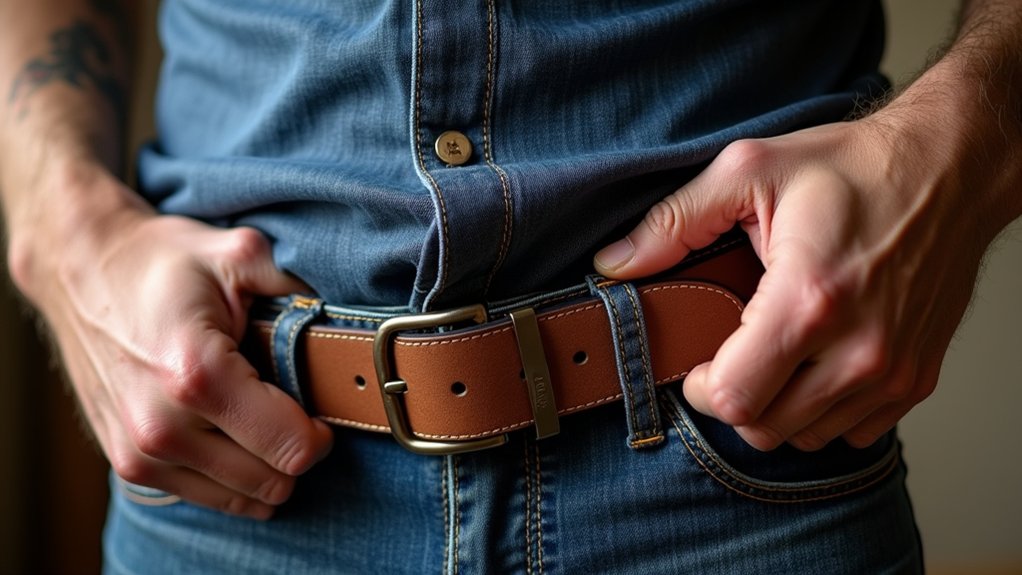
To guarantee your IWB holster sits securely and comfortably, start by choosing a sturdy gun belt that can handle the pressure from the holster claw. The claw relies on belt support to reduce printing effectively.
Next, make sure your waistline is free from excess clothing or tightness; a smooth, stable surface guarantees better holster attachment. Loosen your belt and waistband enough to place the holster inside your pants without discomfort or obstruction.
Once the holster is in place, align the claw properly against your body to push the grip back for improved concealment.
Finally, tighten your belt to keep the holster and claw firmly positioned, while still allowing comfortable movement throughout your day.
Positioning the Holster on Your Waist
Finding the right spot for your IWB holster is essential for both comfort and concealment. Position it between the 11 and 1 o’clock positions, either centered or slightly toward your strong-hand side.
This placement helps keep the grip concealed and accessible. Use a slight rearward cant of 15-20 degrees to improve draw speed while maintaining concealment.
Confirm to test the fit with your covering garment, like an untucked shirt or jacket, which helps stabilize the holster and reduces printing.
Keep in mind your torso length and body shape when positioning the holster, so it doesn’t dig into your body during extended wear.
Regularly reassess the holster’s position as your clothing or activity changes to confirm ongoing comfort and effective concealment.
Adjusting Ride Height for Comfort and Concealment
Finding the right ride height on your IWB holster is key to balancing comfort with effective concealment.
You’ll want to experiment with different positions to see what feels natural and keeps your grip hidden without causing discomfort.
Remember, small adjustments can make a big difference in how easy it’s to access your firearm and how well it stays concealed throughout the day.
Finding Ideal Ride Height
How high should your IWB holster sit for the best blend of comfort and concealment? Start by positioning the grip slightly above your waistband. This helps reduce printing while keeping your draw smooth and natural.
Since everyone’s body shape and torso length differ, you’ll need to experiment with different ride heights. Adjust your holster clips or loops to fine-tune the position until you find what feels comfortable and stays concealed during daily movement like sitting or bending.
Pay attention to any pressure points that might cause discomfort.
Remember to reassess your ride height regularly, especially when changing clothing or activity levels, to maintain ideal concealment and comfort.
Finding your ideal ride height takes some trial and error but greatly improves your everyday carry experience.
Balancing Comfort and Concealment
Though adjusting your IWB holster’s ride height might seem minor, it plays an essential role in balancing comfort and concealment throughout your day.
You’ll want to find that sweet spot where your grip stays hidden without causing discomfort. Here’s how to approach it:
- Start higher for better concealment, especially when moving or wearing lighter clothing.
- Lower the ride for more comfort during extended sitting or when wearing bulkier clothes.
- Experiment with different heights to guarantee a quick, natural draw without printing.
- Reassess often. Changes in your body, wardrobe, or activities can shift the ideal position.
Setting the Cant and Angle for Optimal Access
Since your comfort and quick access depend heavily on the holster’s cant, you should set the angle to a slight rearward rake, usually between 15 and 20 degrees. This rearward tilt improves concealment and promotes a natural draw stroke.
Adjust your belt clips or loops to experiment with different cant angles until you find the most comfortable fit for your body type and carry style.
Practice drawing regularly to guarantee the grip remains easily accessible while minimizing printing, especially when seated or moving.
If you carry appendix style, try a more pronounced cant to push the grip closer to your body for better concealment without slowing your draw.
Remember to reassess and tweak the cant as your clothing or activity changes to maintain ideal access and comfort.
Installing and Positioning the Holster Claw
When you install the holster claw, position it behind the holster at any attachment point or belt clip. Its inward-curved hooks can press firmly against your pants or belt. This secure placement maximizes support and reduces printing.
Follow these steps for effective installation:
- Mount the claw under the trigger guard to guarantee proper function.
- Angle the claw inward between 15-20 degrees to grip fabric tightly.
- Adjust its vertical position to suit your body type and avoid pressure points.
- Regularly check and reposition the claw based on clothing changes or activity.
Fine-Tuning Claw Angle and Depth for Maximum Effectiveness
To maximize your holster claw’s effectiveness, you’ll want to fine-tune both its angle and depth carefully.
Start by adjusting the claw angle inward between 15-20 degrees. This creates support against your belt or pants, pushing the grip closer to your body for better concealment.
Next, fine-tune the claw’s vertical position so it presses firmly against your belt without causing discomfort.
Experiment with its depth by moving it closer or further from the holster to balance concealment and quick access depending on your body type and clothing.
Regularly check and readjust these settings as your clothes or activity level change.
Always verify the claw is securely mounted and avoid sharp pressure points to maintain comfort during extended wear.
Securing the Holster Clips to Your Belt
Begin by loosening your belt and waistband to give yourself enough room to position the holster comfortably.
Next, follow these steps to secure the holster clips to your belt:
- Position the holster inside your waistband at your preferred carry spot, aligning the clips with your belt.
- Firmly press each clip over the belt, making sure they fully seat to lock the holster in place.
- Verify the holster feels stable and doesn’t shift as you move.
- Keep checking the holster’s stability throughout the day to prevent it from loosening.
Securing the clips properly verifies your holster stays firmly attached, providing both comfort and reliability while carrying.
Re-adjusting Your Belt and Waist for a Snug Fit
Although you’ve secured your holster clips, you’ll need to re-adjust your belt and waistband to guarantee a snug fit that supports comfort and mobility throughout your day.
Start by loosening your belt and waistband to position the IWB holster easily without creating pressure points.
Once the holster is in your preferred spot, tighten the belt just enough to keep it stable but not so much that it restricts movement or causes discomfort when sitting or bending.
Make certain your pants and belt feel secure but flexible.
Regularly check the belt tension, especially if your clothing or activity level changes, to maintain comfort and stability.
This careful adjustment guarantees your holster stays in place and feels natural during all your daily activities.
Inserting and Seating Your Firearm in the Holster
Before you insert your firearm, make sure it’s completely unloaded for safety. You don’t want any surprises!
Then, angle the gun just a bit to line it up with the holster’s opening. Once you have it positioned, push it in firmly until you hear that satisfying click. That sound means your gun is properly aligned and securely locked into place.
Proper Firearm Alignment
A key step to proper firearm alignment is inserting your gun into the holster at a slight angle, with the muzzle pointing down and the grip angled toward your body.
To guarantee your firearm sits correctly:
- Insert the firearm gently until you hear or feel a click, confirming it’s fully seated.
- Verify the trigger guard is completely covered to avoid accidental discharges.
- Adjust the holster’s ride height and cant for comfort and a smooth draw.
- Regularly check for any shifting or misalignment during wear.
Following these steps helps your firearm stay secure, accessible, and comfortable throughout the day.
Proper alignment also improves safety and quickness when you need to draw.
Secure Holster Engagement
Two essential steps guarantee your firearm stays secure in your IWB holster: positioning the holster firmly in your waistband with the claw properly adjusted, then inserting the gun muzzle-first until it’s fully seated without any obstruction.
Before insertion, confirm the claw utilizes against your belt to improve grip and concealment.
As you slide the firearm in, verify the trigger guard is fully covered to prevent accidental discharges.
Once seated, give the gun a gentle tug to verify it’s locked in place and won’t shift during movement.
Practicing this process regularly helps you develop smooth, confident handling and quick access when needed.
Mastering secure holster engagement is key to both safety and reliability with your IWB setup.
Testing Concealment and Comfort During Movement
When you test concealment and comfort during movement, position your IWB holster with the claw carefully to reduce printing.
Adjust ride height and cant according to your body type and clothing. Next, evaluate how well the setup holds during everyday motions.
Follow these steps:
- Bend, sit, and perform simulated draws to check for grip stability and comfort.
- Wear a covering garment like an untucked shirt or jacket to keep the holster steady and conceal outlines.
- Regularly assess for pressure points or discomfort from prolonged wear and adjust accordingly.
- Monitor retention and verify no trigger or muzzle exposure for safety and concealment.
This routine helps you maintain secure, comfortable carry without compromising concealment during your daily activities.
Common Carry Positions Compatible With a Holster Claw
You can use a holster claw effectively in several common carry positions like appendix, strong-side hip, and kidney carry.
It really comes down to adjusting the claw’s ride height and cant to customize comfort and concealment throughout the day.
By finding the right setup, you’ll notice your grip stays close to your body without sacrificing accessibility.
That balance is key for everyday carry.
Effective Carry Positions
Although choosing the right carry position depends on your body type and lifestyle, the holster claw works well in several common spots like appendix carry (12-1 o’clock), strong side hip (3-5 o’clock), and behind the hip (4-5 o’clock).
To maximize effectiveness, consider these positions:
- Appendix carry offers quick, direct access, especially when seated.
- Strong side hip carry balances concealment with fast draw capability.
- Behind the hip carry improves concealment by pushing the grip inward.
- Alternate between 3-5 or 7-9 o’clock to find your most comfortable spot.
The claw angles inward 15-20 degrees behind the holster, leveraging against your belt to reduce printing.
Adjusting ride height and cant further boosts comfort and concealment.
Claw Adjustment Tips
Finding the right carry position is just the beginning; adjusting the holster claw properly makes all the difference in comfort and concealment.
For appendix carry at 12-1 o’clock, angle the claw inward 15-20 degrees to push the grip closer to your body, improving concealment and access.
If you prefer strong-side hip carry (3-5 o’clock), position the claw to prevent printing while allowing a smooth draw.
In kidney carry (6-7 o’clock), adjust both height and cant for comfort during extended wear and to keep the grip hidden.
Remember to regularly test and tweak the claw’s angle and placement based on your clothing and activity, so you maintain effective concealment throughout the day without sacrificing comfort or accessibility.
Maintaining and Caring for Your Holster and Claw Attachment
Regular maintenance keeps your IWB holster and claw attachment secure and reliable.
To care for them properly, follow these steps:
- Inspect both for wear or damage regularly. Replace bent or broken parts to maintain safety and function.
- Clean with a damp cloth and mild soap. Avoid harsh chemicals that can harm composite polymers.
- Store your holster in a cool, dry place to prevent moisture buildup and material degradation.
- Check and tighten tension screws on the holster and claw periodically to ensure peak retention and comfort.
Also, avoid exposing your claw to extreme temperatures or direct sunlight for long periods.
This can weaken its strength and performance over time. Proper care extends the life of your gear and keeps it performing at its best.
Frequently Asked Question
Can I Use a Holster Claw With Different Firearm Models?
Struggling to find a holster setup that works with multiple firearms? You’re not alone. Many gun owners want the flexibility to switch between different models without buying a new holster every time.
With the rise in popularity of concealed carry, having a versatile holster claw can make all the difference. These claws help improve comfort and concealment by controlling how the gun sits against your body.
In fact, adjustable holster accessories have become a go-to solution for shooters who want both security and ease of use.
So, can you use one holster claw with different firearms? The answer is yes—but it depends on the design. Some holster claws are adjustable or ambidextrous, allowing you to fit various guns.
The key is making sure the claw aligns properly with each firearm to maintain comfort and concealment. Checking compatibility and tweaking the claw’s position when switching firearms ensures you get the best fit every time.
To help you find the perfect adaptable holster claw, here are the top options that stood out after extensive testing.
Does a Holster Claw Affect Draw Speed?
Worried that adding a holster claw will slow down your draw when seconds count? It’s a common concern since the claw tucks your grip closer to your body for better concealment, which can feel awkward at first.
With concealed carry on the rise—over 21 million permits issued in the U.S.—finding gear that balances concealment and quick access is more important than ever.
The good news? While a holster claw might slightly affect your draw speed initially, most users find that with a bit of practice and proper adjustment, their draw speed bounces back or even improves.
That’s because the claw adds stability and retention, keeping your weapon secure without sacrificing quick access.
If you’re curious about whether a holster claw is right for you, we’ve tested and reviewed the top options that blend comfort, concealment, and speed.
Here are the best picks that stood out after extensive hands-on use.
Are Holster Claws Legal in All States?
Worried about whether holster claws are legal where you live? You’re not alone. Many concealed carry enthusiasts want to enhance their comfort and security without accidentally breaking the law.
Holster claws, which help keep your firearm snug and stable, have become popular for exactly that reason—offering extra peace of mind during everyday carry.
With concealed carry licenses on the rise, more people are turning to accessories like holster claws to improve their setup. The good news? Most states treat holster claws as harmless accessories rather than firearm modifications, so they’re usually allowed.
But laws can vary quite a bit depending on where you are, and that’s where it gets tricky.
To help you navigate this, we’ve gathered the key info on holster claw legality across states and what to watch out for. This guide will help you stay informed and carry confidently without legal headaches.
Here are the top options that stood out after extensive research and legal review.
Can I Wear a Holster Claw While Sitting or Driving?
Ever wonder if you can comfortably wear a holster claw while sitting or driving? Many people worry it might dig into their side or get in the way during long drives or daily commutes.
Holster claws have become increasingly popular because they help push the grip of your firearm closer to your body, which actually reduces pressure and improves comfort.
In fact, for those who carry appendix or strong-side hip, adjusting the holster’s ride height and cant to match your seating posture can make a huge difference.
Plus, wearing looser clothes can help conceal the holster better, making it less noticeable.
If you’re looking to carry comfortably whether you’re behind the wheel or at your desk, it’s all about positioning and practice.
This guide covers how to wear a holster claw effectively in sitting and driving positions, ensuring comfort and accessibility without sacrificing concealment.
Here are the top strategies and setups that stood out after careful consideration and testing.
How Do Holster Claws Impact Printing Under Different Clothing?
Worried about your firearm printing through your clothes? You’re not alone—it’s a common challenge for anyone who wants to stay discreet while carrying. Printing can be a real giveaway, especially with tighter or lighter clothing, making concealment a priority for many.
That’s where holster claws come into play. These clever attachments pull your gun’s grip closer to your body, drastically reducing visible outlines. In fact, many users report a noticeable difference, with the claw helping to keep the firearm snug and hidden even under looser shirts.
Adjusting the claw’s angle lets you fine-tune how close the gun rides, so you can adapt your concealment to different outfits and situations.
If you’ve been searching for a way to cut down printing without sacrificing comfort or accessibility, understanding how holster claws work can make a huge difference. To help you find the right fit, we’ve reviewed the top holster claws that offer excellent concealment and adjustability.
Here are the top options that stood out after extensive testing.
Conclusion
Wearing an IWB holster with a claw can make all the difference in keeping your firearm secure and well-concealed. Once you’ve found the right fit and adjusted the ride height, you’ll feel like you’ve hit the nail on the head with comfort and confidence.
Remember to test your setup during movement and maintain your gear regularly. With a little practice, carrying your firearm discreetly will become second nature.