What Does AIWB Holster Mean?
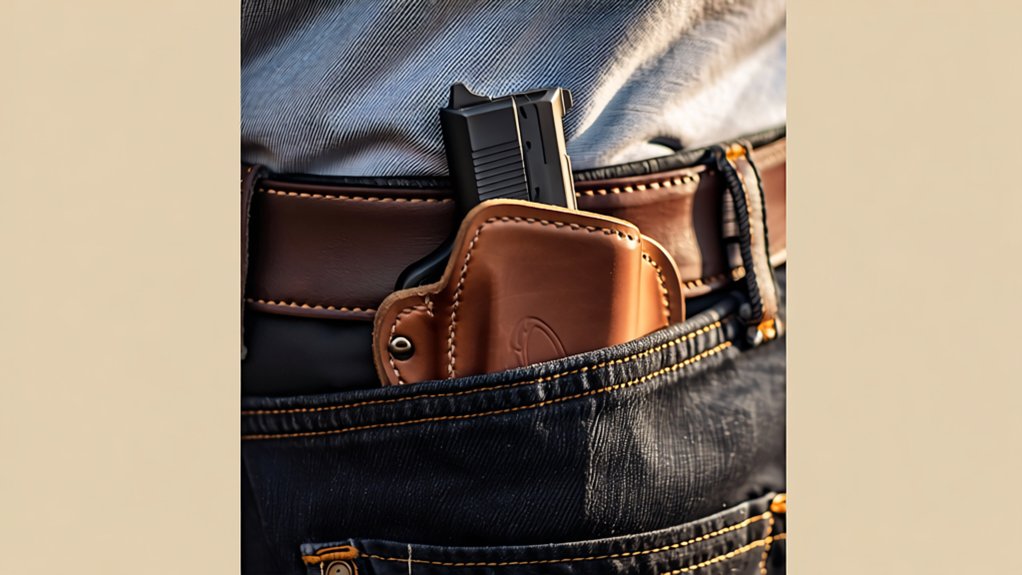
An AIWB holster means you carry your firearm inside the waistband at the front of your body, usually between 12 and 1 o’clock if you’re right-handed. This setup offers quick access and excellent concealment because the firearm rests against your body’s center.
You’ll find many AIWB holsters made from durable materials, with adjustable settings to customize comfort and draw angle. To truly master this carry style and stay safe, understanding the right gear, clothing, and training is key.
Definition of AIWB Holster
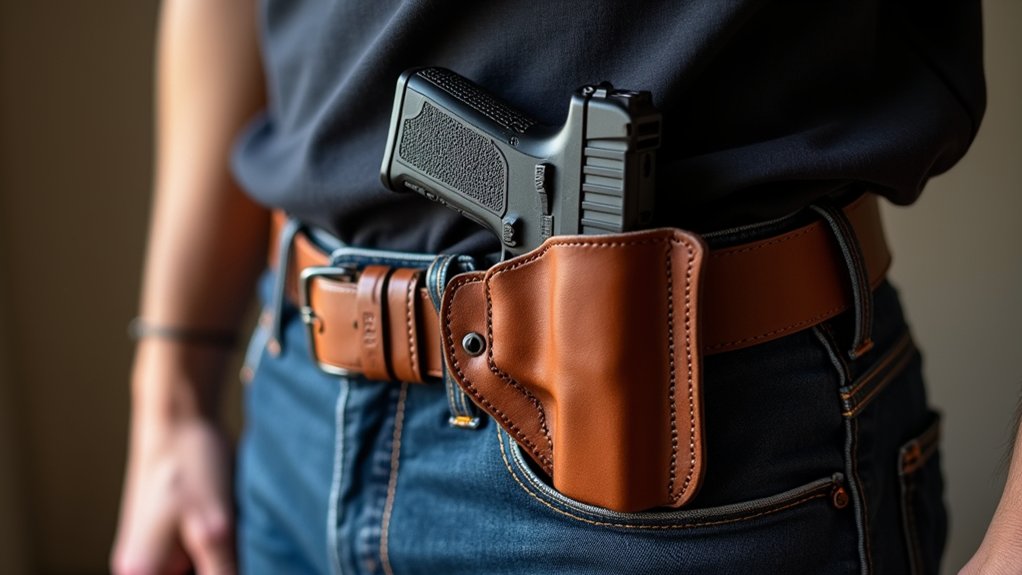
An AIWB holster, short for Appendix Inside the Waistband holster, is designed to carry your firearm at the front of your body, usually between the 12 o’clock and 1 o’clock positions if you’re right-handed.
This holster style is popular among concealed carry users because it offers quick access while maintaining excellent concealment.
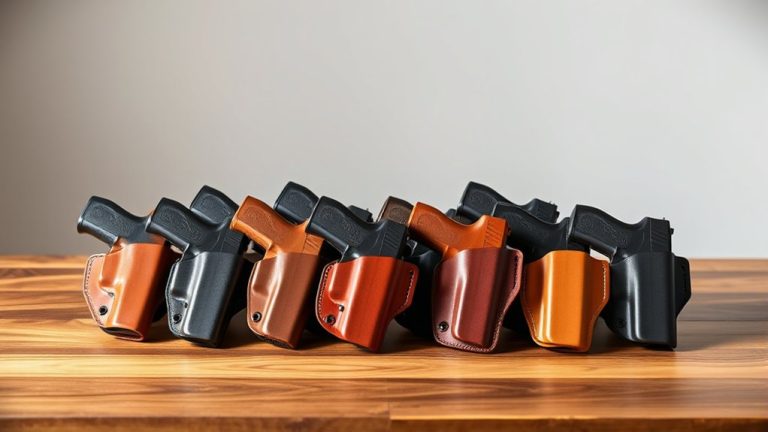
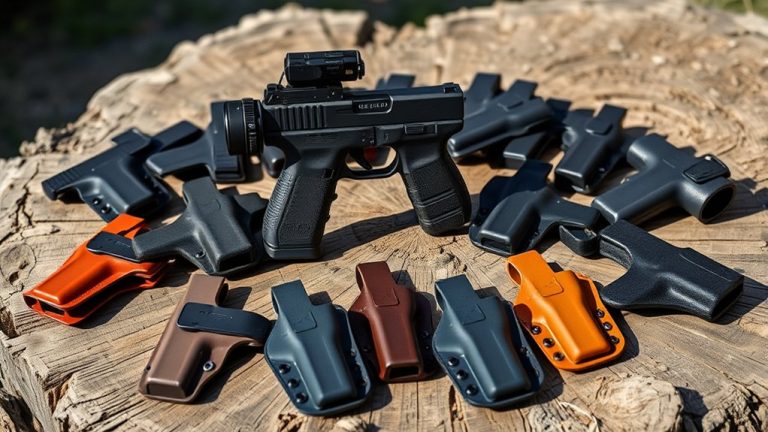
Typically made from durable materials like Kydex or leather, an AIWB holster fully encloses the trigger guard, ensuring safety during carry.
Many models feature adjustable cant and ride height, allowing you to customize comfort and draw angle to fit your body and preferences.
When choosing an AIWB holster, you’ll want to prioritize retention, fit, and ease of reholstering to balance safety and comfort effectively during daily concealed carry.
For optimal performance, it’s important to select a holster that offers full trigger guard coverage to prevent accidental discharges and maximize safe concealed carry.
Advantages of Carrying With an AIWB Holster
While many holster styles offer their own benefits, carrying with an AIWB holster stands out for its superior concealment and quick accessibility. AIWB carry positions your concealed firearm at the front of your body, dramatically reducing printing and enhancing comfort and concealment.
Holsters designed for AIWB often feature adjustable ride height, allowing you to customize fit for your specific body types. This customization not only improves comfort but also supports rapid access, essential for lowering draw times in emergencies.
Moreover, AIWB carry promotes better weapon retention during physical encounters because the firearm’s position is easier to control and protect.
Whether you carry a compact or larger firearm, an AIWB holster offers a versatile, efficient solution combining comfort, concealment, and security tailored to your needs. For even greater concealment, many AIWB holsters are equipped with holster claws, which pull the firearm’s grip closer to the body and further reduce printing for discreet everyday carry.
Challenges and Considerations for AIWB Carry
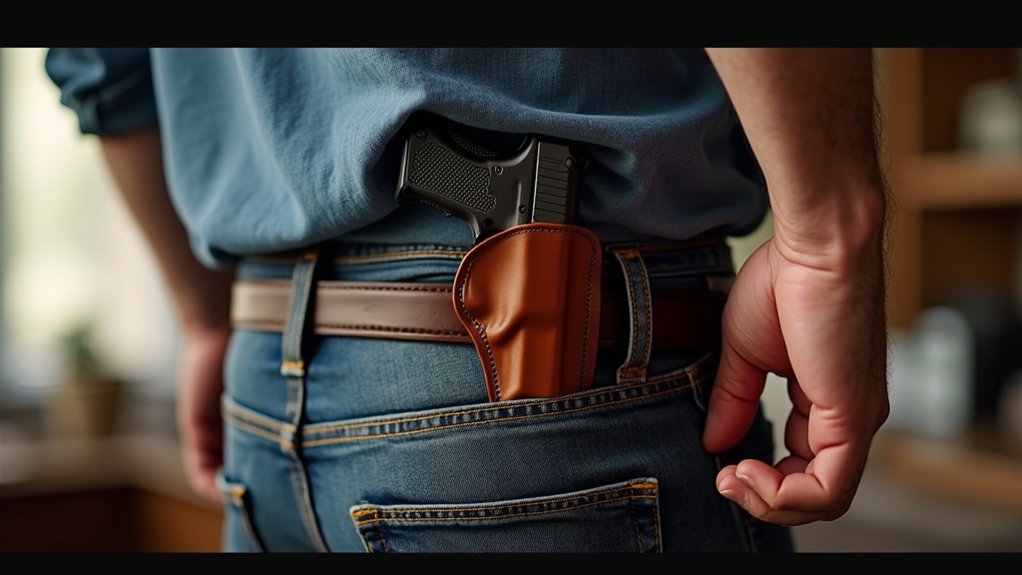
Carrying AIWB requires attention to comfort, especially if you have a larger midsection.
Barrel placement can cause discomfort if you don’t make proper adjustments to your holster and clothing.
You also need to prioritize safety by mastering safe reholstering techniques to avoid negligent discharges since the muzzle points toward sensitive areas.
Regular training helps you build the necessary skills to carry confidently while managing these challenges effectively.
Comfort and Fit
Comfort and fit play pivotal roles in your AIWB carry experience. They often shape how practical and sustainable this method feels throughout the day.
Your body type considerably impacts comfort; larger individuals may face pressure challenges while sitting due to barrel placement.
Achieving the right fit means adjusting your holster’s ride height and cant to match your unique shape.
Consider these tips for better concealed carry comfort:
- Select an AIWB holster with adjustable ride height and cant for ideal positioning.
- Use accessories like foam wedges or concealment claws to improve pressure distribution.
- Wear clothing that balances concealment and comfort. Looser fits often work best.
- Regularly experiment with holster placement to find the most comfortable fit for your body type.
Mastering these factors will improve your all-day comfort and concealment.
Safety and Training
Safety demands your full attention when adopting AIWB carry, as this position presents unique challenges that require disciplined training and awareness.
To address safety concerns, you must commit to proper training and consistently follow firearm safety rules.
Negligent discharge often occurs during reholstering, so mastering safe reholstering techniques like visually confirming the holster opening and ensuring the trigger guard is clear is critical.
Building muscle memory through dry fire drills improves your holstering techniques, reducing risks.
Many AIWB carriers choose firearms with manual safety or double-action/single-action mechanisms to add an extra security layer.
Consistent training helps you maintain control and confidence, ensuring safety at every step.
Prioritizing these practices will make your AIWB carry both safe and effective.
Choosing the Right Holster for AIWB Carry
Although selecting an AIWB holster can seem straightforward, choosing one that offers full trigger guard coverage and adjustable features like ride height and cant is crucial for both safety and comfort.
Choosing an AIWB holster with full trigger guard coverage and adjustable ride height ensures optimal safety and comfort.
When picking your AIWB holster, focus on these key aspects:
- Trigger Guard Coverage: Verify the holster fully covers the trigger guard to prevent accidental discharges during reholstering.
- Adjustability: Look for adjustable ride height and cant to tailor carry position for your body type and comfort.
- Firearm Compatibility: Choose a holster designed specifically for your firearm model to guarantee secure retention and smooth draw.
- Concealment Features: Consider holsters with wedges or claws to reduce printing and improve stability during carry.
Prioritizing these factors will elevate your AIWB carry experience with better comfort, concealment, and safety.
Safety Practices When Using an AIWB Holster

You want to make sure your AIWB holster completely covers the trigger guard. This is key to preventing any accidental discharges when you’re drawing or putting your gun back.
Also, always keep the muzzle pointed in a safe direction. When you reholster, do it slowly and watch carefully to make sure everything lines up properly.
Preventing Negligent Discharges
Three critical practices can help you prevent negligent discharges when using an AIWB holster: always keep the firearm unloaded while holstering, verify the holster fully covers the trigger guard, and maintain strict muzzle awareness and trigger discipline.
Follow these steps to reinforce safety:
- Confirm the firearm is unloaded before starting the holstering process.
- Ensure full trigger guard coverage to block any accidental trigger engagement.
- Adhere strictly to firearm safety rules, focusing on muzzle direction and trigger discipline during draw and reholstering.
- Commit to consistent training, including dry-fire drills, to build muscle memory for safe reholstering techniques.
Safe Drawing and Reholstering
Mastering safe drawing and reholstering techniques with an AIWB holster demands deliberate, controlled motions and unwavering attention to safety.
When drawing, keep your finger off the trigger until you’re ready to engage, and use a smooth, practiced motion to avoid negligent discharges.
Before reholstering, always inspect the holster for obstructions in the trigger guard to prevent accidents.
Insert the firearm slowly, ensuring it’s properly aligned and directed safely within the holster.
Never adjust clothing or move before confirming the firearm is fully holstered.
Regular practice in a controlled environment builds muscle memory, enhancing your safe handling skills.
Prioritizing these steps minimizes risks and maintains consistent firearm control, making your AIWB holster use both efficient and secure.
Additionally, choosing the appropriate retention level for your holster setup is crucial for balancing security and accessibility, ensuring the holster meets your specific safety and carry needs.
Clothing Tips for Effective AIWB Concealment
When carrying AIWB, selecting the right clothing plays an essential role in effective concealment. To maintain comfort and avoid printing, consider these tips:
- Wear longer shirts that extend past your waistline to provide ample coverage and prevent the firearm’s outline from showing.
- Choose looser-fitting clothing or dark patterns; these obscure the gun’s shape better than tight or light-colored fabrics.
- Opt for structured t-shirts or untucked shirts, which help with concealment while keeping you comfortable during daily movements.
- Test your clothing’s coverage by moving—twisting, raising arms—to verify the firearm remains hidden throughout activities.
Avoid crop tops or tight garments that compromise concealment.
Proper clothing selection improves your AIWB carry experience by balancing concealment and comfort effectively.
Training and Practice for Appendix Carry
Although appendix carry offers quick access and comfort, it demands consistent training to handle your firearm safely and efficiently. Focus on deliberate practice of your draw and reholstering techniques to build muscle memory and minimize risks.
Incorporate dry fire drills and gradually increase AIWB carry time to improve comfort and familiarity. Seek professional guidance through concealed carry classes to elevate your safety and proficiency.
| Training Aspect | Key Focus | Benefit |
|---|---|---|
| Draw Technique | Smooth, controlled motion | Faster, safer access |
| Reholstering | Deliberate, mindful action | Prevents negligent discharge |
| Dry Fire Practice | Muscle memory development | Improves draw speed |
| Carry Duration | Gradual time increase | Boosts comfort |
| Professional Help | Expert instruction | Enhances overall safety |
Frequently Asked Question
Can AIWB Holsters Be Used With Left-Handed Carry?
Yes, AIWB holsters offer left-handed options with specific adjustments to improve firearm accessibility and comfort.
You’ll want to consider retention carefully for safe, quick draw techniques, especially from the appendix position.
Also, verify that your belt compatibility suits your body type.
Training is essential—practicing proper safety guarantees smooth, confident use.
With the right setup, AIWB carry works well for left-handed shooters.
What Materials Are Commonly Used for AIWB Holsters?
You’ll find AIWB holsters commonly made from Kydex for durability and custom fit, offering excellent holster retention with impact resistance.
Leather provides comfort and a natural texture grip, while nylon adds flexibility and breathability.
Many feature polymer components to reduce weight and improve retention.
Some also use waterproof materials to keep you dry.
These materials combine to balance comfort, strength, and secure carry, so choose what fits your daily needs best.
How Do AIWB Holsters Affect Sitting Comfort?
AIWB holsters can impact your sitting comfort depending on your sitting posture and body shape.
Adjust your holster positioning and waistband height to reduce pressure on your abdomen.
Holster design plays a big role. Wedges or claws help redistribute pressure.
Managing belt tension and firearm weight also matters.
Choose clothing that accommodates the holster, and modify your sitting habits when needed.
Comfort adjustments like ride height tweaks can make a noticeable difference.
Are AIWB Holsters Compatible With All Firearm Sizes?
AIWB holster compatibility varies with firearm size variability.
You’ll find compact pistol fit and subcompact options work best, while full size compatibility is more challenging due to bulk and concealment issues.
Revolver integration depends on holster design, and caliber considerations affect comfort and safety.
Accessory attachment limits may restrict some setups.
You’ll need to adapt your draw technique and adjust safety mechanisms accordingly to guarantee secure, comfortable carry with your chosen firearm.
Can AIWB Carry Be Combined With Other Concealed Carry Methods?
About 35% of concealed carriers use multiple carry methods.
Yes, you can combine AIWB carry with other concealed options like cross draw carry, shoulder holsters, or pocket and ankle carry to improve versatility.
Hybrid holsters and belt carry setups make switching easier, especially in tactical setups.
Appendix carry pairs well with waistband carry, giving you quick access and comfort.
Just practice drawing from each position to stay safe and efficient.
Conclusion
Now that you know what an AIWB holster is and how to carry it safely, you’re ready to take the bull by the horns. Choosing the right holster, practicing regularly, and dressing smartly will make appendix carry comfortable and effective.
Remember, mastering AIWB carry isn’t just about convenience. It’s about safety and confidence. With the right approach, you’ll carry discreetly while staying prepared for whatever comes your way.