Is Brandishing a Weapon Illegal in USA? Lets Know All Details About It
Yes, brandishing a weapon is generally illegal in the USA when you display it threateningly with intent to intimidate others. Laws vary by state, but the act usually isn’t protected by open carry rights if it causes fear or alarms others.
Self-defense situations require careful legal consideration, as unjustified displays can lead to serious penalties and affect your firearm ownership. Understanding the legal nuances can help you navigate this complex issue more effectively.
Key Takeaways
- Brandishing a weapon is illegal when displayed in a threatening manner with intent to intimidate or cause fear.
- Open carry is legal in many states but becomes illegal brandishing when the display intends to threaten or alarm others.
- Brandishing laws and penalties vary by state, ranging from misdemeanors to felonies with jail or prison time.
- Self-defense justification must be reasonable; unjustified brandishing can lead to criminal charges despite claims of protection.
- Legal defense requires documentation, witness statements, and often skilled attorneys to handle brandishing accusations effectively.
Defining Brandishing in the United States
Although laws vary across states, brandishing a weapon in the United States generally means displaying a firearm or deadly weapon in a threatening way intended to intimidate or instill fear.
When you consider the brandishing firearm definition, it specifically involves showing a firearm with the intent to coerce or frighten another person.
Even if the firearm isn’t loaded, displaying it in a menacing context can still qualify as brandishing. The key factor is intent; your actions must be meant to intimidate.
States differ in how they classify brandishing offenses, ranging from misdemeanors to felonies or wobblers.
Importantly, brandishing laws require that the display causes fear or anxiety in the observer, emphasizing the threatening nature of the act rather than mere possession or casual handling of a weapon.
Legal Elements Required to Prove Brandishing
Understanding what constitutes brandishing sets the stage for examining the specific legal elements prosecutors must establish to prove the offense.
To meet the legal elements required to prove brandishing, you must have exhibited a firearm or deadly weapon in the presence of another person.
This display has to be done in a rude, angry, or threatening manner, clearly indicating intent to intimidate. Furthermore, the prosecution must show your actions were unjustified and not in self-defense.
Vital evidence includes witness accounts and video or audio recordings that capture the incident.
Finally, the observer must have experienced fear or anxiety due to your conduct.
Meeting all these criteria is essential for charges to be valid and for the court to successfully prove brandishing beyond a reasonable doubt.
Differences Between Brandishing and Open Carry

You need to understand that legal open carry means displaying your firearm openly without any intent to threaten.
Basically, you’re just carrying it where others can see, but you’re not trying to scare anyone.
Brandishing, on the other hand, is when you show your weapon with the intent to intimidate or instill fear.
So, it’s not just about having it out in the open—it’s about your behavior and what message you’re sending.
Knowing the difference really comes down to your actions and why you’re carrying your weapon visibly.
If it’s for safety or legal purposes without threatening anyone, that’s open carry.
But if you’re trying to frighten someone, that crosses the line into brandishing.
Legal Open Carry
While open carry allows you to visibly carry a firearm legally in many states, brandishing involves displaying a weapon with the intent to intimidate or threaten others, which is illegal.
Legal open carry permits you to carry your firearm openly as long as you follow your state’s specific regulations. It doesn’t require any intent to intimidate, and simply having your weapon visible during normal activities won’t result in charges.
However, brandishing crosses the line by involving aggressive or threatening behavior aimed at instilling fear.
Knowing the distinction is vital: legal open carry focuses on lawful visibility without hostility, whereas brandishing is defined by the intent to coerce or frighten, carrying serious criminal penalties.
Always make sure you comply with local laws to exercise your right responsibly.
Brandishing Intent
Although carrying a firearm openly is legal in many areas, brandishing crosses into criminal behavior when you display a weapon with the intent to intimidate or threaten others.
The key difference between brandishing and open carry lies in your intent: brandishing laws target actions meant to instill fear, while open carry laws protect lawful possession without aggressive behavior.
If you openly carry but make threatening gestures or use the weapon to intimidate, you risk criminal charges under brandishing laws.
Context matters greatly—what’s lawful in one jurisdiction may be illegal in another.
To avoid legal trouble, understand your local regulations thoroughly and guarantee your conduct remains non-threatening.
Always remember, lawful open carry requires responsible behavior, while brandishing is defined by its intent to intimidate.
How Intent Influences Brandishing Charges
You need to understand that intent plays a vital role in brandishing charges because it directly impacts the legal consequences you might face.
Basically, how a jury interprets your behavior and the context of the weapon display can determine whether your actions are seen as threatening or lawful.
In many cases, proving intent to intimidate is what makes the difference between a misdemeanor and a felony charge.
Intent and Legal Impact
Because intent plays a pivotal role in brandishing charges, prosecutors must demonstrate that the weapon was displayed to intimidate or instill fear. Understanding what brandishing a weapon means legally hinges on proving this intent and legal impact.
Factors like context, behavior, and witness reactions shape how intent is perceived, affecting legal outcomes. Even without pointing a weapon, accompanying threats or aggressive acts can establish intent.
Different jurisdictions classify brandishing as a misdemeanor or felony depending on these nuances.
| Factor | Description | Legal Impact |
|---|---|---|
| Context | Situation surrounding display | Influences intent perception |
| Behavior | Actions of the individual | Supports intent demonstration |
| Witness Reactions | Responses from bystanders | Corroborates intimidation claim |
| Verbal Threats | Accompanying aggressive language | Strengthens brandishing case |
| Jurisdiction Rules | Local laws on classification | Determines charge severity |
Jury Interpretation Role
When juries evaluate brandishing charges, they play a critical role in interpreting the defendant’s intent by carefully considering the context and behavior surrounding the weapon’s display.
Your understanding of the jury interpretation of intent is essential, as jurors assess whether the display aimed to intimidate or coerce.
They weigh the victim’s and witnesses’ perceptions that shape how intent is viewed.
They also consider the circumstances leading to the firearm display and any verbal threats made.
Plus, the defendant’s actions, including aggression or attempts to de-escalate, are important factors.
This jury interpretation of intent can lead to varied outcomes, as identical acts may be judged differently depending on the evidence and context.
Recognizing this helps you grasp how intent influences brandishing charges and their legal consequences.
State-by-State Variations in Brandishing Laws
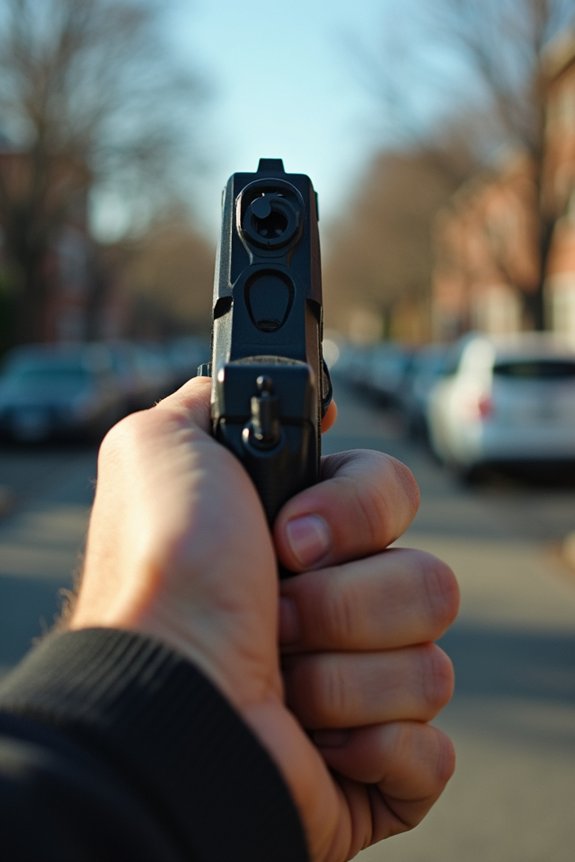
Although brandishing a weapon is generally prohibited across the United States, the specific laws governing this offense vary widely by state. Understanding brandishing laws by state is vital because some classify brandishing under distinct statutes, while others include it within offenses like disorderly conduct or assault.
For example, California treats brandishing as a wobbler offense, allowing prosecution as either a misdemeanor or felony based on the situation. Texas permits open carry but criminalizes threatening displays of weapons that cause alarm. Florida’s self-defense laws further complicate how brandishing is evaluated.
In many states, brandishing can escalate to serious charges if perceived as a public safety threat. As a result, you must familiarize yourself with your state’s particular brandishing laws by state to avoid unintended legal consequences.
Common Scenarios That Constitute Brandishing
If you pull out a firearm during a heated argument to intimidate others, you’re engaging in brandishing. This act is illegal because it threatens public safety and escalates conflict.
Common scenarios that constitute brandishing a firearm include:
- Waving or gesturing aggressively with a firearm toward someone to instill fear.
- Displaying a gun in a threatening manner during confrontations, regardless of whether it’s loaded.
- Carrying a firearm openly in public while behaving aggressively, causing bystanders to feel threatened.
Each of these actions signals a clear intent to intimidate or threaten.
Understanding these scenarios helps you recognize when brandishing a firearm crosses legal boundaries, which vary by state but consistently focus on the threatening nature of the display.
Potential Criminal Penalties for Brandishing
Because brandishing a weapon poses a clear threat to public safety, the law treats it as a serious offense with varying penalties depending on where and how it occurs. You can face a brandishing misdemeanor offense with up to six months in jail or fines, but in more severe cases, a brandishing felony charge may lead to up to three years in state prison.
Increased penalties often apply if you brandish near law enforcement or in sensitive areas. Moreover, probation, community service, or anger management classes might be imposed. Here’s a snapshot of potential criminal penalties for brandishing:
| Offense Type | Penalty Range | Extra Consequences |
|---|---|---|
| Misdemeanor Offense | Up to 6 months jail/fine | Probation, community service |
| Felony Charge | Up to 3 years prison | Mandatory counseling |
| Increased Penalties | Increased jail/prison time | Applied in sensitive locations |
Self-Defense and Brandishing: What You Need to Know
You need to understand the legal boundaries of self-defense to know when displaying a weapon is justified.
Basically, it comes down to your intent and whether your actions were reasonable given the situation. If you’re ever in a position where you have to show a weapon, those factors will determine if you could face brandishing charges.
Legal Self-Defense Boundaries
While brandishing a weapon can sometimes overlap with lawful self-defense, the distinction hinges on intent and context.
Understanding legal self-defense boundaries is vital when displaying a gun in public. You must guarantee your actions are proportionate and justified by an imminent threat.
Displaying a weapon to intimidate rather than defend risks brandishing charges.
To stay within legal self-defense boundaries:
- Draw your firearm only in response to a credible threat.
- Avoid confrontational or aggressive displays that could be perceived as intimidation.
- Know your local laws, as definitions and applications vary by state.
Intent and Reasonableness
Although brandishing a weapon can sometimes serve as a legitimate act of self-defense, determining whether your actions are legally justified hinges on intent and reasonableness. Courts examine if your intent was to prevent imminent harm rather than intimidate. The context and your behavior weigh heavily in this assessment.
Misjudging intent or acting unreasonably can lead to severe legal consequences.
| Intent | Reasonableness | Outcome |
|---|---|---|
| Prevent harm | Proportional response | Legal self-defense |
| Intimidate others | Excessive or unnecessary | Criminal charges |
| Unclear motive | Context-dependent | Case-by-case evaluation |
Understanding intent and reasonableness guarantees you act within lawful self-defense boundaries, minimizing legal risks.
Documentation and Evidence Importance
Proper documentation and evidence play an essential role in cases involving brandishing a weapon, directly impacting legal outcomes.
When you document incidents involving brandishing thoroughly, you strengthen your position in disputes or legal proceedings.
Immediate reporting to law enforcement creates an official record that supports your self-defense claims. Even without physical evidence like the firearm itself, credible witness testimony can validate your account.
Focus on recording precise details: time, location, and context of the incident. Collect witness statements and any audio or video evidence.
Promptly notify authorities to establish an official record.
The Role of Witnesses and Evidence in Brandishing Cases
Because physical evidence of brandishing a weapon is not always available, witness testimony often plays a significant role in these cases. You’ll find witness accounts vital, as they provide context, detail, and perception of threat level. These elements can sway legal outcomes. Audio recordings also support or challenge these testimonies. Immediate and accurate documentation, including reports to law enforcement, strengthens the case.
| Evidence Type | Role in Brandishing Case | Impact on Outcome |
|---|---|---|
| Witness Accounts | Provide detailed incident context | Influence jury and judge |
| Audio Recordings | Corroborate testimonies | Validate or dispute claims |
| Documentation | Supports case building | Essential for prosecution/defense |
You should understand that both witness accounts and evidence form the backbone of brandishing case evaluations.
How Law Enforcement Handles Brandishing Incidents
When law enforcement responds to a brandishing incident, they follow strict protocols to secure the scene and ensure everyone’s safety.
Officers make sure to gather all the important evidence, like witness statements and any available video footage. This helps them get a clear picture of what actually happened.
From there, they put together detailed reports and conduct thorough investigations.
All of this information plays a big role in deciding what charges, if any, are appropriate based on the specific details of the case.
Police Response Protocols
Although brandishing a weapon can quickly escalate tensions, law enforcement officers respond by carefully evaluating the threat and prioritizing everyone’s safety before taking action.
The police response protocols focus on neutralizing danger while respecting legal boundaries under weapon intimidation laws.
When you encounter such incidents, officers will:
- Approach cautiously, using de-escalation techniques to prevent further conflict.
- Detain suspects temporarily to verify the situation and eliminate immediate risks.
- Document all interactions thoroughly to support legal proceedings and maintain accountability.
Evidence Collection Methods
Since brandishing a weapon often involves complex circumstances, law enforcement employs systematic evidence collection methods to build a clear understanding of the incident. Officers start by interviewing witnesses and gathering statements to establish context and details.
They collect physical evidence such as the firearm, surveillance footage, and scene photographs to support their findings. Audio recordings, when available, help corroborate witness testimonies and strengthen the case.
Moreover, police review any prior incidents related to the individuals involved to assess motives and history. These evidence collection methods guarantee that all relevant information is documented thoroughly.
It’s essential for victims and witnesses to report brandishing incidents promptly, enabling law enforcement to gather necessary evidence efficiently and uphold the integrity of the investigation.
Reporting and Investigation
Effective evidence collection sets the stage for how law enforcement handles brandishing incidents once they’re reported.
During the reporting and investigation phase, officers act swiftly due to the serious nature of gun threats and their legal consequences. You’ll see them:
- Interview witnesses and involved parties to clarify intent and context.
- Collect physical evidence, including photographs and video footage.
- Document the incident thoroughly in police reports for legal use.
Even if no firearm is found, officers may continue the investigation based on credible witness accounts and threat assessment.
The process guarantees that authorities evaluate the situation carefully to determine if charges are appropriate.
Understanding this approach helps you appreciate the rigorous standards law enforcement follows to uphold public safety and enforce gun threat legal consequences effectively.
Distinguishing Brandishing From Threatening Behavior
When you see someone displaying a weapon, it’s important to understand that brandishing involves more than just showing the firearm. It requires an intent to intimidate or instill fear.
Distinguishing brandishing from threatening behavior hinges on this intent and the actual display of the weapon. Threatening behavior may be verbal or physical without a weapon, while brandishing legally requires the weapon’s visible, menacing display.
Understanding brandishing vs assault also matters, as assault can occur without a weapon display.
| Aspect | Brandishing | Threatening Behavior |
|---|---|---|
| Weapon Display | Visible, intentional display | Usually no weapon involved |
| Intent | Intimidate or instill fear | Cause fear or harm verbally |
| Legal Implication | Criminal offense in many states | May or may not be criminal |
This table aids in clearly distinguishing brandishing from threatening behavior.
Best Practices to Avoid Brandishing Charges
To avoid brandishing charges, you need to handle firearms responsibly and stay informed about local laws regarding open carry and weapon display.
Following the best practices to avoid brandishing charges guarantees you maintain lawful firearm use and prevent legal complications.
Here are key steps you should follow:
Always secure your firearm when not in use and practice safe handling techniques to prevent accidental displays.
Educate yourself on the legal distinctions between lawful display and brandishing to recognize what behavior is permissible.
Opt for verbal de-escalation during conflicts instead of displaying your weapon, which could be interpreted as a threat.
Impact of Brandishing on Firearm Ownership Rights
Although brandishing a weapon might seem like a momentary act, it can have lasting consequences on your firearm ownership rights.
Facing brandishing charges may lead to criminal convictions that restrict or revoke your ability to obtain or renew firearm permits.
Criminal convictions from brandishing can limit or eliminate your firearm permit eligibility.
States vary widely in how they penalize brandishing offenses, with some imposing stricter limitations that directly impact your legal right to possess firearms.
Beyond criminal penalties, you might also encounter civil liabilities, further complicating your ownership status.
Understanding the seriousness of brandishing charges and mounting effective legal defenses is vital to protecting your rights.
Being aware of how these charges affect firearm ownership helps you navigate the legal landscape and avoid jeopardizing your fundamental privileges regarding weapon possession.
Legal Support and Resources for Brandishing Accusations
Securing skilled legal representation plays an essential role if you’re facing brandishing accusations.
State laws and case details can drastically influence the outcome. Legal support and resources for brandishing accusations are vital to protect your rights and navigate complex regulations.
You should act promptly to document all incident details and consult an attorney familiar with local firearm laws.
Consider these key resources:
- Criminal defense attorneys specializing in weapon charges who provide tailored guidance and defense strategies.
- Legal aid organizations offering assistance to those who can’t afford private counsel.
- Firearm rights groups that provide information and advocacy relevant to brandishing cases.
Public Perception and Social Implications of Brandishing
How do people generally view brandishing a weapon, and why does it stir such strong reactions? Public perception varies widely, shaped by cultural attitudes and state-specific firearm laws. Many see brandishing as a direct threat to public safety, triggering fear and demands for stricter firearm laws.
This reaction often stems from concerns that visible weapons escalate conflicts rather than defuse them. You should understand that incidents of brandishing increase community anxiety and negatively affect overall safety perceptions.
However, education on responsible firearm ownership and proper carrying practices can reduce misunderstandings and ease public fears. Discussions about brandishing reflect broader social debates balancing individual rights with public safety.
Being informed about public safety firearm laws empowers you to navigate these complex issues responsibly and thoughtfully.
Frequently Asked Question
Can Brandishing a Weapon Affect My Employment Opportunities?
Yes, brandishing a weapon can affect your employment opportunities. Employers often run background checks and view weapon-related offenses as serious red flags.
This can limit your chances, especially in fields like law enforcement, education, and healthcare that enforce strict hiring policies. The conviction may harm your reputation and trustworthiness, making networking and career advancement harder.
While some states allow expungement, brandishing charges usually remain on your record longer unless legally addressed.
Are There Age Restrictions Related to Brandishing Laws?
Think of brandishing laws like a traffic light. Age restrictions act as the red light, stopping minors from displaying weapons recklessly.
Yes, there are age restrictions. Many states forbid anyone under 18 from brandishing firearms, and federal law bars handgun possession under 21.
Some states allow supervised display for hunting or training. But courts weigh age heavily when judging intent and threat.
How Does Brandishing Differ From Accidental Firearm Display?
Brandishing differs from accidental firearm display mainly in intent and manner.
When you brandish, you intentionally show your weapon in a threatening or aggressive way to intimidate others.
In contrast, an accidental display happens without that intent.
Maybe your firearm becomes visible unintentionally during normal activities.
The law focuses on your purpose: brandishing is criminal because it aims to frighten, while accidental display usually isn’t punishable if no threat is perceived.
Can Video Recordings Be Used as Evidence in Brandishing Cases?
Yes, you can use video recordings as evidence in brandishing cases. They provide clear visual and audio proof of the incident, capturing both actions and any verbal threats.
Courts consider the footage’s clarity, authenticity, and relevance before admitting it.
If you’re involved, recording events can strengthen your defense or prosecution by corroborating witness testimonies and presenting objective evidence.
This can greatly impact the case’s outcome.
Does Brandishing Impact My Ability to Obtain a Firearm License?
Yes, brandishing a weapon can impact your ability to obtain a firearm license.
Depending on your state’s laws and the severity of the offense, a conviction might disqualify you or delay your application.
Felony charges usually lead to stricter restrictions, while even misdemeanors can trigger concerns during background checks.
You may need to show rehabilitation or meet extra legal requirements before your license is approved.
Conclusion
Imagine holding a firearm responsibly, your actions clear and lawful, never crossing into threatening territory. Understanding brandishing laws helps you avoid serious legal trouble and protects your rights.
Remember, flashing a weapon isn’t just about presence. It’s about intent and context, which vary by state. Stay informed, act cautiously, and keep your conduct respectful to guarantee your safety and freedom.
Knowing the law empowers you to carry with confidence and responsibility.