What Is a Blackjack Weapon? In-Depth Discussion
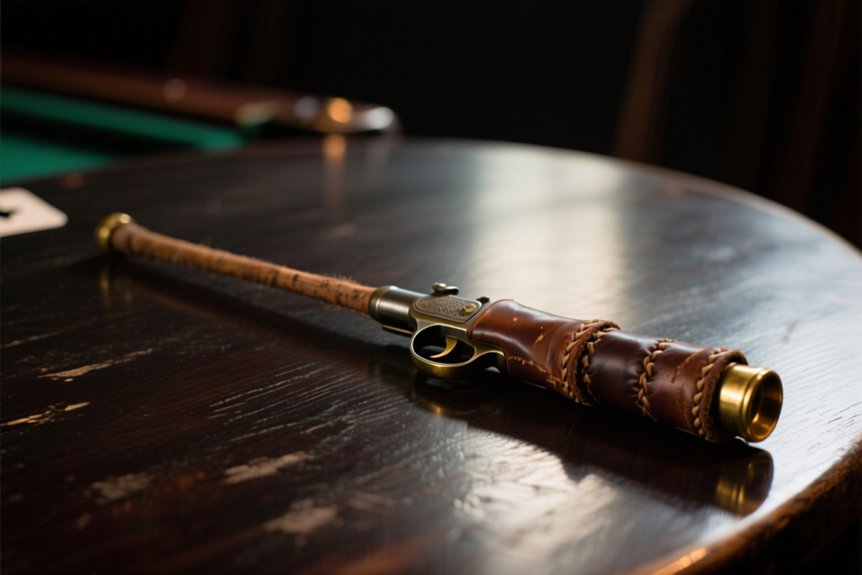
You hold a blackjack, a compact handheld weapon with a weighted core wrapped in leather. It’s designed to deliver powerful, controlled strikes for incapacitating targets without lethal force.
Its semi-rigid shaft allows versatile angling, making it ideal for close-quarters defense. Historically, it was used by law enforcement and civilians alike. Its design balances concealability with impact.
Knowing its legal status and proper use is essential. Understanding these aspects will deepen your grasp of this unique self-defense tool.
Key Takeaways
- A blackjack is a compact, handheld weapon designed to incapacitate targets using blunt force without causing fatal injuries.
- It features a short handle with a weighted core, often leather-wrapped, for controlled, powerful strikes.
- Historically, blackjacks evolved from 18th-century weighted tools and were used by law enforcement for close-quarters combat.
- The weapon is effective for targeting large muscles and joints, making it useful in self-defense and law enforcement.
- Blackjacks are legally restricted or prohibited in many areas due to their classification as dangerous weapons.
Definition and Basic Structure of a Blackjack
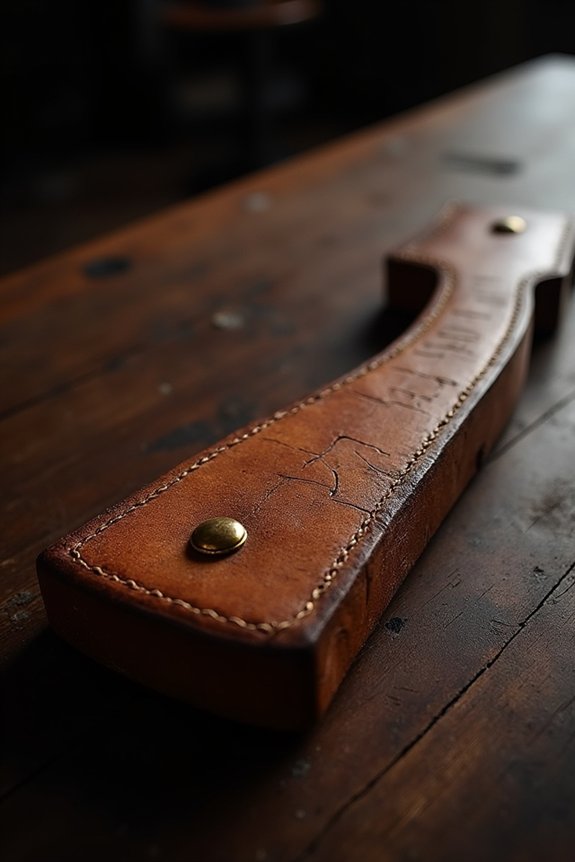
A blackjack is a compact, handheld weapon designed specifically for close-quarters combat and self-defense. It allows you to incapacitate a target without causing fatal injuries.
As a blackjack weapon, it serves as a non-lethal tool intended to subdue rather than kill. The basic structure of a blackjack consists of a short handle that guarantees firm grip and control, paired with a weighted core housed at the striking end.
A blackjack combines a short handle and weighted core for controlled, non-lethal subduing power.
This core is encased within a flexible, padded exterior, typically leather-wrapped, to balance impact force and reduce injury risk. Its compact and balanced design allows for effective, omnidirectional striking with minimal wrist motion.
Such precision engineering provides you with a discreet, quick-deployment instrument ideal for confined spaces and non-lethal engagement.
Materials Used in Blackjack Construction
Understanding the materials that compose a blackjack directly influences its effectiveness and handling characteristics. The core structural materials typically consist of dense metals such as lead or steel. These are often molded or packed with powdered metals or lead shot to optimize weight distribution and impact force.
Outer covering materials primarily include multiple layers of stitched leather, providing durability and flexibility. Modern adaptations use synthetic leather or reinforced fabrics for weather resistance.
Modern material improvements and variations further refine blackjacks with features like thermoset plastics, TBR rubber, and reinforced stitching. These help balance shock absorption and longevity.
Key components include:
- Dense metal cores for concussive impact
- Durable, flexible leather or synthetic outer layers
- Improved grips with paracord or reinforced wrappings for secure handling
Historical Background and Evolution
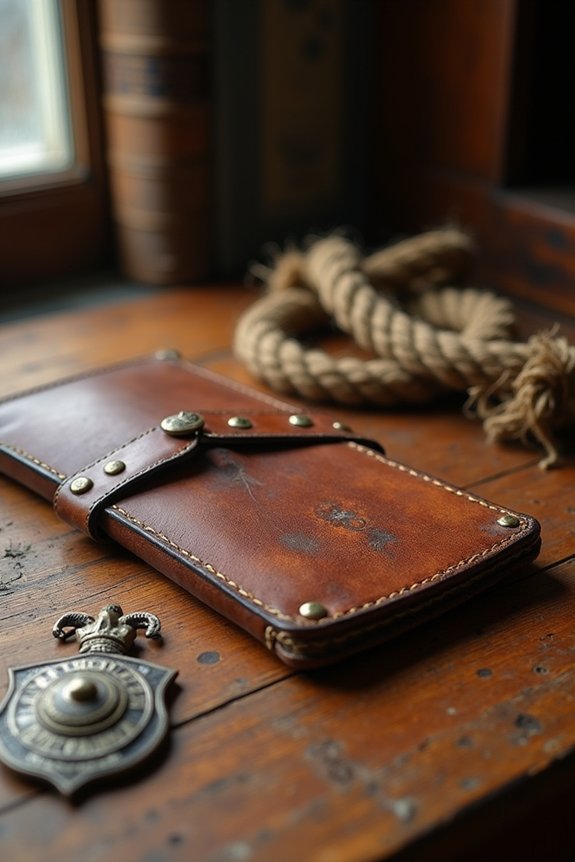
You can trace the blackjack’s origins back to the 1700s when weighted striking tools were first used.
Over time, these tools evolved, and by the 19th century, early law enforcement agencies started adopting them.
The design was specifically adapted to be easy to conceal and deliver a strong impact.
Because of this, blackjacks became a standard non-lethal weapon for police forces.
But nowadays, they’re mostly replaced by more modern alternatives like batons and firearms.
Early Origins and Use
Although weighted striking weapons have evolved considerably, their roots trace back to Renaissance-era sand clubs.
These represent the earliest documented forms of controlled-impact implements designed to incapacitate without blades or piercing elements. These sand clubs laid the foundation in the history of the blackjack weapon, emphasizing blunt force trauma for subduing opponents.
As you trace types of blackjack weapons, note the 19th century modern blackjack invention and design evolution. This introduced coil springs for flexibility, replacing baleen cores.
Visualize this progression:
- Sand-filled leather clubs used in confined Renaissance combat
- Sailor-adapted slungshots with rope construction in the 18th century
- Late 19th-century blackjacks featuring coil springs within shafts
This lineage illustrates the technical refinement from simple weighted tools to sophisticated, flexible striking weapons.
Law Enforcement Adoption
The evolution of blackjack weapons from simple weighted clubs to flexible, lead-filled tools naturally led to their adoption by law enforcement agencies seeking effective close-quarters control methods.
By the mid-1800s, police began integrating blackjacks as law enforcement tools, valuing their compact concealability and striking power for tactical self-defense gear.
Standardized models with coil-spring shafts and lead cores improved impact efficiency while maintaining flexibility.
However, legal and ethical considerations heavily influenced their use; incidents of excessive injury prompted policy reforms limiting blackjack deployment.
You must understand that while blackjacks offered rapid incapacitation and urban utility, agencies balanced effectiveness with minimizing permanent harm.
Consequently, these weapons played a significant yet controversial role in policing history before evolving protocols and equipment emerged.
Decline and Modern Alternatives
As legal challenges and public scrutiny intensified through the late 20th century, law enforcement agencies phased out blackjacks and saps in favor of less lethal, more accountable alternatives.
You’ll notice the decline in law enforcement use was driven by increased lawsuits and evolving legal and regulatory shifts demanding greater transparency and reduced liability.
This led to the rise of modern alternatives that improved officer control and minimized injury risk.
Typical replacements include:
- Expandable batons offering portability and compliance with stricter use-of-force policies
- Pepper spray as a chemical deterrent with lower lethality
- Tasers enabling remote incapacitation to prevent close contact
These modern tools reflect a tactical evolution prioritizing accountability, safety, and adherence to new legal standards, marking a definitive shift away from traditional blackjack weapons.
Common Uses in Law Enforcement
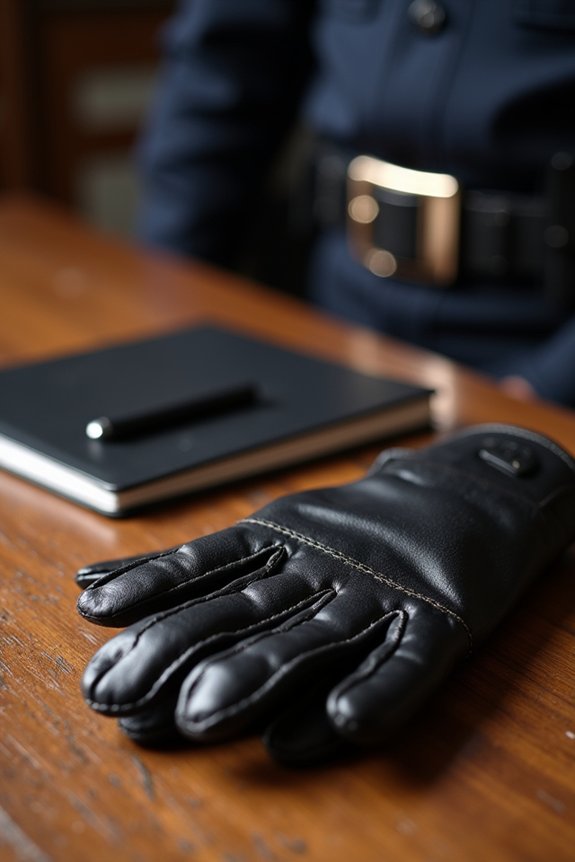
Blackjacks served as versatile tools for law enforcement officers throughout much of the 20th century, offering a compact and discreet means of subduing suspects. As blackjack weapons, they functioned effectively as law enforcement tools for close-quarters self defense, particularly in confined spaces where larger impact weapons proved unwieldy.
Officers favored them for striking large muscle groups and joints to incapacitate suspects rapidly without lethal force. Their small size allowed for easy concealment, making them suitable for both uniformed and plainclothes personnel requiring a discreet compliance option.
Techniques involved targeted jabs and swings to areas like wrists, elbows, and collarbones, maximizing control while minimizing injury risk.
Though phased out by the 1990s, blackjacks once played a critical role in tactical law enforcement confrontations requiring swift, controlled responses.
Civilian and Criminal Applications
You’ll find blackjacks valued in civilian self-defense because of their compact design and ability to deliver controlled, non-lethal strikes.
They’re easy to carry and can be effective for protection.
But on the flip side, their small size and concealability also make them tools that some people exploit in criminal activities, like assaults and robberies.
Self-Defense Uses
When you need a discreet and effective means of close-quarters defense, a blackjack weapon offers rapid deployment and concentrated force. It can quickly incapacitate an attacker.
As a member of the non-bladed weapon category, blackjacks serve as reliable personal protection tools for self-defense uses without resorting to lethal force.
Their compact design allows you to carry them concealed on your person, ready for immediate application.
Key target areas include:
- Limbs (arms and legs) to disable mobility through pain or fractures
- Collarbone strikes to cause intense pain and restrict movement
- Head impacts for rapid incapacitation, used with caution due to severity
Mastering blackjack techniques improves your ability to protect yourself efficiently while complying with legal constraints on use and possession.
Criminal Exploitation
Although primarily designed for self-defense, blackjacks have found illicit use in criminal activities due to their concealability and effectiveness as blunt instruments.
Despite blackjack weapons legal in the USA in every state being rare, many jurisdictions classify them as dangerous or deadly weapons. This classification leads to strict criminal possession penalties and sentencing.
You’ll find assault and violent crime correlations in cases involving blackjacks, often elevating charges to aggravated assault or robbery with increased felony penalties.
Enforcement agencies treat possession and use violations distinctly, with some areas imposing mandatory minimum sentences for armed offenses.
Understanding these legal distinctions is vital, as possession alone can result in misdemeanors or felonies depending on jurisdiction.
Blackjacks feature prominently in violent crime statistics, underscoring their criminal exploitation beyond lawful self-defense contexts.
Variations in Blackjack Design
Blackjack design varies considerably to balance concealment, impact effectiveness, and user control. Understanding the variations in blackjack design reveals how impact dynamics and use have evolved alongside historical and functional design evolution.
You’ll find blackjacks differ mainly in materials, shape, and flexibility to suit tactical needs.
- Dense lead or powdered metal cores wrapped in leather for concentrated strikes
- Cylindrical or flattened heads influencing impact area and lethality
- Rigid or semi-flexible shafts enabling strikes from multiple angles
These design adaptations reflect a trajectory from rigid, lethal tools to versatile, often less-lethal weapons optimized for discreet carry and precise control.
Recognizing these distinctions allows you to appreciate how blackjacks maintain traditional principles while meeting modern functional demands.
Differences Between Blackjacks and Related Weapons
Understanding the unique construction and functional features of blackjacks helps clarify how they differ from similar impact weapons like saps and slungshots. Blackjacks feature semi-rigid shafts with weighted cores, often spring-loaded, delivering concentrated strikes with control.
Saps use flexible, weighted materials lacking springs, while slungshots rely on free-swinging rope handles with attached weights. This distinction is critical when considering blackjack weapons legal in the USA in every state, as regulations vary by weapon type.
The difference between a sap and a blackjack hinges on rigidity and striking mechanics, impacting their classification as impact force weapons.
| Feature | Blackjack | Sap | Slungshot |
|---|---|---|---|
| Core Material | Semi-rigid weighted with springs | Flexible weighted | Free-swinging rope/weight |
| Striking Control | High (compact, controlled) | Moderate | Low (momentum-based swing) |
| Legal Status USA | Generally legal in every state | Restricted in some jurisdictions | Often restricted |
Techniques for Effective Use
When wielding a blackjack, maintain a firm grip and adopt a stance that enables rapid wrist rotation and balanced body movement. This maximizes control and power with each strike. Master grip and stance techniques to guarantee force transmission without sacrificing mobility.
Employ offensive and defensive cycling by shifting seamlessly between blackjack strikes and empty-hand maneuvers. This helps maintain dominance and readiness.
Prioritize training and practice recommendations focused on repetitive drills to build muscle memory, accuracy, and fluid strike cycling under stress.
Use decisive, driving swings targeting vulnerable zones like the collarbone and wrists for maximum incapacitation. Cycle strikes rapidly, escalating force while controlling grip to avoid weapon drops.
Combine blackjack deployment with natural body mechanics for swift, unpredictable attacks. This approach guarantees effective, controlled use in dynamic encounters.
Safety Considerations and Risks
You need to understand that blackjacks can cause serious injuries, like blunt force trauma and even neurological damage.
It’s really important to be aware of the legal side of things too—having or using one can get you into criminal trouble or civil lawsuits.
So, knowing how to handle a blackjack properly is key.
This helps reduce the chance of hurting yourself and ensures you stay in control when you need to use it.
Potential for Serious Injury
Although blackjacks are often viewed as less injurious than rigid impact weapons, their use carries significant risks that demand careful consideration.
Understanding how a blackjack weapon works is essential to grasp injury severity and types associated with its strikes.
Improper use can result in severe bruising, fractures, concussions, or even fatal trauma. To minimize harm, adhere to safe uses of blackjack weapons by targeting less vulnerable areas and controlling force.
Consider these injury risks:
- Strikes to the head or neck may cause traumatic brain injuries or fractures.
- Excessive force and repeated hits amplify tissue damage and swelling.
- Vulnerable individuals face higher risks of unconsciousness or permanent disability.
Proper training and adherence to safety protocols are critical to preventing serious injury.
Legal Implications of Use
Understanding the serious injury risks tied to blackjacks naturally leads to examining their legal implications.
Blackjack weapons legal in the USA in every state don’t exist; most states prohibit civilian possession, classifying these as offensive or deadly weapons.
You must recognize that self-defense and legal use claims involving blackjacks are rarely upheld, as courts typically view them as instruments of excessive force.
Carrying or using a blackjack exposes you to substantial associated legal risks, including felony or misdemeanor charges, fines, imprisonment, and civil liability.
Jurisdictional variations complicate legal status, and even lawful possession by law enforcement doesn’t extend to civilians.
To avoid severe penalties and legal disputes, you should understand and comply with state-specific regulations governing blackjacks.
Proper Handling Techniques
When handling a blackjack, maintaining a proper grip and stance guarantees control and minimizes the risk of self-injury. Knowing how to identify a blackjack weapon helps you adopt the traditional “ball bat” grip or a modified hold for offset handles, securing firm control.
Master both defensive and offensive techniques, striking with the weighted end and targeting specific areas while prioritizing safety considerations during use. Always practice controlled strikes to avoid accidental harm.
- Balanced stance with a stable base for quick, precise movements
- Target key zones like collarbone and wrists for effective disabling strikes
- Use protective gear and inspect the weapon’s condition before use
These steps reduce injury risk, improve handling, and secure proficiency in blackjack deployment.
Legal Restrictions and Regulations
Because blackjacks are designed as offensive weapons, many jurisdictions strictly regulate their possession, carry, and use. They often classify them alongside blunt or concealed weapons such as billy clubs and metal knuckles.
You’ll find blackjack weapons legal in the USA varies widely by state. Some ban them outright, while others allow licensed law enforcement or security personnel to carry them. Blackjacks were banned primarily due to their concealability and lethality.
Civilian possession is heavily restricted or prohibited, with exceptions mostly limited to authorized officials.
| State | Legal Status | Exceptions |
|---|---|---|
| California | Prohibited | None |
| Alaska | Allowed with limits | Law enforcement |
| Arizona | Restricted carry | CCW permit holders |
| New York | Prohibited | Law enforcement only |
Blackjacks in Modern Security Practices
Although blackjacks have largely fallen out of favor, they still offer unique advantages in modern security contexts due to their compact size and impactful design.
As blackjack weapons legal in the USA in every state, they serve as discreet law enforcement tools and improvised defensive weapons when concealment and rapid deployment matter most.
You’ll find blackjacks beneficial in close-quarters defense where space limits larger tools, situations requiring minimal visible injury to de-escalate threats, and covert operations demanding easily concealed yet effective equipment.
While modern agencies prefer batons or electronic devices, understanding blackjacks’ precise use and legal status improves your tactical options.
Proper training guarantees you apply controlled, targeted strikes to maximize incapacitation and minimize harm, aligning with contemporary security standards.
Comparison With Other Non-Lethal Weapons
When you compare blackjacks to slapjacks, you’ll see that blackjacks have a cylindrical, baton-like shape with a weighted core. This design allows for precise, focused strikes.
On the other hand, slapjacks have a wider, flatter striking surface, which spreads the impact over a larger area.
Knowing these design differences makes it easier to figure out which one is more effective and better suited for close-quarters self-defense.
Blackjack vs. Slapjacks
You’ll often encounter the terms blackjack and slapjack used interchangeably, but subtle differences in their shape and construction distinguish them.
A blackjack is typically a round, cylindrical melee blunt weapon with a flexible shaft, often housing a coil spring.
In contrast, a slapjack features a flat, oval-shaped head, sometimes called a beavertail sap.
While blackjack weapons legal in the USA in every state are rare, understanding these distinctions helps identify best alternatives to blackjack weapons.
Visualize the differences:
- Blackjack: cylindrical, weighted core, flexible handle
- Slapjack: flat, oval, leather-covered striking surface
- Both: compact, concealable, designed for close-range impact
Recognizing these nuances aids in selecting appropriate self-defense tools while respecting legal constraints.
Impact and Design Differences
Because blackjacks deliver concentrated blunt force through a weighted core wrapped in leather, they produce highly effective impacts at close range while minimizing lethality compared to edged or piercing weapons. You’ll find blackjack weapons legal in the USA are valued as law enforcement tools for their balance of concealability, control, and impact characteristics.
Unlike rigid batons, blackjacks’ flexible handles increase swing velocity and reduce user fatigue. Here’s a concise comparison:
| Feature | Blackjacks | Batons | Pepper Spray |
|---|---|---|---|
| Impact Type | Localized blunt force | Extended advantage blunt | Chemical irritation |
| Concealability | High | Moderate | High |
| Legal Restrictions | Often restricted or banned | More widely accepted | Generally legal |
Blackjacks offer precise, controlled strikes suited for close-quarters defense with reduced lethality risk.
Maintenance and Care Tips
Although blackjacks are robust weapons, diligent maintenance and care are crucial to preserve their functionality and longevity. As a weighted leather club and common law enforcement tool, your blackjack demands meticulous upkeep.
Follow these maintenance and care tips to maintain peak performance:
Clean the leather after each use, removing dirt and oils without saturating it. Inspect for cracks or dryness that compromise durability.
Store in a cool, dry place away from sunlight and humidity to prevent leather deterioration and metal corrosion.
Regularly check the weighted core and handle integrity. Avoid excessive impact on hard surfaces to prevent structural damage.
Adhering to these practices guarantees your blackjack remains reliable, safe, and effective for tactical applications and legal compliance.
Cultural References and Popularity Trends
When exploring cultural references and popularity trends, blackjacks reveal a complex history that spans law enforcement, criminal folklore, and diverse cultural adaptations.
Historically, these law enforcement tools, prominent in 19th and 20th century police gear, served as compact, effective blunt weapons for subduing suspects.
You should note that blackjacks appear frequently in crime dramas and period pieces, symbolizing covert control and street justice.
However, their use has declined due to legal restrictions. You might wonder, are blackjack weapons legal in the USA in every state? The answer is no. Many states regulate or ban them, limiting civilian possession.
Despite reduced practical application, blackjacks retain cultural significance among collectors and martial artists. They embody a unique blend of authority, stealth, and historical legacy in popular culture.
Frequently Asked Question
Can Blackjacks Be Used Underwater or in Wet Conditions?
You might think blackjacks could handle a splash, but they’re really best kept dry.
Using one underwater or in wet conditions greatly hampers its performance.
You’ll notice reduced swing speed and impact due to water resistance and saturated leather. The increased weight and stiffness make control tricky.
Without diligent maintenance, the material deteriorates quickly.
How Does Weather Affect the Durability of a Blackjack?
Weather notably affects a blackjack’s durability by degrading its leather and core materials.
Moisture causes swelling, fiber weakening, and mold growth. Temperature extremes lead to cracking, stiffening, and internal core expansion or contraction.
UV radiation breaks down collagen fibers, reducing elasticity and causing color fading.
To maintain durability, you must regularly apply conditioners, store the blackjack in controlled environments, and avoid exposure to extreme weather conditions.
Are There Any Training Courses Specific to Blackjack Use?
Coincidentally, while blackjack-specific courses are rare, you can find training embedded within self-defense, law enforcement, or close-quarters combat programs.
These courses emphasize safe handling, striking techniques, concealment, and legal compliance.
You’ll often encounter blackjack instruction alongside other SAP weapons or batons.
Access varies by location due to legal restrictions, so it’s key you verify local laws before seeking formal or private blackjack training opportunities.
What Are the Psychological Effects of Being Struck by a Blackjack?
Being struck by a blackjack can trigger significant psychological effects, including acute stress, anxiety, and heightened hypervigilance.
You may develop post-traumatic stress disorder (PTSD) due to the violent nature of the assault and loss of control experienced.
Persistent psychological trauma often accompanies physical injury. This can lead to chronic anxiety, mood disturbances, and difficulty trusting others.
Early intervention and psychological support are essential to mitigate long-term mental health consequences following such trauma.
Can Blackjacks Be Customized With Personal Engravings or Colors?
Like painting your signature on a canvas, you can customize blackjacks with personal engravings and a variety of colors.
Artisans use full-grain vegetable-tanned leather and high-quality materials, allowing you to choose hues beyond standard black, such as forest green, saddle tan, and more.
Engraved initials add identification and style without compromising durability.
This precise craftsmanship guarantees your blackjack is both unique and functional, tailored to your specific preferences and needs.
Conclusion
Now that you’ve examined the blackjack, you understand it’s a discreet tool designed for controlled impact rather than harm. Its compact design and thoughtful materials offer you a reliable option for situations requiring firm but measured response.
Whether in professional security or personal defense, this device serves as a subtle reminder that sometimes, restraint carries its own strength. Proper care guarantees it remains ready when you need a quiet yet effective solution.