How Does a Retention Holster Work?
A retention holster works by securing your firearm with a blend of passive friction and active locking mechanisms. You can draw your weapon quickly, but these features prevent unauthorized removal or accidental drops.
Passive retention uses a snug fit, while active systems may require pressing a button or releasing a strap. Different levels offer varying security, so you can choose what fits your environment.
Keep going to investigate how these systems protect and assist you better.
Definition of Retention Holsters
A retention holster secures your firearm firmly while letting you access it quickly when needed. It’s designed to prevent unauthorized removal and stops your gun from accidentally falling out during movement.
These holsters use built-in retention mechanisms to keep your firearm in place. Some rely on friction, while others require you to actively engage a release system.
Retention holsters secure your firearm using friction or require an active release for quick, controlled access.
Retention levels range from Level I, which offers basic hold, to Level III, featuring multiple active locks for maximum security. You’ll find retention holsters popular among law enforcement, military, and competitive shooters, where stability and quick access are essential.
Their effectiveness is tested under tough conditions, including simulations of forced removal attempts, ensuring your firearm stays put until you decide otherwise.
Passive Retention Mechanisms
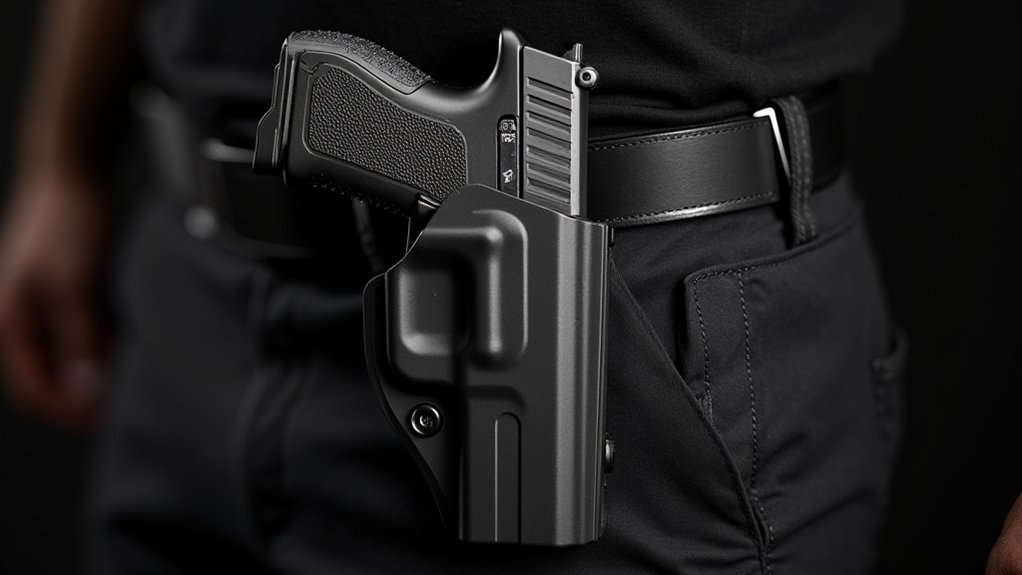
You rely on friction and a snug holster fit to keep your firearm secure without any extra steps.
It’s all about the right materials and precise molding—they make a big difference in holding your weapon firmly.
When you understand how these factors work together, it’s easier to pick a holster that balances security with quick access.
Friction-Based Security
Although it doesn’t involve any extra locking mechanisms, friction-based security keeps your firearm firmly in place by relying on the tight fit and precise design of the holster. Made from materials like leather or Kydex, these holsters mold closely to your firearm’s shape, creating enough friction to hold it securely.
This passive retention lets you draw quickly since you don’t have to release any locks or straps. Many concealed carry holsters use this method because the natural friction prevents your gun from shifting during daily movements.
However, friction alone may not stop someone trying to grab your weapon, so it might fall short for law enforcement or tactical needs where higher security is essential.
Still, it remains a key feature for everyday carry holsters.
Holster Fit Importance
Fit plays an essential role in passive retention mechanisms by guaranteeing your firearm stays firmly in place through a snug, secure hold.
The holster’s fit relies on friction to keep your gun from shifting or falling out, especially during movement or physical activity.
Materials like Kydex or quality leather improve this grip, providing consistent, reliable retention without extra effort from you.
Since passive retention doesn’t require manual locking, a tight fit lets you draw quickly when you need to.
It’s important to regularly check your holster’s fit, as wear or changes in your firearm can reduce retention over time.
Maintaining a proper fit guarantees your firearm remains secure yet accessible, boosting both safety and performance in everyday carry situations.
Active Retention Mechanisms
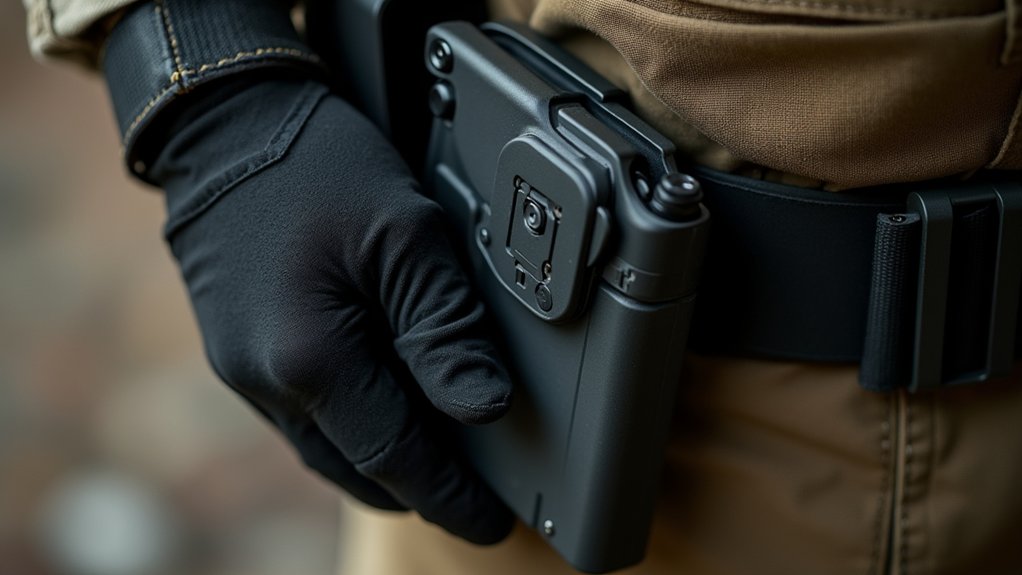
Active retention mechanisms mean you have to do something specific to release your firearm, which adds an extra layer of security.
For example, you might find common types like thumb breaks and trigger guard locks. These options strike a nice balance between protecting your gun and allowing quick access.
Knowing how these mechanisms work really helps you see their role in stopping unauthorized draws.
At the same time, they keep your firearm ready whenever you need it. So, it’s a smart way to stay both secure and prepared.
Types of Mechanisms
When you use a retention holster with active mechanisms, you’ll need to engage specific features to release your firearm. This ensures that only you can draw it quickly and securely.
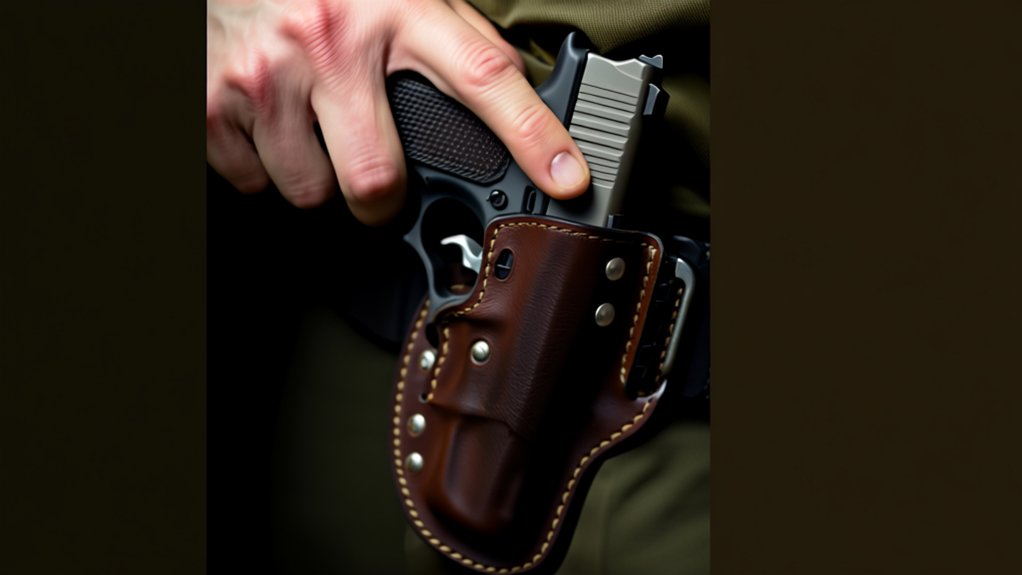
Common active retention types include thumb breaks, which are straps you manually unsnap before drawing. Trigger guard locks automatically engage to secure your firearm and require a precise release to draw smoothly.
Level II holsters combine passive retention with one active mechanism, balancing security and quick access. For greater protection, Level III and IV holsters incorporate multiple active retention devices, greatly reducing the risk of unauthorized access or weapon takeaways.
Each mechanism demands deliberate action, so you must practice to achieve a fast, efficient draw while maintaining maximum security.
Activation Methods Explained
Because you need to release your firearm quickly yet securely, retention holsters use specific activation methods that require deliberate actions.
These active retention mechanisms guarantee only you can draw your weapon, balancing speed with security.
Common methods include thumb breaks and loops, which you must manually release, and trigger guard locks that latch onto the trigger guard.
Higher-level holsters combine multiple active retention devices for added protection. Your effectiveness depends on training and familiarity with these actions to avoid delays during critical moments.
Here are common active retention methods:
- Thumb breaks: straps you unsnap before drawing
- Thumb loops: loops you pull back to release
- Trigger guard locks: latch onto trigger guard, requiring disengagement
- Level II holsters: combine friction with one active device
- Level III/IV holsters: feature multiple active mechanisms for improved security
Security Benefits Provided
Although releasing your firearm requires deliberate action, retention holsters guarantee you maintain control while keeping others from easily accessing your weapon.
Active retention mechanisms like thumb breaks and trigger guard locks demand specific movements to release the gun, markedly reducing the risk of unauthorized grabs or disarms.
Level II holsters combine passive retention with one active feature, striking a balance between quick access and security.
For higher-risk situations, Level III and IV holsters use multiple active mechanisms, offering improved protection against theft or forced removal.
These devices undergo rigorous stress testing to verify they hold firm under pressure while allowing you a smooth, efficient draw.
Still, training is essential. Knowing how to operate these mechanisms quickly prevents delays when you need your firearm most.
Multi-Level Retention Systems
Since securing your firearm is essential, multi-level retention systems offer varying degrees of protection to match your needs.
These systems range from simple to complex, with each level adding extra steps to prevent unauthorized access while ensuring you can draw quickly when necessary.
Here’s how they break down:
- Level I uses passive retention like friction for basic security.
- Level II adds an active mechanism, such as a thumb break, requiring two actions.
- Level III combines passive retention with two active mechanisms for stronger security.
- Level IV involves multiple active devices, demanding up to four distinct actions.
Higher levels suit high-risk environments, offering maximum control without sacrificing accessibility.
Understanding these levels helps you choose a holster that balances safety and usability perfectly.
Materials Used in Retention Holsters
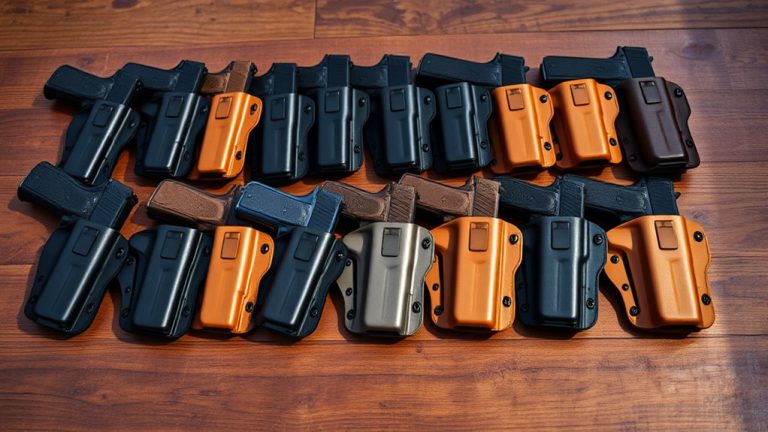
Choosing the right material for your retention holster plays an essential role in balancing durability, comfort, and security. Kydex offers a lightweight, precise fit that locks your firearm securely. Leather provides a classic look and moderate retention but needs upkeep. Nylon is budget-friendly and light but less durable. Hybrid holsters combine these materials, giving you both comfort and strong retention.
| Material | Feel | Security Level |
|---|---|---|
| Kydex | Firm and smooth | High |
| Leather | Soft and classic | Moderate |
| Nylon | Light and flexible | Basic |
This table helps you quickly gauge which material suits your needs, whether you want reliability, style, or affordability.
Common Retention Devices and Their Functions
Retention holsters use a mix of active and passive devices to keep your firearm secure while ensuring a quick draw when necessary.
Retention holsters combine active and passive features to secure your firearm while allowing for a swift, reliable draw.
Active devices require deliberate actions, while passive retention relies on the snug fit of the holster.
Here are some common retention devices and their functions:
- Thumb breaks: Snap a strap open with your thumb before drawing.
- Trigger guard locks: Engage the trigger guard for added security.
- Passive retention: Uses friction and fit to hold the firearm without extra steps.
- Adjustable retention: Lets you tighten or loosen the holster’s grip to fit your needs.
- Multi-level retention: Combines passive and one or more active devices for different security levels.
These devices balance security and accessibility, giving you control over how your firearm is retained.
Benefits of Using Retention Holsters
Understanding the different retention devices helps you appreciate why retention holsters offer significant advantages. These holsters secure your firearm with active and passive retention methods, preventing unauthorized access and reducing weapon takeaways in high-risk situations.
You benefit from a secure fit that still allows quick access when it matters most. Retention holsters, especially Level II and higher, have undergone tough testing to guarantee they hold up against adversarial grabs, giving you reliable performance under pressure.
Using one boosts your confidence and safety during physical activity, knowing your firearm won’t accidentally disengage or discharge. By securely holding your weapon, retention holsters minimize the risk of unintended firing, helping you maintain control and focus wherever you carry.
Choosing the Appropriate Retention Level
When selecting a holster, you need to match its retention level to your specific needs and environment.
Consider these factors to choose wisely:
- Level I: Basic friction, ideal for concealed carry.
- Level II: Adds an active mechanism, good for open carry.
- Level III: Multiple active locks, suited for law enforcement patrols.
- Level IV: Highest security, designed for corrections officers.
- Environment: Urban crime or rural use affects your choice.
Assess your daily threat level and typical surroundings carefully.
Picking a retention level that fits your lifestyle guarantees your firearm stays secure but accessible.
Training and Practice for Effective Use
Choosing the right retention level sets the foundation, but mastering your holster requires consistent training and practice. You need to develop muscle memory by regularly practicing disengagement of retention devices, especially under pressure.
One-handed draw drills help you get familiar with your holster’s mechanics, ensuring quick and safe access. It’s important to include stress-testing exercises that simulate physical confrontations to see how well your holster secures your firearm during movement.
One-handed draw drills and stress-testing ensure your holster provides quick, safe access and secure retention during movement.
Dry-fire practice is key to maintaining proficiency without risking premature trigger exposure.
Finally, attending training courses focused on retention holsters can provide valuable techniques and strategies.
Frequently Asked Question
Can Retention Holsters Be Used for Concealed Carry?
Worried about keeping your firearm secure while carrying it discreetly? Finding a holster that balances safety and concealment can feel tricky, especially when you want quick access without compromising security.
Retention holsters have become increasingly popular because they offer just that. In fact, many users appreciate how these holsters keep their firearm firmly in place, reducing the chance of accidental drops or unauthorized access.
Plus, with adjustable retention features, you can tailor the fit to your comfort and draw speed. Whether you prefer leather’s classic feel or the sleek durability of Kydex, there’s an option that fits your style.
To make your choice easier, we’ve gathered the best retention holsters designed for concealed carry, focusing on security, comfort, and accessibility. This roundup will help you find the perfect balance so you can carry confidently and discreetly.
Here are the top options that stood out after extensive testing.
How Do Retention Holsters Affect Firearm Accessibility in Emergencies?
Ever fumbled with your holster when seconds mattered most? It’s a common worry for anyone who carries a firearm for protection. Retention holsters, designed to secure your weapon firmly, can sometimes slow your draw in emergencies because they require specific actions to release the firearm.
With personal safety more important than ever, retention holsters have gained popularity for their added security—especially higher retention levels like Level III that demand multiple steps to access your gun. In fact, many law enforcement officers rely on these holsters to prevent accidental loss or unauthorized grabs.
But here’s the catch: those extra steps can delay your response time when every second counts.
That’s why training is key. The right practice helps you quickly disengage the holster under stress, balancing safety with swift accessibility. Without it, the very features meant to protect you might end up hindering you in a critical moment.
To help you navigate these pros and cons, we’ve gathered the top retention holsters that offer a smart blend of security and quick access. Here are the best options that stood out after extensive testing.
Are Retention Holsters Compatible With All Firearm Models?
Worried your retention holster mightn’t fit your firearm just right? You’re not alone. Many assume these holsters work universally, but that’s rarely the case.
Retention holsters are specifically designed to snugly fit certain gun models, ensuring your firearm stays secure and ready when you need it. In fact, using a holster that isn’t tailored to your weapon can lead to poor retention and slow access—defeats the whole purpose of carrying safely.
With safety and quick draw times more important than ever, choosing the right holster is crucial. While some “universal” options exist, they often compromise on security, leaving your firearm less protected.
That’s why it’s essential to pick a retention holster made specifically for your model to strike the perfect balance between safety and accessibility.
To make your choice easier, we’ve gathered the best retention holsters designed for various firearms, highlighting their fit, comfort, and security features. Here are the top options that stood out after extensive testing.
What Maintenance Is Required for Retention Holsters?
Worried your retention holster might fail when you need it most? Keeping it in top shape is crucial for safety and quick access.
With more people investing in retention holsters for added security, knowing how to maintain them properly has never been more important.
Retention holsters rely on mechanisms like thumb breaks and locks to keep your firearm secure, but dirt and wear can make these parts less reliable. Regular maintenance ensures your holster works smoothly every time you draw.
In this guide, we’ll walk you through the simple steps to clean, inspect, and lubricate your holster, plus tips on proper storage to protect it from damage.
By following these easy tips, you’ll boost your holster’s performance and reliability.
Ready to keep your gear in prime condition? Here are the best ways to maintain your retention holster and make sure it’s always ready when you are.
Do Retention Holsters Add Significant Bulk or Weight?
Worried that a retention holster might weigh you down or add unwanted bulk? You’re not alone—many people hesitate because they think extra security means sacrificing comfort or concealability.
But with the growing need for reliable carry options, retention holsters have become essential for safely securing your firearm without compromising ease of use.
Did you know that modern retention holsters are designed to balance security and comfort? While Level III or IV models include extra locking mechanisms that can add size and weight, many use lightweight materials like Kydex to keep things slim and manageable.
In fact, advances in design focus on minimizing bulk so you can carry confidently every day.
To help you navigate these choices, we’ve rounded up the best retention holsters that combine strong security features with practical, lightweight designs.
Whether you want maximum retention or something more streamlined, this guide will help you find the perfect fit.
Here are the top options that stood out after extensive testing.
Conclusion
Think of a retention holster as the steadfast guardian of your sidearm, locking it in place like a fortress protecting its treasure. By mastering its layers of security, you hold the key to both safety and readiness.
With the right holster and regular practice, you’ll feel the confident weight of control, ensuring your weapon stays secure until the moment you choose to release it. Swift, sure, and always in your command.