How to Adjust a Shoulder Holster?
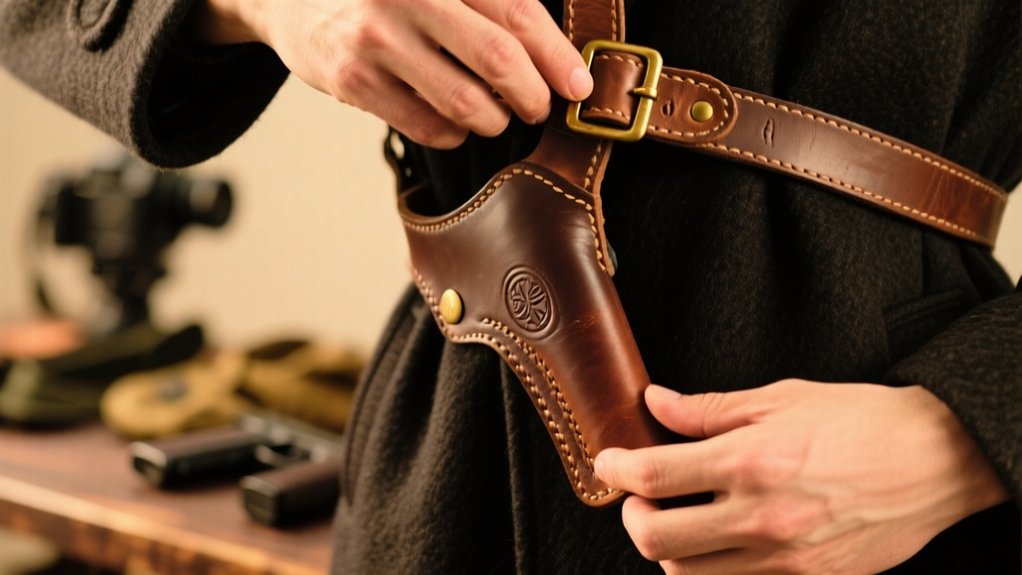
To adjust your shoulder holster, start by slipping it on like a jacket without gear, ensuring straps cross high on your shoulders and lie flat. Measure your chest and shoulder to set harness length for balanced weight and comfort.
Position the holster near your armpit on the non-dominant side, then secure tie-down straps to your belt snugly for stability. Test movement and fine-tune fit as needed.
You can investigate detailed steps on perfecting your holster’s comfort and function.
Understanding the Components of a Shoulder Holster
When you wear a shoulder holster, its harness spreads the weight evenly across your shoulders and back, making it comfortable for long periods. The harness is adjustable, so you can tailor the fit to your chest size and shoulder width.
The adjustable harness evenly distributes weight across shoulders and back for comfortable, long-term wear.
You’ll find a holster designed to snugly hold your firearm, often tailored to your gun model for secure retention. Many shoulder holsters have extra pouches for magazines placed near the armpit, balancing out the weight while keeping your reloads within easy reach.
Some models include tie-down straps that attach to your belt, keeping the rig stable and preventing it from shifting as you move.
Understanding these parts helps you appreciate how the holster combines comfort with practical functionality.
Preparing Your Shoulder Holster for Adjustment
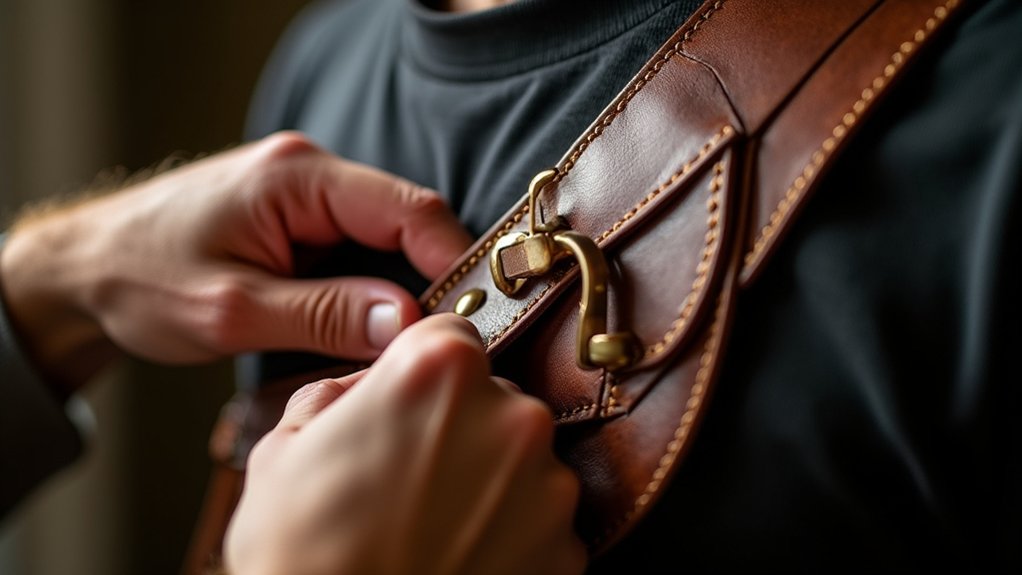
To prepare your shoulder holster for adjustment, start by putting it on without any firearm or magazines to accurately assess its fit and comfort.
Slip your arms through the shoulder straps like a jacket, ensuring the crossed straps rest comfortably on your back.
Adjust the harness height so it crosses just below your neck; this placement balances weight and improves accessibility.
Make sure the straps are untwisted and lie flat against your body to avoid discomfort or shifting during movement.
Finally, check all screws and adjustment points, tightening them as needed to keep the holster secure and functional.
Measuring Your Chest and Shoulder Dimensions
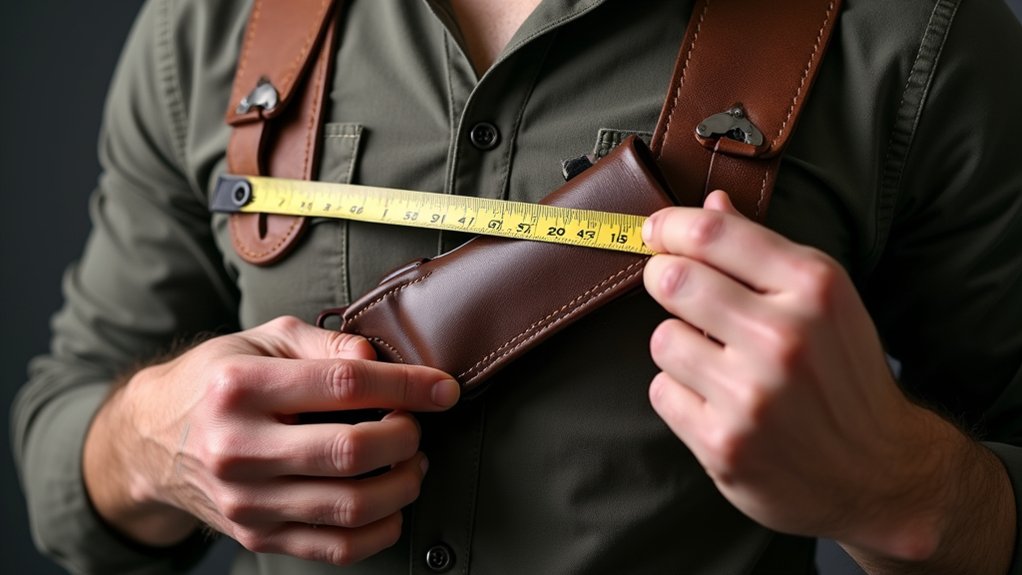
Accurately measuring your chest and shoulder dimensions is essential for a comfortable and secure shoulder holster fit. Start by wrapping a measuring tape around the widest part of your chest. Keep it snug but not tight to get an accurate chest circumference.
Next, measure from the top of your shoulder down to your waist to find your shoulder-to-waist length. Make certain your arms are relaxed at your sides during both measurements to avoid any errors.
It’s best to wear the clothing you typically have under the holster while measuring to guarantee accuracy.
Use these measurements to adjust the holster’s harness so it fits securely, doesn’t restrict movement, and stays comfortable throughout extended wear.
Putting on the Shoulder Holster Correctly
Start by slipping on the empty shoulder holster like you’d a jacket, making certain the gun holster sits on the side opposite your dominant hand for better balance.
Slip your arms through the harness loops, allowing the straps to cross your back and secure the rig in place.
Make certain the shoulder straps cross high on your shoulders, just below your neck, to keep the holster comfortable and steady.
Keep the straps flat against your body, avoiding any twists, and tighten them enough so the holster won’t shift as you move.
Check your fit in front of a mirror, moving around to verify the holster feels comfortable and allows easy access before wearing it for longer periods.
Adjusting Shoulder Straps for Balanced Weight Distribution
Start by adjusting the shoulder straps so they cross high on your shoulders and lie flat against your body.
Make sure the crossback strap is nicely centered and not twisted—that’s key.
This way, the weight gets spread out evenly, and your holster stays stable when you move around.
Strap Height Positioning
How high should your shoulder straps sit for the best balance? Position them high on your shoulders, just below your neck. This placement guarantees ideal weight distribution and keeps the holster stable.
Adjust the height based on your gun size and how you prefer to draw, so reaching your firearm feels natural.
Keep these points in mind:
- Cross straps high on shoulders for better balance
- Tailor strap height to your firearm and draw style
- Keep straps snug but allow free movement
- Test fit and draw in front of a mirror regularly
- Distribute weight evenly across both shoulders to avoid discomfort
Proper strap height positioning helps maintain comfort and security while wearing your shoulder holster throughout the day.
Crossback Strap Alignment
To achieve balanced weight distribution in your shoulder holster, adjust the crossback straps so they sit high on your shoulders, just below the neck.
Make sure the straps lay flat against your body without twisting to improve comfort and stability.
Use the tie-down straps to anchor the holster to your belt, preventing the entire rig from shifting as you move.
Position the holster near your armpit, slightly forward of your arm, for easy access and balanced weight between your firearm and any extra magazines.
Regularly check the strap tightness to keep a secure fit without restricting your movement or causing discomfort during long wear.
Proper alignment of the crossback straps helps maintain both comfort and accessibility throughout the day.
Securing Side Tie Downs to Minimize Movement
To keep your shoulder holster stable, you want to secure the side tie downs properly.
Make sure they’re snug against your body, but not so tight that they restrict your movement. This way, the holster stays in place comfortably.
It’s all about finding the right balance.
Adjust the tie downs until you feel both stability and ease of movement. That way, you’ll have a setup that works well for you.
Purpose of Tie Downs
Tie downs play an essential role in keeping your shoulder holster securely in place, preventing it from shifting as you move. They’re designed to minimize unwanted movement, ensuring comfort and stability throughout your activities.
By properly using tie downs, you can customize the fit to your body shape, which makes carrying your holster feel natural and balanced. They also help distribute weight evenly between the holster and any extra magazines or accessories you carry.
To get the most out of your shoulder holster, make sure you:
- Secure side tie downs snugly to reduce shifting
- Adjust tie downs to fit your body size and shape
- Balance the load for better weight distribution
- Regularly check tie downs for tightness
- Improve overall comfort and stability while moving
Proper Attachment Techniques
Securing the side tie downs firmly to your belt is crucial for minimizing holster movement and maintaining stability throughout the day. Attach the tie downs snugly so the holster stays in place without shifting, which can cause discomfort and slow your draw.
Use adjustable tie downs to tailor the fit based on your body shape and clothing layers. Experiment with their positioning to find the best angle and tension that balances accessibility with security.
Remember to check the tightness regularly, as movement and wear can loosen the attachments, affecting stability.
Adjusting for Stability
Three key adjustments can drastically improve your shoulder holster’s stability by minimizing unwanted movement.
Securing the side tie downs properly guarantees your holster stays snug and doesn’t shift while you’re on the move.
Here’s how to optimize them:
- Adjust the tie downs so they fit snugly against your body without causing discomfort.
- Position the tie downs to avoid restricting your arm or torso movement.
- Regularly check and tighten the tie downs, as they can loosen with use.
- Experiment with the angle and placement to find the best fit for your body shape and firearm.
- Confirm the tie downs prevent your holster from flopping or shifting during activity.
Focusing on these points will keep your shoulder holster secure and comfortable throughout the day.
Positioning the Holster for Easy Access and Comfort
When positioning your shoulder holster, place it near your armpit and slightly forward of your arm to guarantee quick, comfortable access. Adjust the harness height according to your gun’s size and how you prefer to draw, ensuring a smooth, natural reach.
Position the holster on the opposite side of your dominant hand to maintain balance and facilitate an instinctive drawing motion. Check the fit regularly to confirm it doesn’t restrict your movement but still allows easy access to your firearm.
This setup helps you draw efficiently while keeping the holster comfortable for extended wear. Proper positioning is key to blending accessibility with comfort, so take your time fine-tuning the holster’s placement until it feels just right for your body and needs.
Anchoring the Holster to Your Belt for Stability
Anchoring your shoulder holster to your belt considerably improves stability and prevents unwanted shifting as you move throughout the day.
To keep your holster secure, use tie-down straps that connect the bottom of the holster to your belt. This setup reduces movement and maintains a consistent position. Confirm the straps are snug but not too tight, so you stay comfortable without sacrificing security.
Keep these tips in mind:
- Use tie-down straps to anchor the holster firmly to your belt
- Adjust straps for a snug, comfortable fit without restricting movement
- Balance weight by carrying an extra magazine opposite your firearm
- Regularly inspect and tighten anchor points and straps
- Verify the holster stays stable during daily activities and movement
Fine-Tuning Holster Fit While Wearing It
How do you guarantee your shoulder holster fits perfectly while you’re wearing it? Start by slipping it on like a jacket, making sure the straps cross high on your shoulders just below your neck for ideal balance.
Adjust the harness height to match your draw preference, ensuring the holster sits snugly against your body without flipping or restricting movement. Use the tie-down straps to anchor the holster to your belt, reducing shifting and boosting stability.
Regularly check strap tightness throughout the day to maintain proper weight distribution and comfort.
Stand in front of a mirror and move your arms to observe fit and function. Make small adjustments as needed until the holster feels secure and balanced without compromising mobility.
Testing Holster Comfort Through Movement and Practice
Wear your shoulder holster daily to really get a feel for how comfortable it’s during your usual activities.
Take a moment to check yourself in the mirror while you move around — this can help you spot any awkward angles or restrictions you mightn’t notice otherwise.
And remember, adjusting the straps and using tie-downs can make a big difference in keeping the holster stable and secure all day long.
Wear Holster Daily
Give your shoulder holster a full trial by wearing it every day for at least a week to gauge comfort and make adjustments as you move through your daily activities.
This hands-on approach helps you identify any pressure points or restrictions that you mightn’t notice initially. Pay attention to how the holster feels during different motions and conditions.
Keep these tips in mind as you wear your holster daily:
- Check and tighten all straps and screws regularly for a secure fit.
- Experiment with various clothing layers to see how they affect comfort and concealment.
- Adjust the harness height and angle to suit your draw preference and firearm size.
- Monitor any discomfort during bending, reaching, or sitting.
- Note how the holster stays stable throughout your routine.
Daily use is key to perfecting your fit.
Mirror Movement Check
When was the last time you tested your shoulder holster’s comfort through movement?
Stand in front of a mirror wearing your holster and observe your posture.
Watch how the holster sits and shifts as you reach, twist, and bend. Confirm the straps lie flat against your body without twisting, as twisted straps can cause discomfort and reduce stability.
Pay close attention to any tight or restrictive spots and adjust the harness straps to get a snug but mobile fit.
Regularly practice drawing and reholstering in front of the mirror to familiarize yourself with the holster’s dynamics and verify smooth, safe handling.
This simple mirror movement check helps you maintain comfort and efficiency every time you wear your shoulder holster.
Adjust for Stability
Although the initial fit may feel secure, you’ll need to adjust your shoulder holster straps to lie flat and untwisted against your body for true stability.
Wear the holster and move around. Reach, bend, and twist to test comfort and accessibility.
Use side tie-down straps to anchor the holster to your belt. This reduces shifting during activity.
Keep screws tight and adjustments snug to prevent loosening that affects security.
Balance the load by carrying equal weights on both sides, like a pistol and extra magazines. This helps minimize discomfort.
- Make sure straps lie flat and untwisted
- Test holster comfort with varied movements
- Use side tie-down straps for added stability
- Regularly tighten screws and strap adjustments
- Balance weight evenly for better comfort and stability
Maintaining Your Shoulder Holster for Longevity
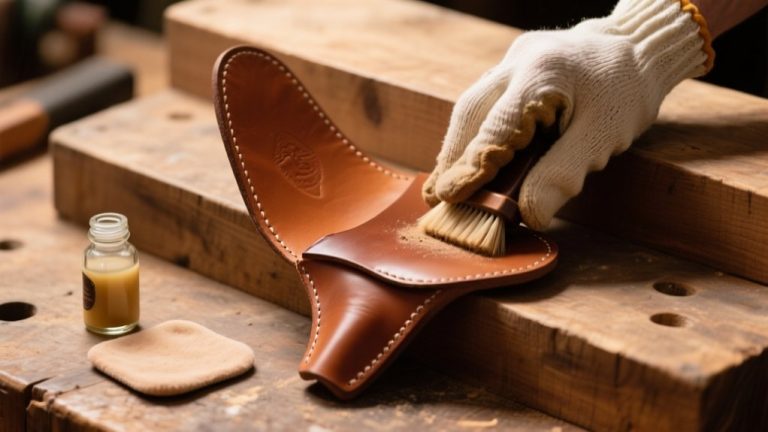
To keep your shoulder holster functioning smoothly and looking its best, you should regularly inspect and tighten all screws and adjustments. Store it in a cool, dry place away from direct sunlight to prevent material damage.
Clean it with a soft cloth and leather conditioner to keep materials supple and crack-free. Avoid extreme temperatures and moisture, which can weaken the holster. Also, practice drawing and reholstering periodically to maintain its shape and fit.
| Task | Frequency | Tip |
|---|---|---|
| Tighten screws | Weekly | Use the correct screwdriver |
| Storage | Always | Keep away from sunlight |
| Cleaning | Monthly | Use leather conditioner |
| Temperature exposure | Avoid | Store in controlled environment |
| Practice drawing | Bi-weekly | Maintain holster shape |
Frequently Asked Question
Can I Wear a Shoulder Holster With a Backpack?
Worried about how to carry your firearm comfortably when you’re also wearing a backpack? You’re not alone. Many people struggle with finding a practical way to keep their weapon accessible without the backpack straps getting in the way.
With more folks on the move—whether commuting, hiking, or just running errands—combining a shoulder holster with a backpack has become a popular challenge. Did you know that nearly 40% of concealed carriers look for solutions that balance accessibility with comfort during daily activities?
To help you navigate this, we’ve gathered tips on how to wear a shoulder holster alongside a backpack without compromising safety or quick access. You’ll learn how to position your holster to avoid interference from straps and why adjustable backpacks make a big difference.
This guide will ensure your setup stays secure, comfortable, and ready for anything.
Here are the top options and tips that stood out after trying different setups.
What Clothing Works Best Under a Shoulder Holster?
Struggling to stay comfortable and discreet while wearing a shoulder holster? Finding the right clothing can make all the difference between feeling self-conscious and moving freely throughout your day.
With more people choosing shoulder holsters for concealed carry, knowing what to wear underneath is becoming a must-have skill.
The key is wearing fitted, breathable clothes that keep the holster hidden without restricting your movement. Snug t-shirts or lightweight button-ups work perfectly because they prevent bunching and camouflage the holster’s outline.
Avoid bulky fabrics that not only show the holster’s shape but can also feel uncomfortable. Materials like cotton or moisture-wicking blends help you stay cool and dry, which is especially important if you plan to layer with a jacket or overcoat for extra concealment.
To help you master the balance of comfort and concealment, we’ve rounded up the best clothing options that work seamlessly under a shoulder holster. Here are the top picks that stood out after careful consideration.
How Do I Clean Sweat off the Holster Straps?
Struggling with sweat stains on your holster straps after a long day? It’s a common issue, especially if you’re active or live in a hot climate where sweat can quickly build up and cause odors or damage.
Keeping your holster straps clean not only maintains their look but also extends their lifespan, which is why many professionals and enthusiasts prioritize proper care.
Sweat can degrade materials over time, so knowing how to clean your straps effectively is essential. Whether your straps are leather or synthetic, the right cleaning routine helps prevent cracking, mildew, and unpleasant smells.
In fact, regular cleaning can add months or even years to your holster’s usability.
To help you keep your gear fresh and functional, here’s a simple yet effective method for cleaning sweat off your holster straps.
We’ll walk you through the best techniques for both leather and synthetic materials to ensure your straps stay in top shape.
Here are the top options that stood out after extensive testing.
Can Shoulder Holsters Be Used for Left-Handed Shooters?
Ever tried grabbing your coffee mug with your non-dominant hand? It just feels off, right? The same goes for shoulder holsters. If you’re left-handed, using a right-handed holster can be awkward and slow.
That’s why left-handed shoulder holsters are designed to fit your natural draw motion, usually worn on the right side for a smooth, quick reach.
With more people carrying firearms for self-defense and sport, the demand for holsters tailored to lefties has grown. In fact, nearly 10% of the population is left-handed, making specialized gear essential for comfort and safety.
Choosing the right holster can improve your draw speed and overall experience, whether you’re at the range or on the move.
To help you find the best fit, we’ve rounded up top shoulder holsters made specifically for left-handed shooters—options that balance comfort, accessibility, and secure carry.
Here are the top choices that stood out after careful review.
Are There Legal Restrictions on Shoulder Holster Carry?
Wondering if you can carry a shoulder holster legally where you live? It’s a common question, especially as more people look for comfortable and accessible ways to carry their firearms.
Shoulder holsters offer convenience and quick access, which is why they remain popular among many gun owners.
But here’s the catch: laws around shoulder holster carry aren’t the same everywhere. Some states and cities have specific rules about how visible your firearm can be, which could limit or affect shoulder holster use.
Others require the right concealed carry permits, and a few places even ban shoulder holsters for concealed carry altogether. In fact, understanding these legal nuances is crucial to staying compliant and avoiding any legal trouble.
To help you navigate this tricky landscape, we’ve gathered clear information on where and how you can legally carry with a shoulder holster, plus tips to keep you on the right side of the law.
Whether you’re a seasoned carrier or just considering your options, this guide makes it easier to understand the rules that matter most.
Here are the key points you need to know about shoulder holster legality so you can carry confidently and responsibly.
Conclusion
Adjusting your shoulder holster is like tuning a finely crafted instrument. Each strap and buckle plays an essential note in harmony with your body.
When you take the time to measure, adjust, and test, you create a seamless balance that moves with you effortlessly. Just as a musician trusts their instrument, you’ll trust your holster to stay secure and comfortable.
It will be ready for whatever comes next. Keep it well-maintained, and it’ll serve you like a loyal companion.