How to Wear a Paddle Holster?
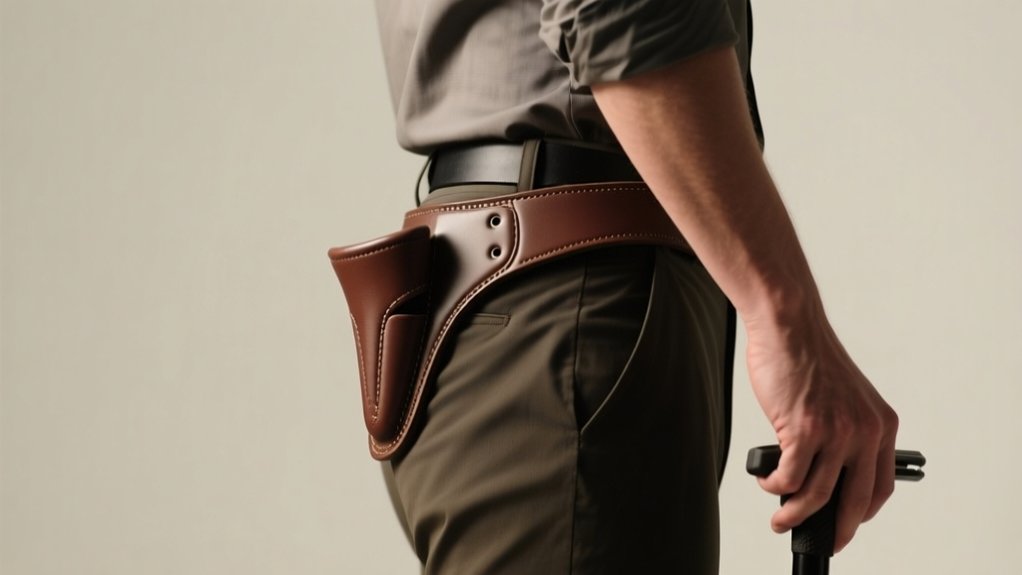
When you wear a paddle holster, position it at the 3 or 4 o’clock spot on your waist. Make sure the paddle lip securely locks behind your belt or pant material to prevent shifting.
Adjust the cant angle for a smooth, comfortable draw that fits your style. Wear slightly looser pants to avoid pinching and improve concealment.
If you want to master comfort, concealment, and quick access, there are a few more tips to investigate.
Choosing the Right Firearm and Holster
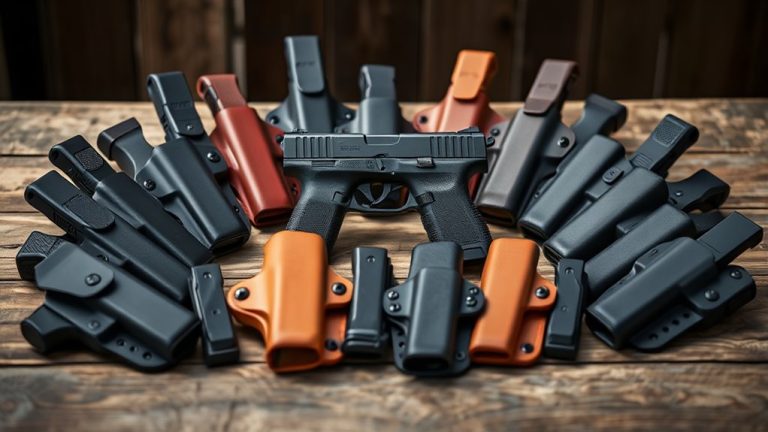
When choosing the right firearm and paddle holster, you’ll want to pick one designed specifically for your handgun’s make and model to guarantee a secure fit and proper retention.
Opt for a compact or subcompact firearm to improve concealment, as larger guns can be harder to hide with a paddle holster.
Choosing a compact or subcompact firearm enhances concealment with paddle holsters, as larger guns are more difficult to hide.
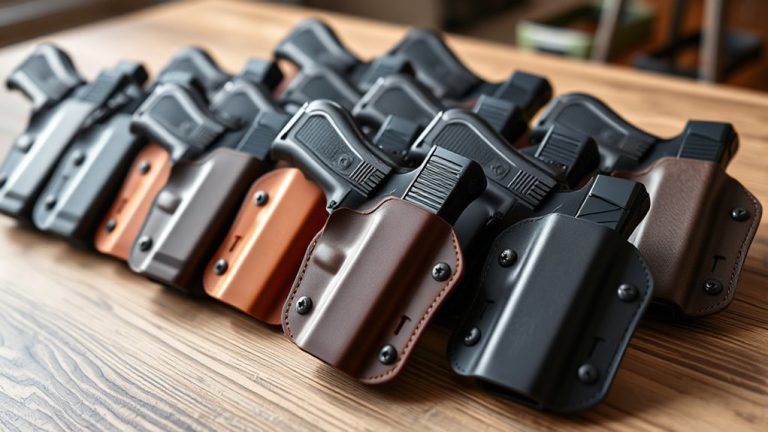
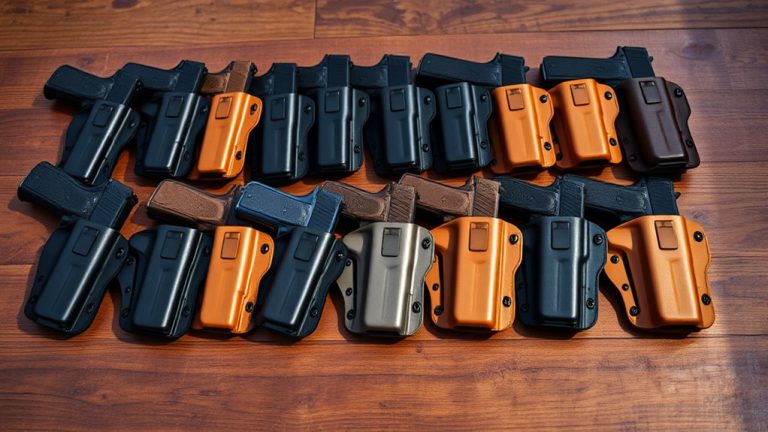
Consider the holster material carefully. Rigid synthetics offer durability, while leather provides comfort.
Choose a paddle holster with an adjustable cant so you can customize the angle for your preferred draw style.
Make certain you’re using a sturdy belt and wear pants with a slightly looser waist to accommodate the holster effectively.
This setup ensures stability and comfort while keeping your firearm easily accessible.
Positioning the Paddle Holster on Your Waist
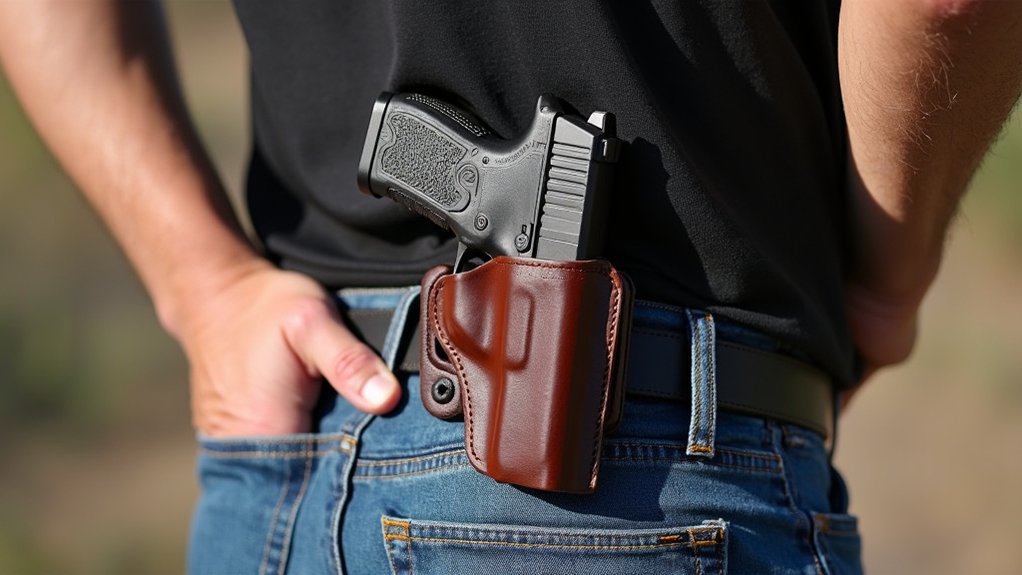
When positioning your paddle holster, try aiming for the 3 or 4 o’clock position. This helps balance accessibility and comfort nicely.
You’ll want to think about whether you prefer it inside or outside your waistband, too. That choice really depends on what you do daily and the kind of clothes you wear.
And don’t forget to adjust the angle and fit so it feels secure and makes drawing your firearm easy.
Optimal Placement Areas
Placing your paddle holster correctly is key to quick access and comfort. Typically, you’ll want to position it around the 3 o’clock or 4 o’clock spot on your hip. This placement guarantees your firearm is easily accessible while staying comfortable.
Make certain the lip of the paddle is securely seated behind your belt or pant material to keep it stable as you move. Adjust the cant, or tilt, of the holster between 15 and 30 degrees to match your drawing style. Test the fit by drawing your firearm to confirm the holster doesn’t shift or lift.
For better concealment and comfort, especially with looser clothing, try placing the paddle slightly above your waistband or over your tailbone.
Inside vs. Outside Waist
Although paddle holsters are most commonly worn outside the waistband for easy attachment and removal, you can also position them inside the waistband for improved concealment.
Wearing your paddle holster outside the waistband (OWB) lets you quickly attach or remove it without threading a belt, making adjustments simple.
To guarantee stability, seat the paddle properly behind your belt, preventing shifting as you move. Alternatively, placing the paddle between your belt and pants keeps the holster snug against your body, reducing printing and enhancing concealment.
The paddle’s design wraps around your hip, offering comfort and secure fit regardless of position.
Remember, adjusting the cant tailors the draw angle to your preference, improving accessibility whether you wear it inside or outside your waist.
Choose the position that balances concealment and convenience best for you.
Adjusting for Comfort
How do you find the most comfortable position for your paddle holster on your waist?
Start by placing it at your preferred carry angle, usually around 3 or 4 o’clock, which offers quick access and comfort.
Verify the paddle’s ledge sits firmly behind your belt or pants to keep it stable.
Adjust the cant to match your draw style, improving both comfort and speed.
Test stability by moving and bending to confirm it doesn’t shift or lift.
Finally, wear a slightly loose shirt or jacket over it to conceal without restricting access.
- Position paddle at 3 or 4 o’clock for easy reach
- Secure paddle ledge behind belt or pants
- Adjust cant to suit your draw style
- Check holster stability with movement
- Use loose outerwear to conceal and reduce printing
Securing the Holster for Stability
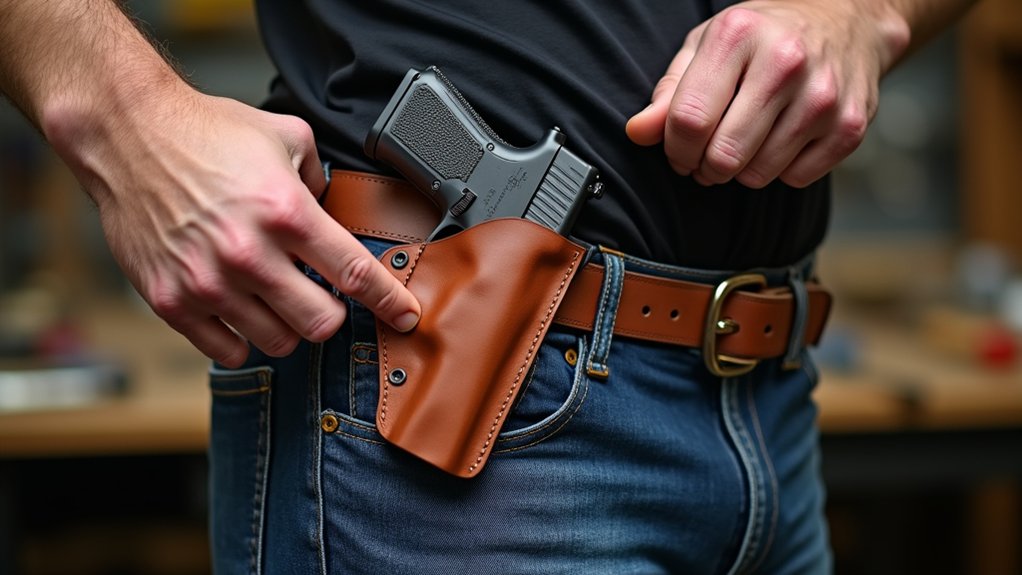
To keep your paddle holster stable, first make sure the retention hook is firmly locked behind your belt or pants. You want it snug so it doesn’t wiggle around.
Next, position the paddle fully between your waistband and your body. This helps prevent any shifting when you move.
Finally, adjust the angle to fit your draw style. This way, you’ll have both comfort and a solid hold.
It really makes a difference when you’re on the move.
Paddle Positioning Techniques
When you insert the paddle behind your waistband, make certain the retention lip securely locks behind your belt or pant material to keep the holster stable.
Proper positioning not only improves comfort but also guarantees quick access when you need it most.
Here’s how to position your paddle holster effectively:
- Place the holster at your preferred carry angle, usually around 3 o’clock or 4 o’clock.
- Adjust the cant (tilt) to fit your natural draw style for a smoother extraction.
- Press the holster firmly against your body to prevent shifting or lifting during movement.
- Check that the retention lip fully engages behind your belt or pants.
- Regularly test the holster’s stability by attempting to lift the firearm to confirm secure retention.
These steps help keep your paddle holster stable and ready.
Retention Hook Engagement
Ensuring your paddle holster stays firmly in place depends largely on the retention hook engaging properly with your waistband or belt. Slide the paddle between your pants and body, making sure the retention hook locks securely behind your belt or garment.
Adjust the holster’s cant to fit your draw style, improving both comfort and hook engagement. Always perform movement checks to confirm the holster doesn’t shift during activity. Regularly inspect the hook for wear since a worn hook can compromise stability.
| Step | Action |
|---|---|
| 1. Insert Paddle | Slide between body and pants |
| 2. Engage Hook | Lock behind belt or waistband |
| 3. Adjust Cant | Match your draw style |
| 4. Movement Check | Test stability during activity |
| 5. Inspect Hook | Look for wear and secure grip |
Adjusting the Holster’s Cant and Draw Angle
Although adjusting the cant and draw angle of your paddle holster might seem minor, it plays an essential role in your comfort and draw speed.
To fine-tune your setup, loosen the screws and tilt the holster to an angle between 10 to 15 degrees for peak efficiency. A forward cant brings the grip closer for a quicker draw, while a rearward cant can help with concealment.
Always re-tighten the screws securely to keep the angle stable during movement. Try different angles and practice drawing to find what fits your style best.
Remember to check the angle regularly, especially after any physical activity.
- Loosen screws to adjust the cant angle
- Aim for 10–15 degrees for best draw speed
- Forward cant improves grip access
- Rearward cant aids concealment
- Re-tighten screws firmly after adjustment
Dressing to Conceal Your Paddle Holster
Since paddle holsters can create noticeable bulges, you’ll want to pick clothing that hides their outline effectively. Choose slightly loose-fitting shirts or jackets that prevent printing. Opt for longer tops that cover below your waistline.
Layering with a jacket or vest adds extra concealment. Make sure your pants have a sturdy waistband to hold the holster securely while remaining comfortable. Experiment with different carry angles and placements to find what works best with your outfit.
| Clothing Tip | Why It Helps |
|---|---|
| Loose-fitting tops | Prevents printing |
| Longer shirts | Covers holster below waist |
| Jackets or vests | Adds concealment layers |
| Sturdy waistband | Holds holster securely |
Tips for Comfort and Practical Use
To keep your paddle holster comfortable throughout the day, start by securing it firmly behind your waistband so the retention lip locks in place. This guarantees stability during movement and prevents shifting.
Adjust the cant and draw angle to fit your personal comfort and allow quick access. Choose a sturdy belt and wear slightly loose-fitting pants to avoid pinching and improve comfort.
Regularly check the holster’s fit, especially after bending or moving, to maintain security. Don’t hesitate to experiment with different placements above the waistband or slightly off-center to find what works best for you.
- Secure retention lip behind waistband for stability
- Adjust cant and draw angle for quick access
- Use a strong belt and loose pants to prevent pinching
- Check fit regularly to verify holster doesn’t shift
- Try different placements to maximize comfort and concealment
Frequently Asked Question
Can Paddle Holsters Damage My Firearm’s Finish?
Worried that your paddle holster might be scratching up your firearm? You’re not alone. Many gun owners wonder if their holster could be harming their prized piece’s finish without them even realizing it.
Paddle holsters are popular because they offer easy on-and-off convenience and secure carry. But with frequent use, a poorly fitting holster or one made from rough materials can actually wear down your firearm’s finish over time. In fact, studies show that abrasion from holsters is a common cause of cosmetic damage to firearms.
So how do you protect your investment? Choosing a high-quality holster made from rigid, smooth materials like Kydex can significantly reduce the risk of scratches. A snug fit is key to preventing unnecessary movement and friction.
Plus, regular cleaning of both your firearm and holster helps keep debris from building up and causing wear.
To help you find the safest and most durable options, we’ve rounded up the best paddle holsters that balance protection, comfort, and quality. Here are the top choices that stood out after thorough testing.
Are Paddle Holsters Suitable for Left-Handed Users?
Struggling to find a holster that works comfortably for left-handed shooters? You’re not alone—many lefties worry that paddle holsters just aren’t made for them.
But the truth is, paddle holsters have come a long way. With more left-handed and ambidextrous models hitting the market, there’s no need to settle for an awkward fit.
Paddle holsters are popular because they offer quick access and easy on-and-off convenience, making them a favorite for everyday carry. In fact, many manufacturers now specifically design options tailored to left-handed users, ensuring proper retention and draw angles.
This means you don’t have to compromise your comfort or safety.
To help you find the perfect match, we’ve rounded up the best paddle holsters that combine secure fit, adjustability, and left-handed-friendly features.
Whether you want to tweak the cant or find one that fits your specific firearm, these picks have got you covered.
Here are the top options that stood out after extensive testing.
How Do I Clean and Maintain a Paddle Holster?
Ever notice how your paddle holster starts looking worn or feels less secure over time? Keeping it clean and in good shape isn’t just about looks—it’s key to making sure it works properly when you need it most.
Paddle holsters are popular because they offer quick access and comfort, but they can wear down if not cared for right. In fact, regular maintenance can extend your holster’s life and keep your gear reliable.
If you’re wondering how to keep yours in top condition, you’re in the right place. We’ll walk you through easy cleaning tips like wiping it with a damp cloth and mild soap—without soaking it.
You’ll learn why checking for cracks or wear is crucial, especially with polymer models, and how leather holsters benefit from a good conditioner to stay flexible. Plus, we’ll share quick tricks for clearing out dust and advice on storing your holster properly to avoid damage.
Ready to keep your paddle holster working like new? Here are the best maintenance tips that’ll make your gear last longer and perform better every time.
Can I Use a Paddle Holster While Driving?
Ever wonder if you can comfortably wear a paddle holster while driving without it getting in the way? Many gun owners struggle with finding a balance between accessibility and comfort behind the wheel.
With more people prioritizing personal safety on the go, knowing how to wear your holster properly is crucial. Paddle holsters are popular because they offer quick access and easy on-and-off convenience, making them a top choice for daily carry.
But when you’re driving, a poorly positioned holster can snag on your seatbelt or shift uncomfortably. That’s why understanding the best placement and fit matters more than ever.
In this guide, we’ll walk you through how to wear your paddle holster snugly and securely while driving. You’ll learn the ideal positioning—usually around the 3 or 4 o’clock position—and how to adjust the angle (cant) for comfort and quick access.
Plus, we’ll remind you to always check local laws to stay compliant and keep your firearm safe.
Ready to find out how to carry smart and comfortable behind the wheel? Here are the top tips that make all the difference.
Are Paddle Holsters Legal in All States?
Wondering if paddle holsters are legal everywhere? You’re not alone. Many firearm owners want the convenience and quick access paddle holsters offer, but the rules around using them can be tricky.
Paddle holsters have become popular because they’re easy to put on and take off without removing your belt, making them a favorite for both open and concealed carry. In fact, with concealed carry permits increasing across the country, more people are looking for holsters that blend comfort with accessibility.
But here’s the catch—laws vary widely depending on your state, and some places have strict regulations or require permits that affect whether you can carry with a paddle holster.
To help you avoid surprises or legal issues, we’ve broken down where paddle holsters are allowed and what restrictions might apply. This guide will give you the clarity you need to carry confidently and stay within the law.
Now, let’s dive into the top paddle holsters that combine comfort, security, and style.
Conclusion
Now that you know how to wear your paddle holster just right, the real challenge begins: mastering your draw with speed and confidence. Remember, choosing the perfect fit and position sets the stage, but it’s your practice that steals the show.
So, gear up, adjust carefully, and dress smartly. Ready to feel the difference every time you reach for your firearm? The next step is yours. Don’t just wear it, own it.