
Can You Carry a Concealed Weapon in California
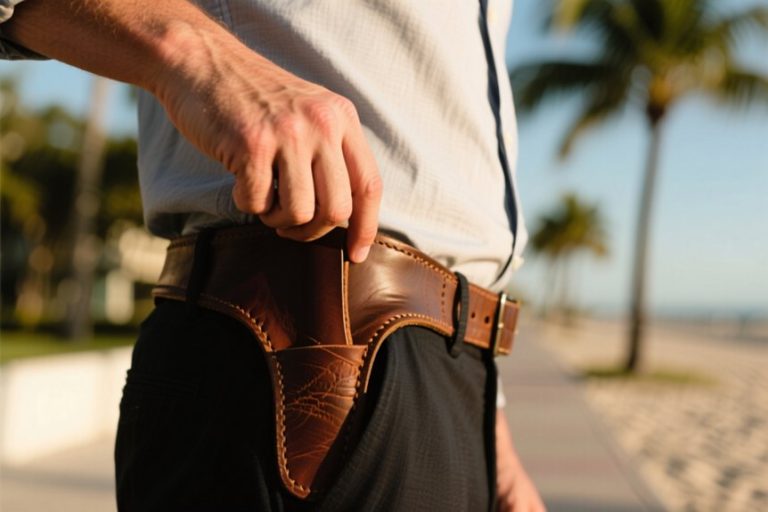
You can carry a concealed weapon in California only if you have a valid CCW permit. To get one, you need to be at least 21, complete a training course, and pass a thorough background check.
You must register your firearm and follow strict rules against alcohol use when armed. Also, remember to renew your license every two years.
Violating these laws can lead to serious legal consequences. Understanding these requirements and restrictions will help you stay fully informed and compliant.
Key Takeaways
- You must have a valid CCW permit issued by local authorities to legally carry a concealed weapon in California.
- CCW permits require applicants to be at least 21 years old and complete a 16-hour firearms safety course.
- Carrying a concealed weapon without a permit is a misdemeanor punishable by up to one year in jail and fines up to $1,000.
- CCW license holders must comply with all firearm laws, carry their permit at all times, and avoid alcohol when armed.
- Applications undergo thorough background checks and can be denied for mental health issues, violent history, or recent restraining orders.
Requirements for Obtaining a CCW Permit in California
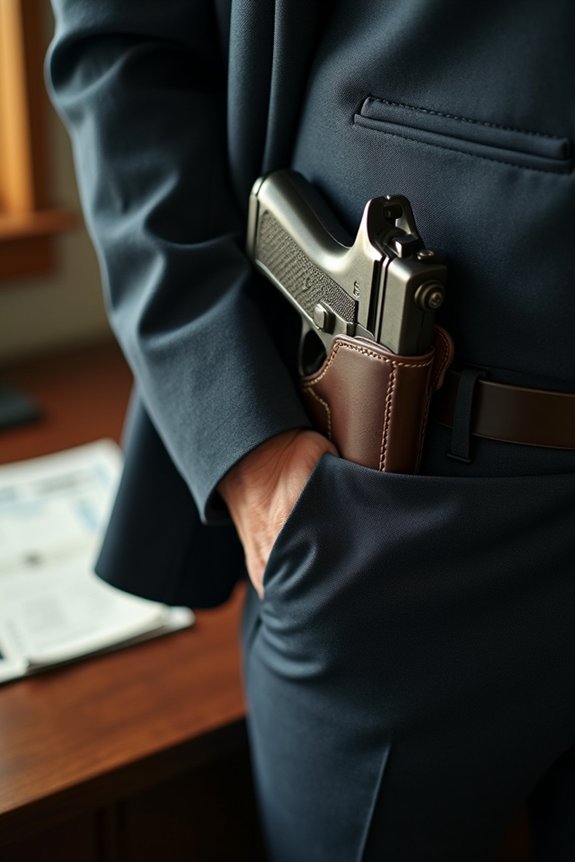
While the process may seem complex, obtaining a CCW permit in California requires you to meet specific criteria designed to guarantee responsible firearm ownership. You must be at least 21 years old and provide proof of identity and age.
California CCW license types require you to complete a 16-hour training course covering firearms safety, mental health awareness, and a written test. You also need to be the registered owner of each firearm you plan to carry, as recorded with the California Department of Justice, and qualify with each weapon.
Applications go through local police or sheriff’s departments, which must respond within 120 days. Once approved, your CCW permit lasts two years, after which you must complete an 8-hour refresher course and re-qualify to renew your permit.
Restrictions and Responsibilities of CCW License Holders
After securing your CCW permit by meeting California’s strict requirements and completing the necessary training, you must understand the specific restrictions and responsibilities that come with carrying a concealed weapon.
Under California concealed carry laws, you’re prohibited from consuming alcohol or controlled substances while armed and must avoid entering bars or being under the influence.
Carrying a concealed weapon in California means no alcohol or drugs and avoiding bars while armed.
You’re required to carry your CCW license on you at all times and comply with all federal, state, and local firearm laws.
You can’t carry firearms not listed on your license, nor falsely represent yourself as a peace officer.
Violating these legal restrictions can lead to severe penalties for carrying a concealed weapon without a permit in California, including fines and criminal charges.
Staying informed and compliant protects your rights and public safety.
Disqualifications and Grounds for Denial of a CCW License
Because California takes public safety seriously, the state enforces strict disqualifications and grounds for denying a CCW license. You’ll be disqualified if you pose a danger to yourself or others, which includes a history of violent behavior or mental health issues.
Recent restraining or protective orders within five years automatically bar you from obtaining a license. Furthermore, convictions for contempt of court or specific offenses under the California Penal Code on firearms can lead to denial. Unlawful use or display of firearms also disqualifies applicants.
Local authorities thoroughly investigate your background to confirm compliance with these standards.
If you’re a traveler, understand that California concealed carry laws for travelers incorporate these disqualifications, so you must meet all criteria before carrying concealed in the state.
Duration, Renewal Process, and Information Disclosure of CCW Licenses
Understanding how long your California CCW license remains valid and what steps are necessary to renew it guarantees you stay compliant with state laws. The duration of a CCW license is two years, with no grace period after expiration, so timely renewal is essential.
The renewal process requires completing an approved eight-hour legal firearms update refresher course and qualifying with each firearm you intend to carry.
Authorities notify you of approval or denial within 120 days, specifying reasons for any denial. You may face additional psychological testing if concerns arise about your mental fitness.
CCW application records are public but can have sensitive information withheld by law enforcement.
Keep in mind, the cost of a concealed carry permit includes fees for courses, testing, and administration, varying by jurisdiction.
Legal Consequences of Carrying a Concealed Weapon Without a Permit
If you carry a concealed weapon in California without a valid CCW permit, you face serious legal consequences. These can include misdemeanor charges with penalties of up to one year in jail and fines reaching $1,000.
Prior felony or firearm offenses increase the minimum jail time to three months. The violation escalates to a felony if you’re not lawfully possessing the firearm or if you’re linked to a street gang. This can lead to 16 months to 3 years in prison and fines up to $10,000.
Law enforcement can arrest you for violations, especially if you’re unregistered with the California Department of Justice.
Understanding firearm transportation rules and restrictions on carrying a handgun in public in California is essential. This helps you avoid these legal consequences of carrying a concealed weapon without a permit.
Frequently Asked Question
Can Tourists Carry Concealed Weapons in California?
No, you can’t carry a concealed weapon in California as a tourist without a valid California CCW license.
The state doesn’t recognize permits from other states, so even if you have one elsewhere, it won’t protect you here.
You must be a California resident and meet strict eligibility requirements to get a license.
Carrying concealed without permission risks misdemeanor charges, so always follow local laws carefully to avoid serious legal trouble.
Are There Specific Locations Where Concealed Carry Is Always Prohibited?
Think of certain places as sanctuaries where peace is symbolically shielded from weapons.
You can’t carry concealed firearms in schools, daycare centers, government buildings, or places of worship without explicit permission.
Bars, restaurants serving alcohol, and public gatherings also ban concealed weapons.
These strict boundaries guarantee safety and respect for community spaces.
Always know these locations to stay compliant and avoid serious legal consequences in California.
How Does California Define a “Loaded” Firearm for Concealed Carry?
California defines a “loaded” firearm as one with unexpended ammunition in the chamber, magazine, or cylinder, making it ready to fire.
You’re also considered to have a loaded firearm if the ammo is in your immediate possession or easily accessible, even if not inside the gun.
This strict definition means you must store ammo separately and comply with laws, or you risk serious legal consequences for carrying a loaded concealed weapon without a permit.
Can a CCW Permit Holder Carry a Concealed Weapon in Other States?
You can carry a concealed weapon in other states only if those states recognize your CCW permit. Reciprocity varies widely, so you’ll need to check each state’s laws before traveling.
Some states honor California permits, while others don’t, and violating their rules can lead to serious penalties.
Always research the specific requirements and restrictions for concealed carry in your destination state to stay compliant and avoid legal trouble.
What Types of Firearms Are Allowed for Concealed Carry in California?
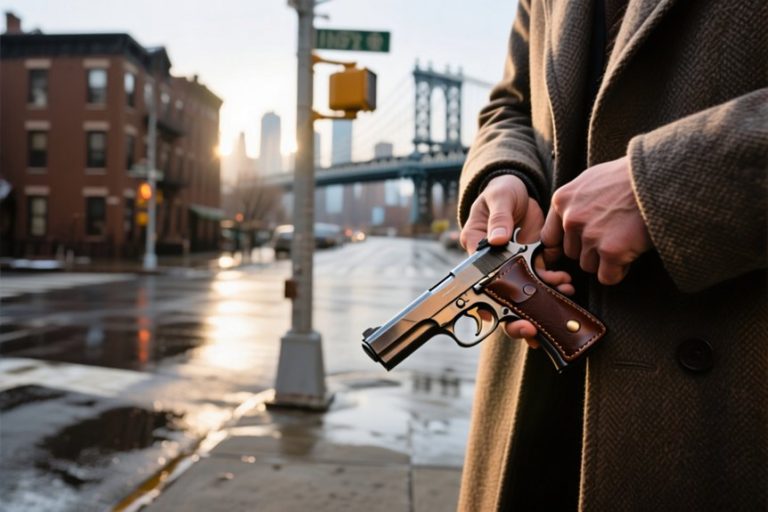
Imagine a sleek pistol tucked securely against your side. California allows you to carry pistols, revolvers, or any firearm classified as a concealed weapon if you have a valid CCW permit.
You can qualify up to three firearms, but each must be registered and legally owned by you.
Conclusion
While California lets you carry a concealed weapon with the proper permit, it doesn’t take this responsibility lightly. You must meet strict requirements and follow clear rules, or face serious legal consequences.
On one hand, obtaining a CCW license grants you lawful protection; on the other, carrying without one exposes you to severe penalties. Understanding these contrasts guarantees you stay informed, compliant, and safe in exercising your rights under California law.