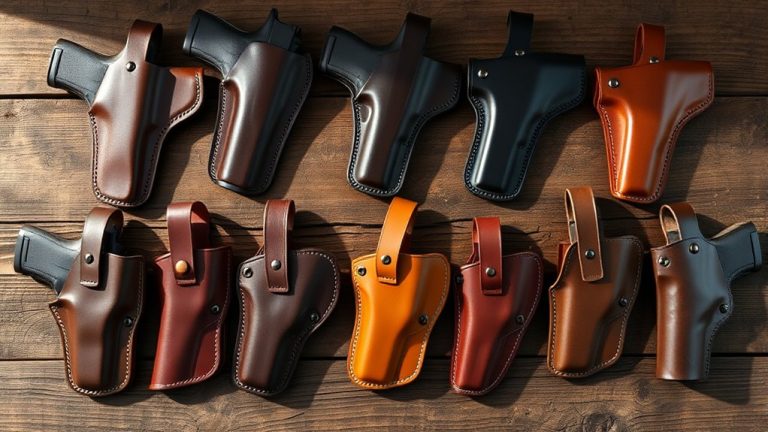
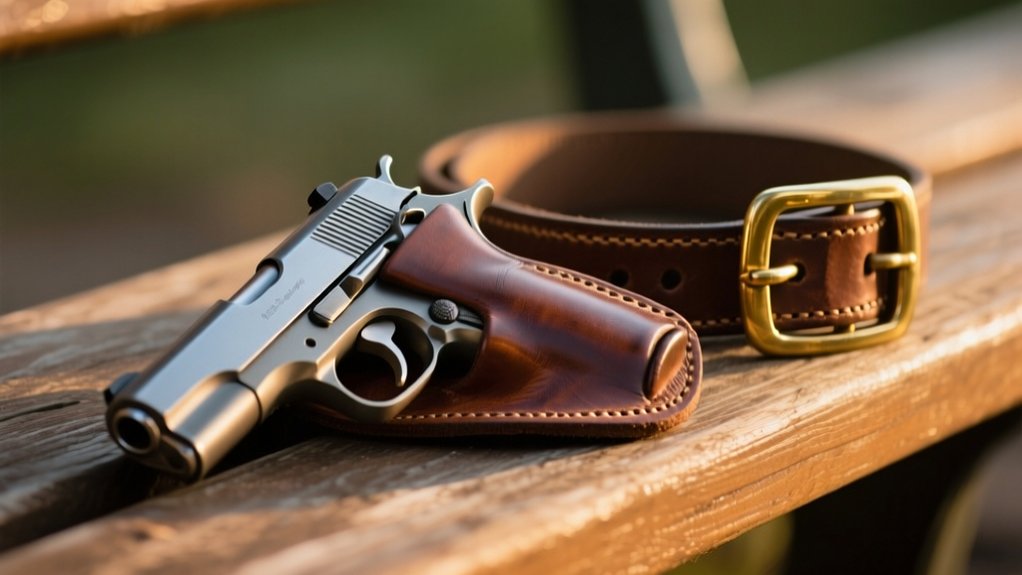
Does Your Gun Have a Holster for Safe and Legal Carry?
You must use a holster that fully covers your gun’s trigger guard to guarantee safe and legal concealed carry, preventing accidental discharge. Choose a holster designed specifically for your firearm model, offering secure retention and comfortable fit.
Verify it complies with your state’s laws, as requirements vary. Regular maintenance and proper holster attachment improve safety and accessibility. Mastering holster use is essential to responsible carry. Discover how selecting the right holster and training with it can enhance your firearm handling.
Importance of Using a Holster for Concealed Carry
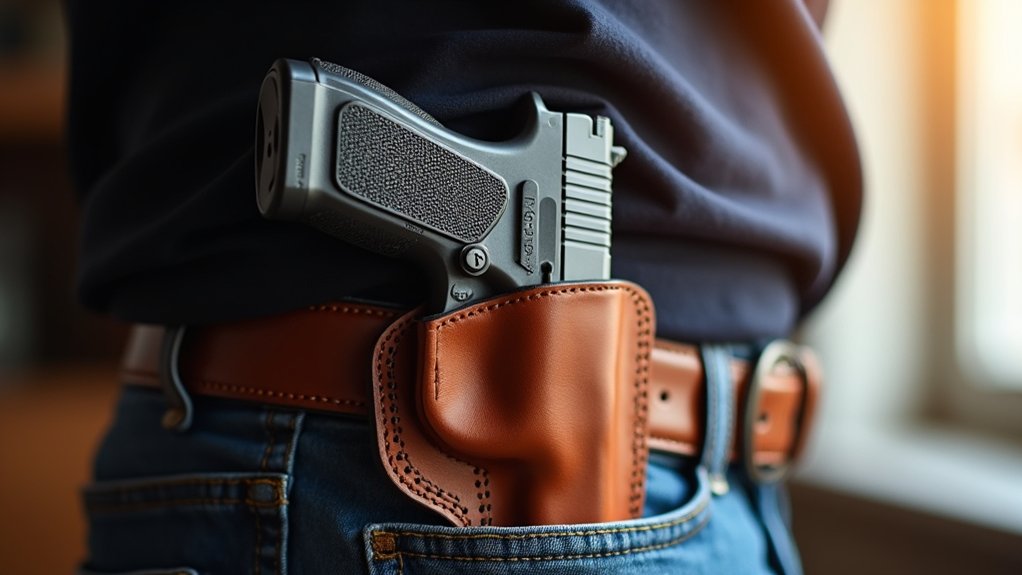
Although many states don’t legally require it, using a holster for concealed carry is vital for your safety and the safety of those around you. A holster securely covers the trigger guard, reducing the risk of negligent discharge by preventing accidental trigger activation. It also keeps your firearm firmly in place, avoiding accidental falls or misplacement.
By choosing the right holster, whether inside-the-waistband (IWB) or outside-the-waistband (OWB), you guarantee quick access when needed while maintaining concealment. This balance between security and accessibility is essential for responsible concealed carry.
Selecting the right holster ensures quick access and effective concealment for responsible carry.
Remember, a properly fitted holster not only improves your personal safety but also complies with concealed carry standards, promoting confidence and control.
Prioritize holster use to protect yourself and those in your environment. In addition, using a holster with proper trigger guard coverage is crucial, as it prevents accidental discharges and enhances overall safety during concealed carry.
Legal Requirements for Holster Use by State
You should know that some states actually require holsters that cover the trigger guard to ensure safe carrying.
For instance, in Texas and Kansas, there are specific laws that make using a holster mandatory if you want to stay within the legal limits.
So, it’s a good idea to always check your state’s regulations before you pick out a holster.
That way, you can make sure it meets all the legal standards and keeps you protected.
State Holster Mandates
Since holster laws vary widely across the United States, you must understand your state’s specific requirements to carry legally and safely.
Many states legally mandate that your holster fully covers the trigger to prevent accidental discharges during concealed carry.
For instance:
- Texas requires firearms to be concealed in a belt or shoulder holster, prohibiting open visibility.
- Kansas law demands every handgun secure in a holster covering the trigger.
- Some states have no legal holster requirements but strongly recommend using one.
- Legal requirements for holster use differ considerably, so check local statutes.
- Proper holster use guarantees safer, compliant concealed carry.
Knowing these state holster mandates helps you avoid legal issues and keeps your firearm secure, meeting the essential safety standards for responsible carry.
Additionally, age verification rules at many retailers can impact who is allowed to purchase a holster, so it’s important to know both your state laws and store policies before buying.
Trigger Guard Coverage
When choosing a holster for concealed carry, confirm it fully covers the trigger guard to comply with many state laws designed to prevent accidental discharges. Proper trigger guard coverage is vital to reduce the risk of negligent discharge and meet legal requirements.
Some states, like Kansas, strictly require holsters that secure the trigger, while others recommend but don’t mandate them. Understanding your state’s specific rules is important.
| State | Trigger Guard Requirement |
|---|---|
| Kansas | Must cover trigger guard |
| Texas | Concealed carry in holster required |
| Others | Recommended but not always required |
Select a holster that guarantees complete trigger guard coverage for safe, legal concealed carry. Many holsters also incorporate retention mechanisms for added firearm security and peace of mind during daily activities.
Holster Use Recommendations
Although most states don’t legally require you to use a holster for concealed carry, several mandate that your holster fully covers the trigger guard to prevent accidental discharges.
Understanding holster use and adhering to firearm laws in your state is vital for safe, legal carrying concealed. Here are key recommendations:
Confirm your holster completely covers the trigger guard to reduce negligent discharges.
In Kansas, the law explicitly requires holster use that secures the handgun’s trigger.
Texas mandates carrying firearms in belt or shoulder holsters to avoid public visibility violations.
Always choose holsters designed for your specific firearm model for secure retention.
Familiarize yourself with your state’s firearm laws on holster use to maintain compliance and safety.
Following these guidelines helps you carry responsibly and avoid legal issues.
For those considering alternative carry methods, be aware that some jurisdictions ban shoulder holsters for concealed carry entirely, making it crucial to understand your local laws before choosing a holster style.
How a Holster Enhances Firearm Safety
Three key ways a holster improves firearm safety include preventing accidental discharges, securing your weapon, and guaranteeing quick access in emergencies.
When carrying a firearm, a holster covers the trigger and trigger guard, effectively reducing the risk of unintentional firing. This protection is vital for both open and concealed carry, aligning with legal requirements in many states.
Furthermore, a holster provides a designated, secure location for your firearm, minimizing the chance of losing or misplacing it during daily activities.
A holster offers a secure spot to keep your firearm safe and within reach throughout your day.
In urgent situations, a properly fitted holster allows you to draw your firearm efficiently and safely.
Choosing a holster with trigger guard coverage and adjustable retention further enhances both safety and comfort during daily carry.
Incorporating a holster into your concealed carry routine not only boosts safety but also assures comfort and discretion, making responsible firearm carrying both practical and compliant.
Key Features to Look for in a Concealed Carry Holster
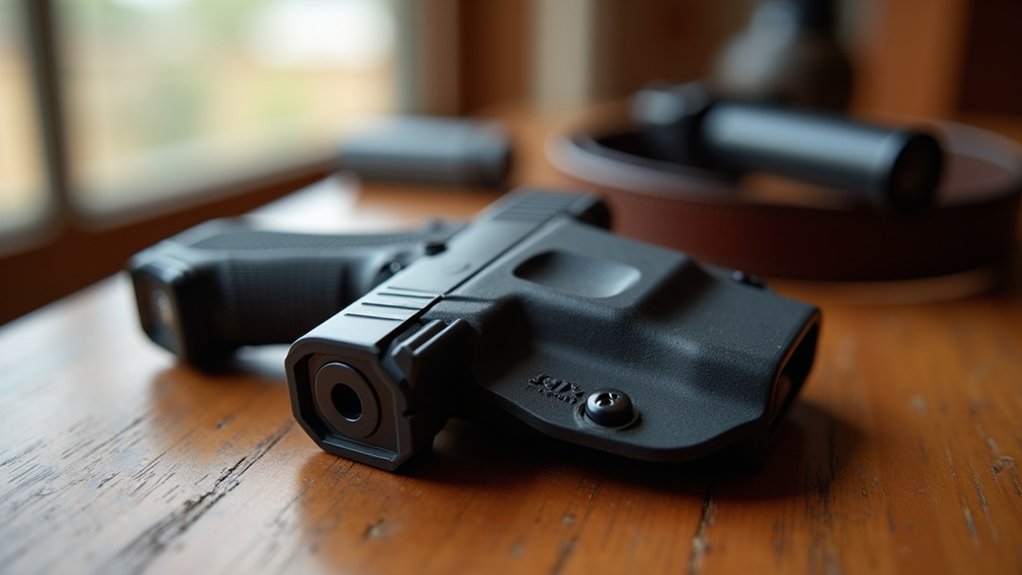
When you’re picking out a concealed carry holster, one of the most important things to look for is complete trigger coverage. This helps prevent any accidental discharges, which is obviously crucial. You want to be sure that your trigger is fully protected at all times.
Another thing to keep in mind is how the holster attaches to your belt or clothing. Having a secure attachment method, like sturdy clips or loops, is key. This way, the holster stays firmly in place even when you’re moving around a lot.
All these features together make sure you stay safe and have reliable access to your firearm whenever you need it. For added stability and comfort, consider adjustable cant options so you can customize your holster’s draw angle to best suit your needs.
Trigger Coverage Importance
Because your safety depends on it, a concealed carry holster must fully cover the trigger and trigger guard to prevent accidental discharge. This trigger coverage is a non-negotiable safety feature that every holster design must prioritize.
When selecting a concealed carry holster, guarantee it completely shields the trigger and trigger guard. Make sure it holds your firearm securely without wobble and enables a smooth, consistent grip and draw.
Look for holsters that use durable materials like Kydex or leather for retention while maintaining a discreet and comfortable profile on your body.
Proper trigger coverage prevents negligent discharge, protecting you and those around you. A well-designed holster combines retention with safety, guaranteeing your firearm is both secure and ready for immediate use.
For added concealment and comfort, consider using a holster with a holster claw attachment to keep the firearm grip close to your body and minimize printing.
Never compromise on this critical aspect when choosing your concealed carry holster.
Secure Attachment Methods
Although trigger coverage is crucial, the way your holster attaches to your body plays an essential role in maintaining secure carry and effective concealment. Holsters made with reliable secure attachment methods such as clips, loops, or slots ensure your firearm stays put during movement.
An IWB holster typically offers superior concealment and firearm retention compared to OWB options. Choose a holster molded specifically for your firearm model to guarantee a snug fit and prevent accidental dislodging.
Regularly inspect your holster’s materials for wear to maintain dependable firearm retention.
| Attachment Type | Benefits |
|---|---|
| Clip | Easy on/off, firm hold |
| Loop | Durable, stable |
| Slot | Low profile, secure |
| IWB Holster | Best concealment |
| Molded Fit | optimal retention |
Different Types of Holsters for Concealed Carry
Choosing the right holster for concealed carry greatly impacts your comfort, accessibility, and safety. You’ll primarily choose between Inside the Waistband (IWB), Outside the Waistband (OWB), and pocket holsters, each serving a specific need.
Inside the waistband holsters offer superior concealment but may require looser clothing and can feel less comfortable. Outside the waistband holsters provide easier access but demand a cover garment for concealment.
Pocket holsters work well for small firearms, enabling deep concealment, though with slower draws.
Prioritize holsters that fully cover the trigger guard to guarantee safety and prevent negligent discharges.
Always select a holster that securely retains your firearm during everyday movement. Understanding these types helps you carry safely, legally, and comfortably every day. For optimal daily carry, consider how clothing compatibility with IWB holsters affects both concealment and comfort.
Comparing Holster Materials: Leather, Kydex, Nylon, and Hybrid
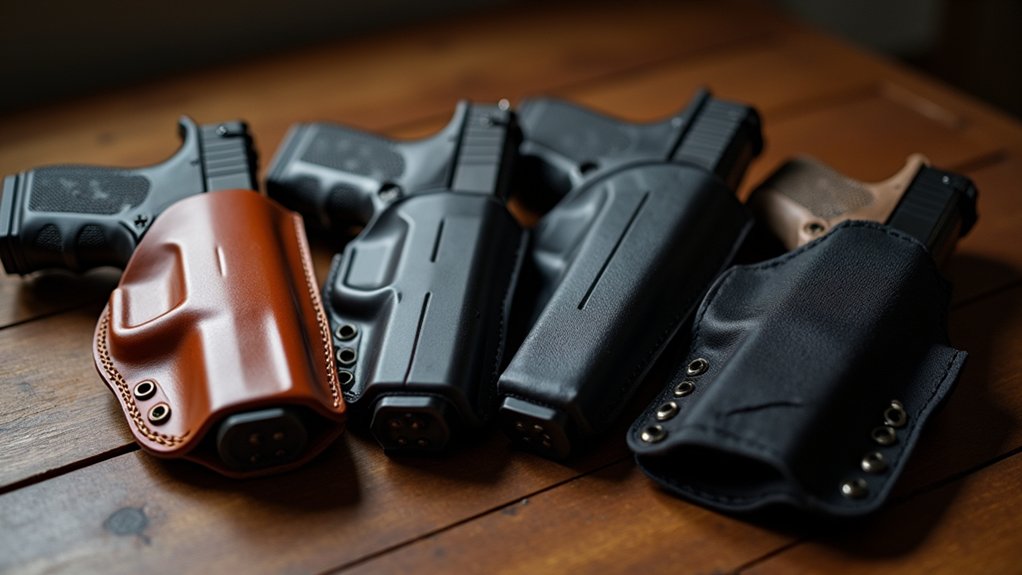
Four primary materials dominate the holster market: leather, Kydex, nylon, and hybrid blends.
A leather holster offers unmatched comfort but may warp over time, compromising retention and fit.
Leather holsters provide exceptional comfort but can warp over time, affecting fit and retention.
Kydex holsters provide superior durability and retention, maintaining shape and allowing precise firearm-specific customization.
Nylon holsters are lightweight and comfortable but often lack the durability and secure retention necessary for safe carry, making them less reliable.
Hybrid holsters combine the comfort of leather or nylon with Kydex’s structural integrity, balancing comfort and durability; however, they mightn’t match Kydex in long-term wear resistance.
When selecting holsters, consider your lifestyle, firearm model, and personal preference to guarantee safe, effective carry tailored to your needs.
Proper holster selection should also include attention to gun belt support, as a sturdy belt prevents sagging and maintains holster stability during daily activities.
Holster Attachment Options and Their Benefits
When you select a holster, the attachment method plays an essential role in security, comfort, and concealment. Understanding holster attachment options helps you enhance your concealed carry setup.
For inside the waistband (IWB) holsters, clips and loops offer adjustable cant and a secure, close fit to your body. This improves concealment.
Outside the waistband (OWB) holsters commonly use paddles and slots. Slots offer the highest security but less concealment convenience.
Consider these options:
- Clips: Secure, adjustable, ideal for IWB carry
- Loops: Provide stable attachment and comfort for IWB
- Slots: Maximum security, best for OWB carry
- Paddles: Easy on/off, moderate security for OWB
Attachment choice directly affects security levels and concealment effectiveness. Choose wisely to maintain safe, legal carry and maximum comfort.
Common Mistakes to Avoid When Choosing a Holster
Understanding holster attachment options sets a solid foundation, but it’s just as crucial to avoid common mistakes that can compromise safety and functionality. Always pick a holster that fully covers the trigger guard to prevent accidental discharges.
Consider your body type and the types of holsters that best fit your frame for comfort and concealment. Neglecting draw speed can slow your reaction time, so choose a design that allows quick access.
| Mistake | Consequence |
|---|---|
| Exposed trigger guard | Accidental discharge |
| Poor holster fit | Discomfort, shifting |
| Low-quality materials | Reduced retention, wear |
| Ignoring draw speed | Slower response in emergencies |
Avoid these errors to guarantee your holster offers secure, safe, and efficient carry.
Holster Maintenance Tips for Longevity and Safety
Maintaining your holster regularly assures both safety and longevity. Effective holster maintenance guarantees your good holster retains its shape, functionality, and safety over time.
Regular holster maintenance ensures safety, preserves shape, and extends functional lifespan.
Neglecting this can lead to compromised retention or damage, which poses risks during carry.
Follow these essential tips for carry holsters:
- Inspect for wear signs like cracks, fraying, or loss of retention frequently.
- Clean with a damp cloth to remove dirt without damaging materials.
- Store in a cool, dry place away from sunlight to avoid material degradation.
- Prevent excessive bending or flexing; use a dedicated storage solution.
- Apply a suitable protectant or conditioner, especially for leather holsters.
Understanding the pros and cons of your holster’s material helps tailor maintenance efforts effectively.
Integrating Holster Use Into Your Concealed Carry Training
When you’re training for concealed carry, it’s really important to prioritize holster safety. Make sure your holster keeps the trigger guard fully covered—that way, you can prevent any accidental discharges.
Try to focus on mastering your drawing and re-holstering drills. These exercises help build muscle memory, so handling your firearm becomes smooth and controlled without you even thinking about it.
Also, practicing consistently with different types of holsters is a smart move. It helps you figure out which one fits you best for quick access and reliable concealment.
The more you practice, the more confident and safe you’ll be carrying every day.
For added readiness, consider integrating a tourniquet holder with your holster setup so you’re prepared for emergencies without interfering with your firearm draw.
Holster Safety Practices
Though carrying a firearm safely requires more than just choosing a holster, integrating holster use into your concealed carry training is essential.
You must develop consistent habits to guarantee safety and readiness.
Focus on these holster safety practices:
- Always use a holster that fully covers the trigger guard to prevent accidental discharge.
- Select a holster designed specifically for your gun model to assure a secure fit.
- Practice drawing and re-holstering regularly to build muscle memory and smooth handling.
- Choose durable, comfortable materials that support daily concealed carry without compromising safety.
- Follow all local laws regarding concealed carry to maintain legal compliance and responsible gun ownership.
Training Drills and Techniques
When integrating holster use into your concealed carry training, practicing consistent drawing and re-holstering drills sharpens your muscle memory and response time.
Focus your training drills on smooth, deliberate movements to build proficiency and reduce the risk of negligent discharges.
Prioritize proper holster selection. Ensure it fully covers the trigger guard to bolster safety during every draw.
Incorporate reality-based scenarios that emphasize firearm retention and access under stress, simulating real-world encounters.
Vary your drills by practicing draws from multiple positions, such as standing and seated, to prepare for unpredictable situations.
Frequently Asked Question
Can I Make My Own Holster at Home?
Yes, you can make your own holster at home using DIY holster materials like Kydex, leather, or fabric.
Focus on custom fit options to guarantee your firearm is secure and accessible.
Prioritize safety considerations by fully covering the trigger guard to prevent accidents.
This approach offers cost effective solutions compared to buying commercial holsters, but always verify your design complies with local laws for legal carry.
How Do Holsters Affect Quick Draw Speed?
Holsters directly impact your quick draw speed by influencing your draw technique and retention levels.
Choosing holster materials like Kydex offers firm retention yet smooth release, letting you draw swiftly and securely.
Practicing drills with your specific holster reinforces muscle memory, ensuring consistent grip and motion.
Are Holsters Compatible With All Firearm Accessories?
Holsters aren’t one-size-fits-all puzzle pieces; you can’t force a square peg into a round hole.
Different holster materials, like Kydex or leather, influence firearm retention and accessory compatibility.
If your firearm sports lights or lasers, you’ll need a holster designed to accommodate those extras without compromising concealed carry comfort or safety.
Always choose a holster tailored for your specific setup to guarantee secure retention and seamless access every time.
Can I Carry a Gun Without a Holster in an Emergency?
You can carry a gun without a holster in emergency situations, but it’s not advisable because of major safety concerns.
Without trigger guard coverage, you risk negligent discharge and might find it hard to access your firearm quickly.
Alternative carrying methods often don’t provide the stability and security you need.
Also, keep in mind the legal side—many states require using a holster for lawful carry.
It’s best to prioritize a quality holster to ensure safety, accessibility, and compliance when emergencies arise.
Do Holsters Affect Firearm Accuracy or Performance?
Imagine the vital moment when every second counts. Does your holster help or hinder?
Holster material and the retention system don’t directly affect your firearm’s accuracy. But they do influence stability and your draw technique. A secure holster keeps your gun steady, preventing unwanted shifts.
Plus, a smooth draw can save precious time. So, choose a holster that supports stability and quick access to boost your performance confidently.
Conclusion
Think of your holster as the lock on a treasure chest. It safeguards what’s valuable and keeps it secure until you need it. Without it, your firearm is exposed, risking safety and legality.
By choosing the right holster and integrating it into your daily routine, you guarantee your weapon stays protected and ready. Don’t leave your safety to chance. Treat your holster as the essential guardian of your concealed carry responsibility.