How Old Do You Have to Be to Buy a Holster?
You don’t have to be a specific age to buy a holster, but most retailers require you to be at least 18 and show valid ID before purchasing. Federal law doesn’t set an age limit for holster sales, though state laws and store policies might.
Keep in mind, owning a holster doesn’t mean you can carry a firearm legally if you’re underage. If you want to understand more about these rules and how they affect you, there’s important information ahead.
Understanding Holster Purchase Age Requirements
When can you buy a holster? In most states, there’s no minimum age requirement since holsters aren’t considered firearms. That means legally, you can buy one even if you’re under 18.
Holsters aren’t firearms, so most states allow you to buy one regardless of age.
However, many retailers set their own rules and might require you to be at least 18, often aligning with the legal age to own a firearm. Expect to show ID at the checkout, especially if you’re buying from a store that sells firearms and accessories.
Laws can vary depending on where you live, so it’s smart to check local regulations before making a purchase.
While buying a holster won’t trigger a background check, make sure you’re compliant with all rules about owning and carrying firearms in your area.
Federal Regulations Affecting Holster Sales

You might be surprised to learn that federal law doesn’t set an age limit for buying holsters like it does for firearms.
That said, some retailers do ask for ID to make sure they’re selling responsibly.
Also, keep in mind that state laws can be different, so it’s a good idea to check your local regulations before you buy.
Federal Age Requirements
How old do you need to be to buy a holster under federal law? Surprisingly, there’s no minimum age set federally since holsters aren’t classified as firearms.
However, don’t assume that means unrestricted access. Here’s what you need to know:
- Federal law doesn’t require an age limit for holster purchases.
- Most retailers set their own rules, often requiring buyers to be at least 18.
- State laws might impose different age restrictions tied to firearm regulations.
- You won’t face federal age verification for holsters, but sellers may still ask for ID.
Identification Verification Rules
Although federal law doesn’t set a minimum age for buying a holster, retailers still require you to show a government-issued photo ID before completing the purchase.
Cashiers must check identification for all customers, regardless of age, to satisfy legal and store policies.
While you don’t need a background check like you do for firearms, verifying your ID guarantees compliance with regulations and helps stores enforce any state or company age limits.
Some customers find these checks frustrating, but they’re necessary steps.
Keep in mind that individual retailers may have their own age restrictions, so always bring your ID when shopping for holsters.
Being prepared will make the process smoother and help you avoid delays at checkout.
Legal Sale Restrictions
Since federal law doesn’t impose age restrictions on holster sales, anyone can technically purchase one. However, the reality is more nuanced.
You should be aware of these key points:
- Retailers often enforce their own age verification policies, requiring you to show a government-issued ID.
- Some states set the minimum age to buy a holster at 18, especially for handgun carry holsters.
- Local laws may add extra restrictions, so you need to check your state’s regulations.
- Despite no federal limits, companies link holster sales to firearm laws, affecting who can buy.
Understanding these legal sale restrictions helps you avoid surprises and guarantees you comply with both store policies and state rules when purchasing a holster.
State Variations in Age Restrictions
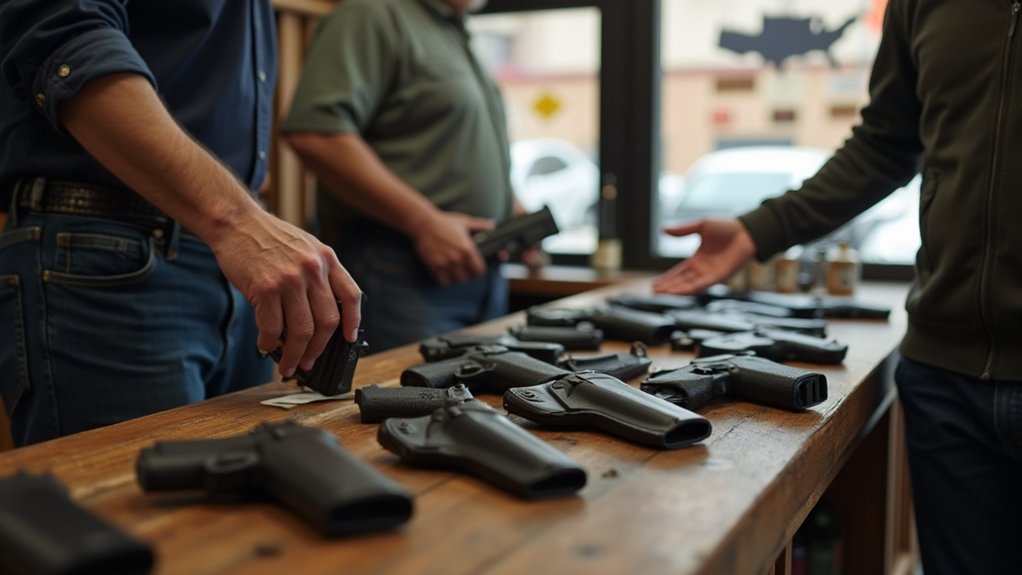
While most states don’t set a minimum age for buying a holster itself, your ability to purchase one often depends on firearm ownership laws in your area.
Holsters are generally treated as accessories, so no specific age limit usually applies.
However, if your state restricts firearm ownership to 18 or 21 and up, that can indirectly limit your holster purchase since carrying a firearm legally is the main purpose.
Some states with stricter firearm regulations might enforce more rigorous checks.
Plus, retailers can have their own age policies, requiring you to show ID before selling a holster.
To avoid surprises, always check both your local laws and individual store policies, as age requirements for holster sales can vary depending on where you live and shop.
Holster Sales Policies at Major Retailers
Understanding state laws is just one part of the picture regarding buying a holster. Major retailers have specific sales policies you need to know before making a purchase.
Here’s what you should keep in mind:
- Dick’s Sporting Goods requires age verification for all holster buyers, no exceptions.
- Most stores enforce an 18+ age limit, aligning with state laws.
- Some retailers allow minors to buy holsters only if accompanied by a parent or guardian.
- Online stores usually follow similar age verification rules but can vary, so always check their policies.
The Relationship Between Holster and Firearm Ownership
Because holsters are designed to securely carry firearms, you need to be aware of firearm ownership laws before purchasing one. Typically, you must be at least 18 years old to buy a holster, aligning with firearm purchase age requirements in many states.
Some states even require you to show a valid government-issued ID to verify your age due to the close link between holsters and firearms. Holsters vary based on the type of firearm they hold, so understanding the regulations that apply to both is essential.
While no federal laws specifically regulate holster sales, local and state rules may impose extra age restrictions tied to firearm laws. Knowing these connections guarantees you stay compliant and use your holster responsibly.
Legal Considerations for Minors and Holster Use
You might be surprised to learn that most states don’t set a minimum age to buy a holster since it’s not a firearm. That means, technically, anyone can purchase one without hitting an age limit.
But here’s the catch: laws about minors carrying or using firearms vary a lot depending on where you live. So, it’s really important to check your local regulations carefully before you take any steps.
Even if you can buy a holster, you still need to understand how the rules around firearm use apply. Just having a holster doesn’t give you the green light to carry a gun, especially if you’re underage.
Staying legal and safe means knowing not only if you can buy a holster but also how you can use it within the law.
Age Restrictions Overview
While federal law doesn’t set age limits for buying holsters, retailers often have their own policies that may require you to show ID or get parental permission if you’re underage.
Here’s what you need to keep in mind:
- You can technically buy a holster at any age, but store policies vary.
- Many retailers ask for ID or require a parent to be present if you’re a minor.
- Local laws might affect your ability to purchase, especially if holsters are bundled with firearms.
- Some states have specific age restrictions or guidelines you must follow.
Knowing these points helps you navigate holster purchases without surprises.
Always check store rules and local laws before you buy to stay compliant and avoid issues.
Minor Usage Regulations
Although most states don’t set a minimum age for buying holsters, using one as a minor involves significant legal considerations.
Since holsters aren’t classified as firearms or accessories under federal law, you can usually purchase one without age restrictions.
However, if you’re a minor, you should only use a holster under the supervision of a parent or guardian legally allowed to possess firearms.
Some states have rules about minors carrying firearms, which can affect your ability to use a holster.
It’s essential that your guardian educates you on safe firearm handling and storage when using a holster.
Understanding these regulations helps you stay compliant and safe while handling firearms as a minor.
The Role of Identification in Holster Purchases
Because retailers like Dick’s Sporting Goods require cashiers to check IDs for every holster purchase, you need to be prepared to show a government-issued photo ID. This step guarantees compliance with firearm accessory regulations and promotes responsible ownership.
Showing a government-issued photo ID is required for holster purchases to ensure legal compliance and responsible ownership.
While some customers might find this process frustrating, it’s a legal necessity in many states. Here’s why presenting your ID matters:
- Confirms you meet the minimum age requirement.
- Helps prevent illegal access to firearm accessories.
- Supports retailer compliance with state and federal laws.
- Reinforces responsible and safe handling of holsters.
Understanding these points will help you navigate holster purchases smoothly and respect the legal framework around firearm accessories.
Impact of Age Restrictions on Concealed Carry Laws
Showing your ID when buying a holster is just one part of following legal guidelines. Age restrictions on concealed carry laws impact when you can legally carry a holstered firearm, even if holsters themselves often lack specific age limits.
Most states require you to be at least 18 to carry a concealed weapon, subject to additional rules like training or background checks. Some states impose stricter regulations if the holster is linked to firearms needing permits.
Since concealed carry laws vary widely, you must know your state’s rules before carrying. Understanding these age restrictions guarantees you stay compliant and avoid legal trouble when carrying a holstered weapon in public, even if purchasing the holster itself isn’t age-restricted.
Retailer Enforcement of Age Verification Policies
When you buy a holster at Dick’s Sporting Goods, expect to show your ID, no matter your age. This strict policy aims to comply with legal and management rules but can frustrate customers.
You might feel annoyed or inconvenienced, especially if you’ve never faced an ID check before. Here’s what you might experience:
- Being stopped at checkout and asked for ID unexpectedly
- Feeling singled out despite your age or previous purchases
- Experiencing delays that disrupt your shopping flow
- Questioning whether the policy is necessary or overreaching
While these measures prioritize safety and legality, they can deter you and others from returning.
The enforcement reflects a broader retail trend to strictly follow firearm-related regulations, even at the cost of customer satisfaction.
Alternatives for Younger Buyers Interested in Holsters
Wondering how you can get a holster if you’re underage? While federal law doesn’t set a minimum age for holster purchases, many states have their own rules that might limit you.
Retailers often require age verification, which can block younger buyers.
One good alternative is to involve a parent or legal guardian. They can help you navigate purchases and guarantee you comply with local laws.
In some states, carrying a holster under 18 is allowed if you’re with a legal adult.
You might also investigate gun shows, where you can learn about holsters directly from vendors, though buying will likely still need parental support.
Always check your state’s laws first, so you know your options and stay within legal boundaries.
Best Practices for Responsible Holster Ownership
Maneuvering age restrictions is just one part of owning a holster responsibly. To guarantee safety and functionality, you need to:
- Understand your state’s specific age and firearm laws before buying a holster.
- Choose a holster that fits your firearm’s size, shape, and carry method perfectly.
- Prioritize safety features like retention mechanisms to prevent accidental discharges.
- Regularly inspect your holster for wear and tear, replacing it if its integrity is compromised.
Beyond selection, educate yourself on safe drawing and re-holstering techniques to reduce risks.
Responsible ownership isn’t just about legality; it’s about protecting yourself and those around you. By following these best practices, you’ll carry with confidence and peace of mind.
Frequently Asked Question
What Materials Are Holsters Typically Made From?
Ever struggled to find a holster that feels just right? Whether you’re aiming for comfort, quick access, or sleek concealment, choosing the right material makes all the difference.
With more people carrying daily for personal safety, holsters have become an essential part of everyday gear.
Holsters typically come in materials like leather, nylon, Kydex, and other thermoplastics, each offering unique benefits.
Leather is classic and stylish but requires a bit of upkeep to stay looking sharp.
Nylon is lightweight and durable, perfect if you want something tough without adding bulk.
Kydex provides a rigid, waterproof fit that holds your firearm securely and allows for fast drawing.
To make your choice easier, we’ve rounded up the best holsters based on material, comfort, and functionality.
Here are the top options that stood out after careful consideration.
How Do I Choose the Right Holster for My Firearm?
Struggling to find a holster that feels just right for your firearm? You’re not alone. With so many styles and materials out there, choosing the perfect holster can feel overwhelming.
And it matters—using the right holster isn’t just about comfort; it’s about safety and quick access when it counts. In fact, studies show that a properly fitted holster can significantly reduce accidental drops and improve your draw speed.
Whether you prefer carrying inside or outside the waistband, on your ankle, or over your shoulder, the options can seem endless.
That’s why we’ve put together a straightforward guide to help you zero in on the best holsters tailored to your carry style and firearm model. We’ll walk you through key factors like material durability, retention adjustability, and attachment methods so you can make a confident choice.
Ready to find the holster that fits your lifestyle and keeps your firearm secure? Here are the top options that stood out after thorough research and testing.
What Types of Holsters Are Best for Concealed Carry?
Worried about how to carry your firearm comfortably and discreetly? Finding the right holster for concealed carry can feel like a puzzle—too bulky, and it’s obvious; too loose, and it’s unsafe.
With over 15 million people in the U.S. holding concealed carry permits, having a holster that fits just right is more important than ever.
Inside the waistband (IWB) holsters are popular because they keep your firearm close and hidden, making them a top choice for everyday carry. If comfort is your main concern, outside the waistband (OWB) holsters offer ease of access, though you might need extra coverage to stay discreet.
For those who want a backup option, ankle holsters provide discreet storage but can be slower to reach. Materials like Kydex are favored for their durability and secure fit, ensuring your carry is both reliable and comfortable.
To help you navigate these choices, we’ve rounded up the best holsters that balance concealment, comfort, and security. Here are the top options that stood out after extensive testing.
Can Holsters Be Customized or Personalized?
Ever find yourself frustrated with holsters that just don’t fit your style or carry needs? You’re not alone. As more people prioritize both comfort and personal expression in their gear, customized holsters have become a hot trend.
In fact, many shooters now prefer holsters tailored to their preferences for better fit and unique flair.
The good news is, customizing a holster is easier than you might think. You can pick your favorite color, material, and design to match your lifestyle.
Plus, many manufacturers offer custom engravings or monograms to give your holster a one-of-a-kind look. Whether you want an inside or outside waistband style, or even modular systems that let you swap parts depending on the situation, there’s a personalized option for you.
To help you navigate these choices, we’ve rounded up the best customizable holsters that combine functionality, style, and versatility.
Here are the top options that stood out after extensive research.
How Do I Properly Maintain and Clean a Holster?
Ever notice how a well-maintained holster keeps your gear secure and ready, while a neglected one can wear out fast and lose its grip?
With more people carrying holsters daily for work, sport, or personal safety, knowing how to properly care for them is essential. In fact, a clean and well-kept holster not only looks better but can extend its life significantly, saving you money and hassle down the line.
To help you keep your holster in top shape, we’ve put together simple, effective maintenance tips tailored for different materials.
Whether your holster is leather, nylon, or synthetic, our guide covers how to clean, condition, and store it correctly. We’ll explain why avoiding extreme heat and humidity matters and how regular inspections can catch small issues before they become big problems.
Ready to keep your holster looking sharp and functioning perfectly? Here are the best practices that stood out after careful research and testing.
Conclusion
Now that you know the age rules around buying a holster, you might think it’s straightforward, but it’s not always that simple. Federal laws, state variations, and retailer policies all play a part. Your age could mean the difference between getting one today or having to wait.
So, what’s the best way to navigate these layers and responsibly own a holster? Keep reading, because the answer might surprise you.