How to Attach a Holster to a Backpack?
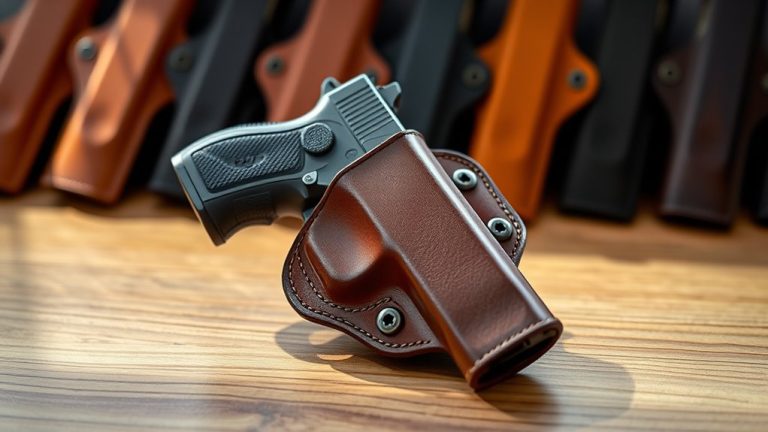
To attach a holster to your backpack, start by choosing a holster type like drop-down or belt clip, suited for your activity and comfort. Securely fasten it using sturdy straps or clips aligned with your natural draw position.
Adjust retention straps tightly enough to prevent shifting but not restrict movement. Guarantee the setup balances easy access with safety, maintaining stability throughout your hike. If you want to master comfort, retention, and legal tips, keep exploring these essential steps.
Types of Holsters Suitable for Backpacks
When choosing a holster to attach to your backpack, you’ll want to contemplate how each type balances accessibility, comfort, and security.
Belt clip holsters, like the Blackhawk Serpa, attach directly to your backpack belt and include a retention mechanism, ensuring your firearm stays secure during movement.
Drop-down holsters use thigh straps to position the weapon lower, keeping it out of the way of backpack gear while offering quick access.
Chest holsters, such as the Alaskan leather model, align centrally on your chest, providing easy reach and allowing you to remove your backpack without detaching the holster.
Always consider local laws and your firearm type when selecting a holster.
When choosing a holster for your backpack, it’s also important to select a model with adjustable cant to ensure a comfortable and efficient draw angle based on your activity and personal preference.
Choosing the right holster depends on your activity, ensuring you maintain safety and convenience on the trail.
Preparing Your Backpack for Holster Attachment
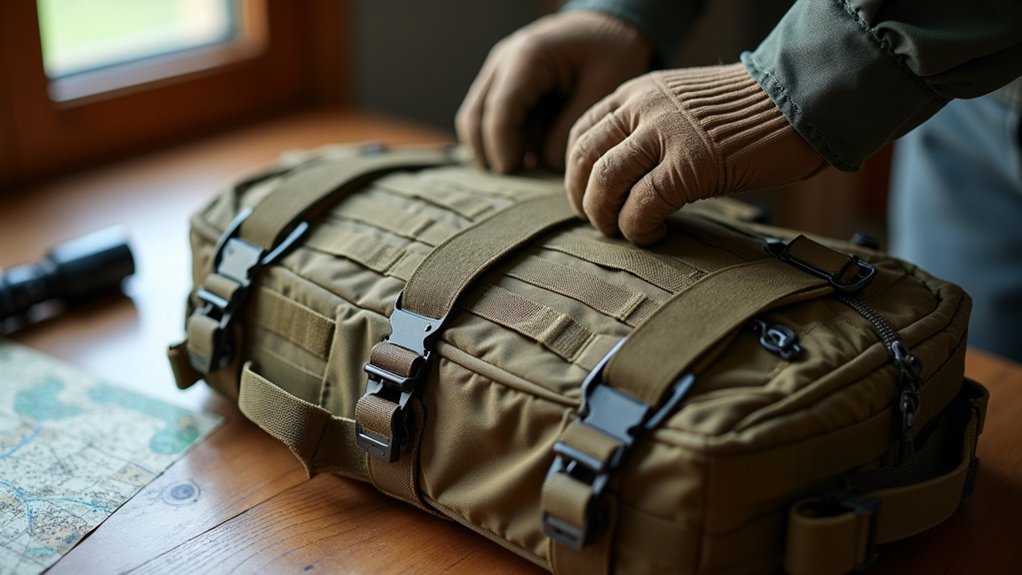
Choosing the right holster is just the first step; preparing your backpack properly guarantees the attachment will hold securely and remain accessible.
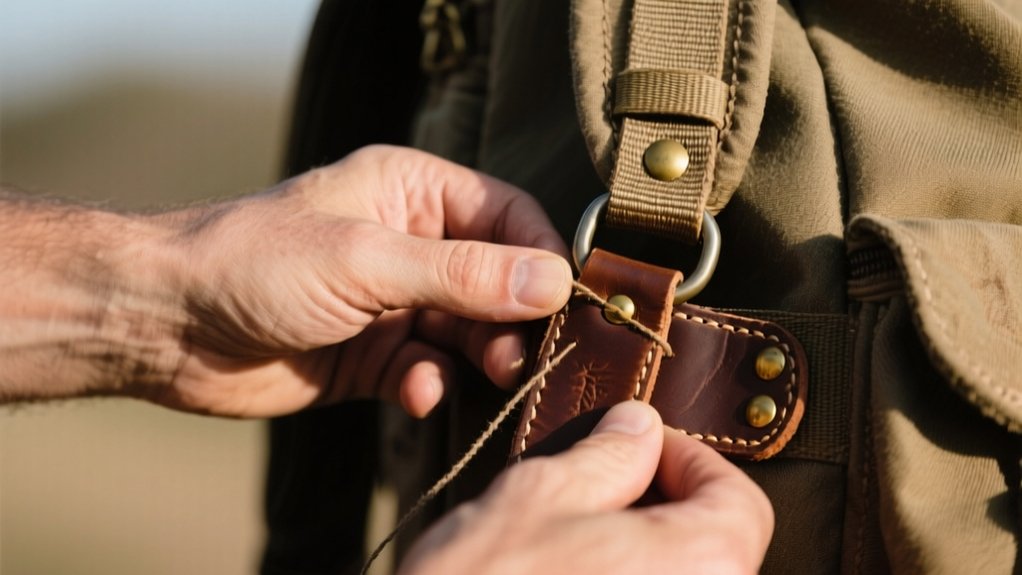
Start by inspecting your backpack for a sturdy belt loop or strap that can support the holster’s weight without tearing.
Begin by checking your backpack for a strong belt loop or strap to securely hold your holster.
Verify the attachment point aligns with your natural draw position for quick access. Consider your firearm’s size and weight to avoid imbalance or discomfort during use.
Remove any obstructive items from the area around the belt loop to prevent snagging. Test the fit by attaching the holster and wearing the backpack, checking for stability and comfort.
Finally, review local laws to confirm your setup complies with firearm carry regulations. Proper preparation guarantees safety, comfort, and reliable access on the trail.
Attaching a Drop-Down Holster to Your Backpack
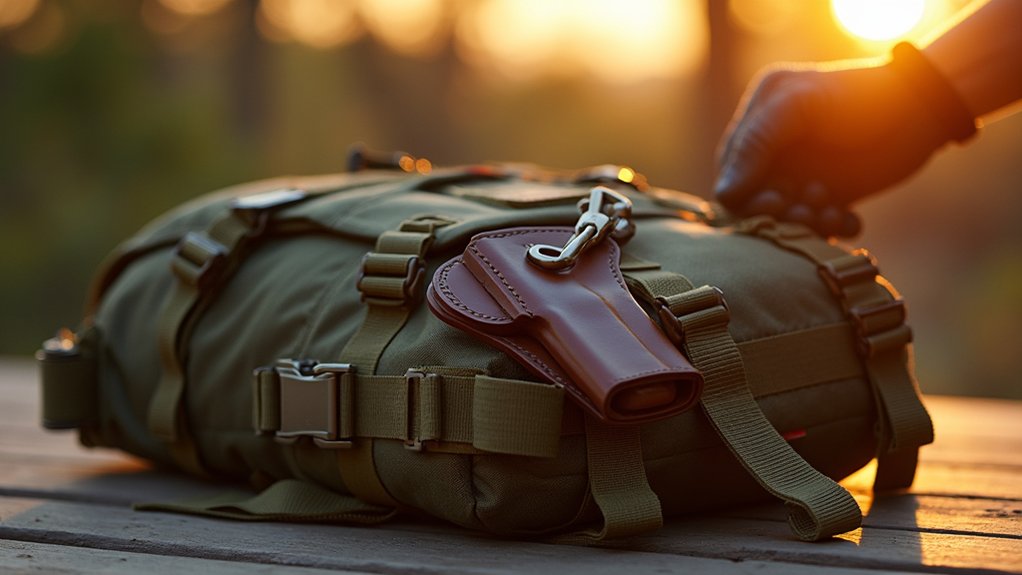
How can you securely attach a drop-down holster to your backpack for both stability and quick access?
Start by using the thigh straps to fasten the holster to your belt, ensuring it stays firmly in place without shifting.
Position the holster so you have easy access to your firearm, keeping it clear of other gear to avoid any obstruction.
Adjust the straps tightly enough to prevent excessive movement but not so tight that it restricts blood flow or causes discomfort.
Remember, a properly attached drop-down holster balances stability with swift retrieval.
Follow these steps:
- Secure thigh straps to your belt firmly.
- Position holster for easy access and minimal interference.
- Tighten straps to minimize movement.
- Check for comfort and blood flow during activity.
Securing a Belt Clip Holster on Your Backpack
Start by picking a spot on your backpack’s belt where the holster will stay secure and be easy to reach.
You want it to feel stable, so it doesn’t wobble or shift around when you’re moving.
Make sure the clip on the holster is firmly attached.
This helps keep everything in place and prevents any accidental slips.
Try using quick attachment methods to save some time, but don’t forget to double-check that it’s really stable.
Safety and accessibility are key, after all!
Choosing Clip Placement
When securing a belt clip holster to your backpack, you’ll want to fasten it firmly to the waist belt or hip area for quick and easy access while on the move.
Proper clip placement guarantees comfort, safety, and efficiency. Follow these steps:
- Attach the clip to the waist belt or hip section, where it aligns naturally with your body.
- Use models with a retention strap or mechanism to secure the firearm firmly.
- Avoid placing the holster where it obstructs movement or causes discomfort during hiking.
- Balance the weight to prevent sagging or pulling, which can affect your pack’s stability.
Always verify local laws on carrying firearms in backpacks to confirm compliance and safety.
Ensuring Holster Stability
Guaranteeing your belt clip holster stays stable on your backpack requires selecting a mounting point on the waistband that keeps it snug against your body with minimal movement.
Secure the belt clip firmly to the backpack’s belt or strap, so the holster you can see doesn’t shift as you move.
Test the clip’s retention to confirm it holds your firearm tightly but allows quick access.
If your holster includes additional retention straps or loops, use them to further stabilize it, especially when traversing rugged terrain.
Regularly inspect the connection and tighten any loose points after extended use or rough activity.
This attention to detail guarantees the holster you can see remains secure, safe, and ready when you need it most.
Quick Attachment Tips
Although attaching a belt clip holster to your backpack may seem straightforward, doing it correctly is crucial for safety and quick access.
Follow these quick attachment tips to guarantee your holster stays secure and functional:
- Attach the holster clip firmly to a sturdy belt or strap on your backpack to maintain stability during movement.
- Engage the holster’s retention mechanism fully to prevent accidental firearm release.
- Practice drawing your firearm with the backpack on to confirm smooth, quick access.
- Choose a holster suited for your firearm’s weight and size, and inspect attachment points regularly for wear or loosening.
Fitting and Adjusting a Chest Holster for Backpack Use
When you’re fitting your chest holster for backpack use, start by positioning it right at the center of your chest. This helps make sure you have quick access and it feels comfortable.
Next, adjust the retention straps so your firearm stays secure but can still be drawn easily without getting caught up on your pack.
Also, be sure the holster stays stable and comfortable whether you’re wearing the backpack or not. This way, it won’t shift around or cause any chafing while you’re hiking.
Chest Holster Positioning
Because quick access is essential, position your chest holster centrally on your chest to reach your firearm easily without removing your backpack. Proper chest holster positioning maximizes safety and efficiency during movement.
Follow these steps to guarantee ideal fit and function:
- Align the holster so it sits flat and centered on your chest for immediate access.
- Secure the retention strap firmly to keep your firearm stable and prevent shifting.
- Choose materials that breathe well and avoid chafing during extended wear.
- Test quick draws with your backpack on to confirm nothing obstructs access or movement.
This approach guarantees your chest holster stays comfortably in place, allowing safe, rapid firearm retrieval even while fully loaded with gear.
Strap Adjustment Techniques
To guarantee your chest holster fits securely and functions effectively with your backpack, start by adjusting the harness straps to evenly distribute weight across your shoulders.
Use strap adjustment techniques to position the holster so the firearm rests at chest level, allowing quick access without interfering with your backpack’s straps or load.
Next, tighten the retention strap just enough to secure the firearm. Avoid making it too tight or too loose.
Regularly reassess strap tightness and holster placement after long hikes, as shifting can affect both comfort and accessibility.
If possible, choose a holster with adjustable straps to tailor the fit to your body type and backpack.
These strap adjustment techniques guarantee safety and reliable function during your outdoor activities.
Comfort and Stability
Although securing your chest holster properly can seem straightforward, achieving comfort and stability requires careful fitting and regular adjustments.
To guarantee your holster stays secure and comfortable while wearing a backpack, follow these steps:
- Align the holster with the center of your chest for balanced weight distribution and easy access.
- Adjust retention straps to hold the firearm firmly without restricting a smooth draw or causing discomfort.
- Choose a holster made of soft materials like leather or nylon to reduce chafing during long hikes.
- Regularly check and reposition the holster to prevent shifting or irritation, especially when carrying a heavy load.
Ensuring Holster Stability and Accessibility
When you attach a holster to your backpack, securing it firmly and ensuring easy access is essential for both safety and convenience.
Choose a Blackhawk Serpa holster that clips onto your backpack’s belt for a reliable retention system, keeping your firearm secure yet quickly accessible.
Opt for drop-down holsters with thigh straps to keep the weapon out of the way while allowing swift retrieval.
Regularly inspect attachment points to prevent shifting that could cause discomfort or hinder access during movement.
For added stability, consider a chest holster aligned centrally to stay secure even when you remove your pack.
Prioritize holsters that balance comfort and accessibility, ensuring you can smoothly access your firearm without interference from other gear or straps.
When selecting a holster for backpack use, it’s important to understand the different retention levels available, as higher retention levels provide increased security against unauthorized access and accidental drops.
Common Challenges and How to Overcome Them
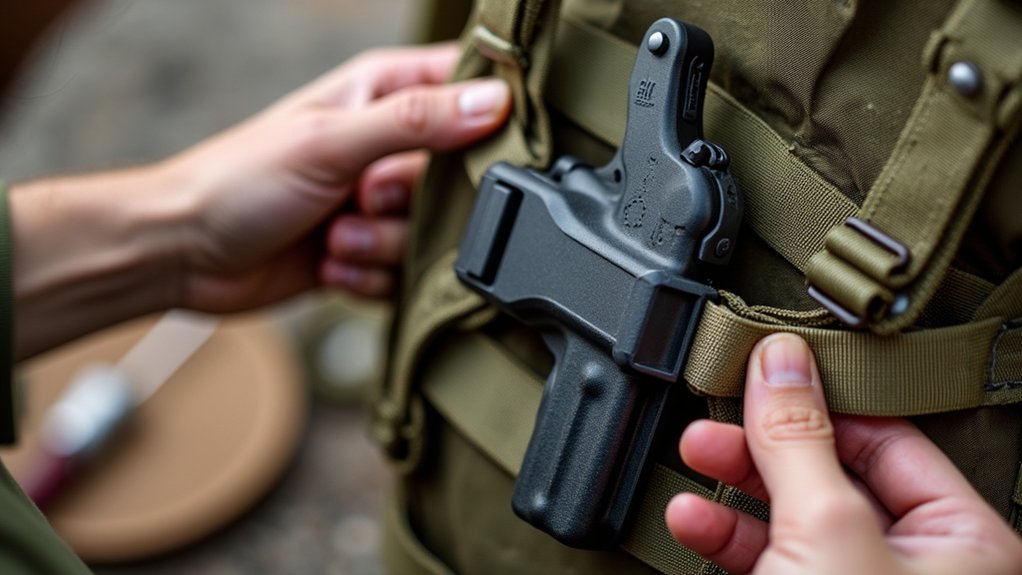
Since holster compatibility varies widely, you need to carefully match your holster’s attachment system with your backpack’s available mounts, whether belt clips, straps, or specialized holster attachments. This helps maintain quick accessibility and secure retention.
Ensure your holster’s attachment matches your backpack mounts for secure, accessible carry.
Here are common challenges you might face and how to overcome them with a good holster:
- Incompatible Mounts: Verify your backpack supports your holster’s attachment type before purchase.
- Holster Shifting: Use retention straps and test stability on rough terrain.
- Restricted Draw Speed: Choose retention mechanisms that secure but don’t slow your access.
- Comfort Issues: Opt for chest holsters or drop leg designs and test placement to avoid discomfort.
Tips for Comfort During Long Hikes
To stay comfortable during long hikes, you’ll want to carefully select and position your holster to prevent discomfort and maintain quick access.
Choose a drop-down holster with thigh straps for easy reach, but be aware it may restrict blood flow if worn too long.
A chest holster, like an Alaskan leather model, offers secure attachment and comfort even when you remove your backpack.
Make sure your holster fits snugly to avoid flopping and chafing.
Opt for padding or soft materials. Nylon holsters are great for quiet, comfortable wear during extended hikes.
Regularly check and adjust your holster’s placement to find the best spot that balances accessibility and comfort, especially when sitting or taking off your pack.
Prioritizing comfort helps keep you focused and safe on the trail.
Safety and Legal Considerations When Carrying
Although carrying a firearm on a backpack can improve your preparedness, you must first verify and comply with local laws governing public and outdoor carry. Safety should always be your top priority.
Here are key considerations to keep in mind:
Essential tips to carry responsibly, legally, and safely when armed outdoors
- Confirm legal restrictions about carrying firearms in your area, including open or concealed carry rules.
- Securely attach the holster to prevent accidental discharges during movement or hiking.
- Choose a holster with strong retention to keep your firearm stable and safe at all times.
- Regularly practice safe handling and familiarize yourself with your holster’s operation to guarantee quick, confident access without compromising safety.
Following these steps helps you carry responsibly while respecting legal boundaries and maintaining personal safety.
Frequently Asked Question
Can I Attach Multiple Holsters to One Backpack?
Yes, you can attach multiple holsters to one backpack if it has enough attachment points and space.
Make sure each holster is securely fastened and positioned so they don’t block your gear or movement.
Use modular systems or adjustable mounts for flexibility.
Always prioritize comfort and quick access, and check local laws to stay compliant.
Proper setup keeps you safe and efficient while carrying multiple holsters on your backpack.
What Materials Work Best for Holster Attachments?
You’ll want to use nylon webbing or MOLLE systems for the best holster attachments.
They’re durable, flexible, and secure for rough outdoor conditions.
Metal clips or hooks work well if you need a strong hold that won’t shift during movement.
Velcro straps let you adjust the holster’s position easily for quick access.
Paracord is another lightweight, reliable option.
But always double-check your attachment to make sure it won’t loosen or cause safety issues.
How Do Weather Conditions Affect Holster Attachment?
You need to evaluate weather carefully because rain can weaken nylon or leather holsters, making them less secure.
Cold can make plastic parts brittle, increasing breakage risk.
High humidity might cause moisture buildup, affecting retention mechanisms, so check them often.
Snow and wet conditions can cause straps to slip or ice to form, reducing stability.
Wind may interfere with drawing your firearm smoothly, so adjust your attachment for a secure, accessible fit every time.
Are There Holsters Designed for Children’s Backpacks?
Yes, about 60% of holsters designed for children’s backpacks include safety features like retention straps to prevent accidental discharges.
When you choose one, look for lightweight materials and adjustable fittings to guarantee comfort and proper fit.
Always prioritize secure storage and easy access if necessary.
Remember to follow local laws strictly, as safety and compliance are essential regarding kids carrying any firearm-related gear.
Can Holsters Be Attached to Hiking Backpacks With Hydration Packs?
Yes, you can attach holsters to hiking backpacks with hydration packs.
Use belt clip holsters secured to the pack’s belt or drop-down holsters with thigh straps to keep your firearm accessible yet unobtrusive.
Chest holsters work well, too, avoiding interference with hydration tubes.
Always make certain the holster doesn’t block the drinking tube or other essential components.
Prioritize safety and accessibility to guarantee your gear functions smoothly during your hike.
Conclusion
Now that you’ve mastered attaching your holster to your backpack, imagine trekking through wild terrains with your gear locked in place like a fortress. No more fumbling or awkward shifts. Just smooth access whenever you need it.
Remember, safety isn’t just a box to check; it’s your lifeline out there. Keep your holster secure, comfortable, and legal.
With these steps, you’re not just prepared. You’re unstoppable on every hike.