
How to Wear Iwb Holster Appendix?
To wear an IWB holster appendix style, position the holster at your 1 to 2 o’clock, just above your waistband and near your appendix. Choose a holster with adjustable cant and ride height for comfort and quick access.
Use a sturdy belt to keep it stable and pick clothing that’s loose or stretchy to conceal printing. Keep your finger off the trigger while drawing and re-holstering safely.
A few simple tweaks make appendix carry both comfortable and practical. Explore what else can improve your setup.
Understanding Appendix Carry Position
When you choose appendix carry, you position your firearm in the 1-2 o’clock spot, right over the appendix area, which makes access quick and concealment easier.
This placement sits comfortably between your belly button and hip bone, allowing smooth arm movement for drawing, especially compared to carrying at 3-4 o’clock. You’ll find it convenient whether you’re seated or standing.
It’s essential to use a holster that fully covers the trigger guard and securely retains the firearm during your daily movements to keep things safe.
Remember, proper training and consistent practice in drawing and re-holstering from this position are imperative.
With the right technique, appendix carry offers a natural, efficient, and easily concealed way to carry your firearm.
Selecting the Right Holster for Appendix Carry
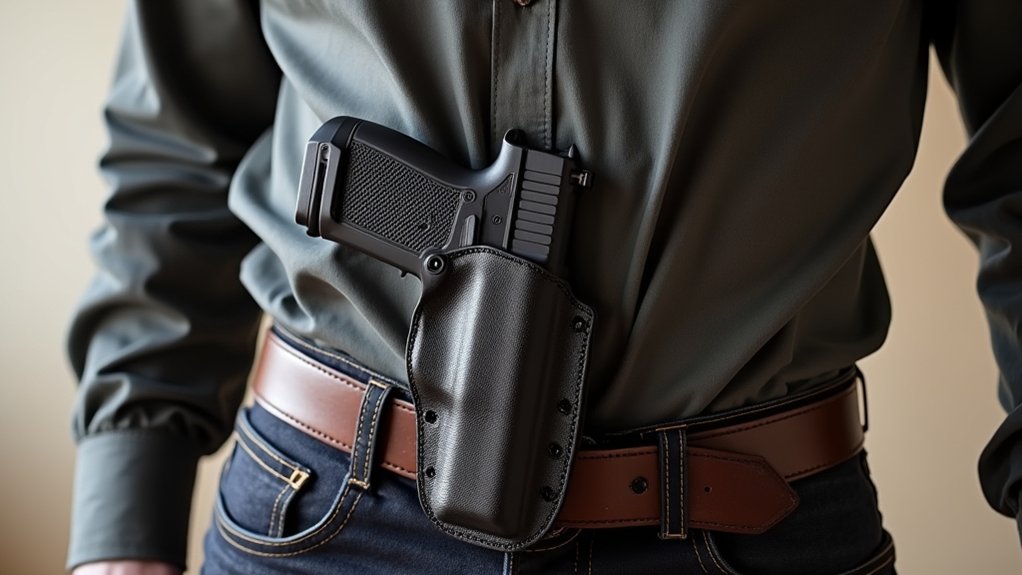
When you’re picking out a holster for appendix carry, you’ll want to go for materials that strike a good balance between comfort and secure retention.
Something like a hybrid Kydex with a soft backing works really well.
It’s also super important to make sure your holster fully covers the trigger guard—that way, safety stays front and center.
And don’t forget to look for one with adjustable cant and ride height.
This lets you customize the fit perfectly to your body and your clothing style, making carry much more comfortable throughout the day.
Holster Material Options
Choosing the right holster material plays an essential role in your comfort and firearm retention during appendix carry.
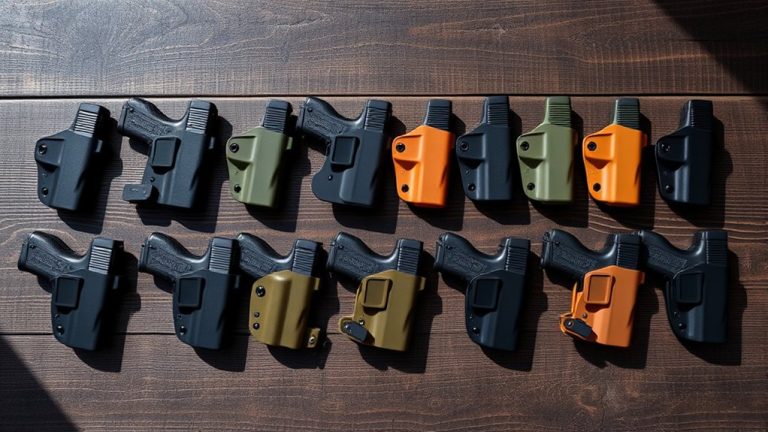
Kydex stands out for its durability, lightweight feel, and excellent retention, thanks to its rigid shape that fully covers the trigger guard.
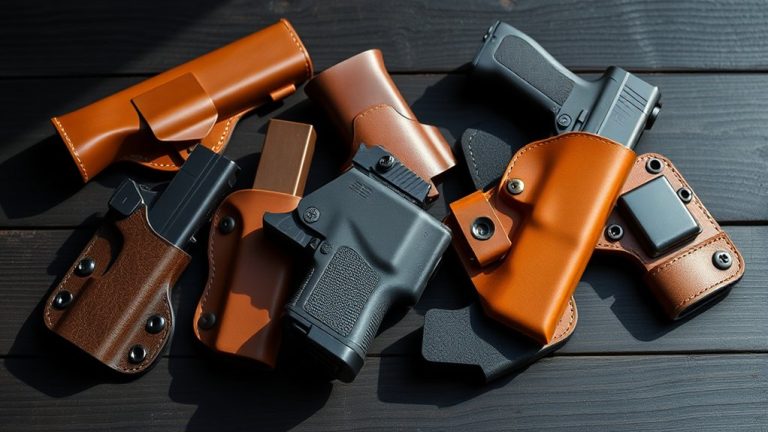
If you prefer a more traditional look and softer feel, leather holsters offer comfort but usually need a break-in period and might wear out faster.
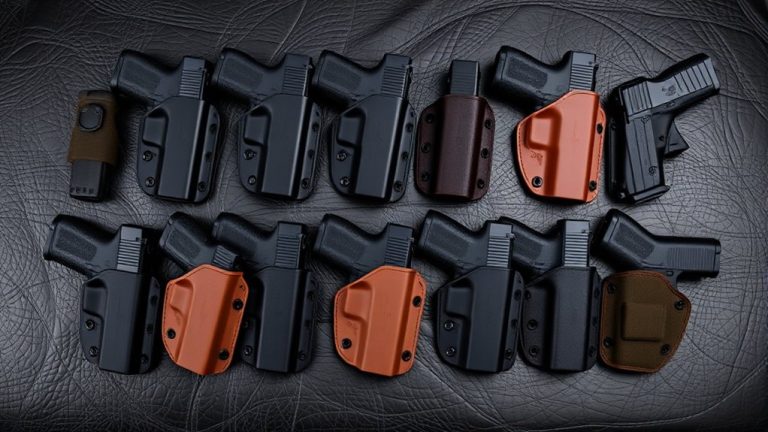
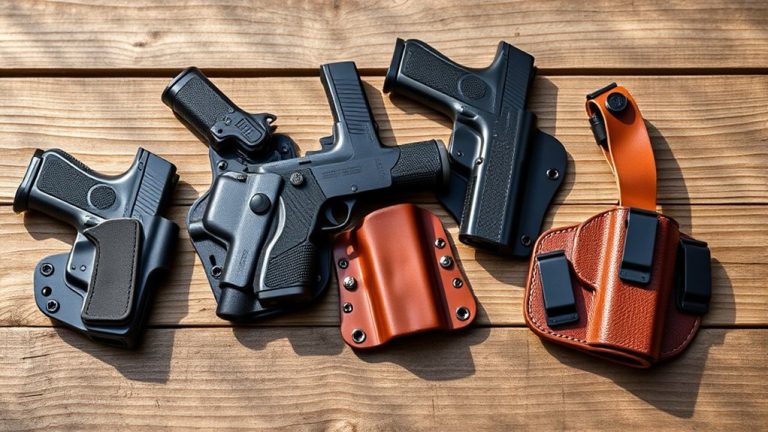
Hybrid holsters combine a Kydex shell with a soft backing like neoprene or leather, giving you secure retention plus comfort against your skin.
Consider your climate too. Kydex can feel hot in warm weather, while leather might absorb moisture.
Picking the right material helps you stay comfortable and confident throughout the day.
Adjustable Fit Features
Although finding the right holster material is important, adjusting fit features like cant and ride height will make a bigger difference in comfort and accessibility during appendix carry.
You want a holster that lets you customize these settings to match your body shape and clothing style perfectly.
Look for one with adjustable retention, too, so your firearm stays secure but easy to draw.
Don’t forget that soft backing materials like neoprene or leather can boost comfort for long wear.
Experiment with different angles and positions to find what works best for you.
Key adjustable fit features to evaluate:
- Cant adjustment for ideal draw angle
- Ride height customization for concealment and comfort
- Adjustable retention to balance security and accessibility
Trigger Guard Coverage
Since safety is paramount in appendix carry, you need a holster that fully covers the trigger guard to prevent accidental discharges.
Look for a holster made from durable materials like Kydex, which maintain shape and provide consistent trigger guard coverage.
A well-designed holster includes a retention system that secures your firearm firmly but still allows for a smooth draw.
Adjustable cant and ride height are helpful features to customize fit and guarantee the trigger guard stays protected without sacrificing comfort.
Choosing a holster specifically made for appendix carry is essential, as these models often have improved features to safeguard the trigger during both drawing and re-holstering.
Prioritize trigger guard coverage to keep your carry safe and reliable every time.
Adjusting Holster Cant and Ride Height
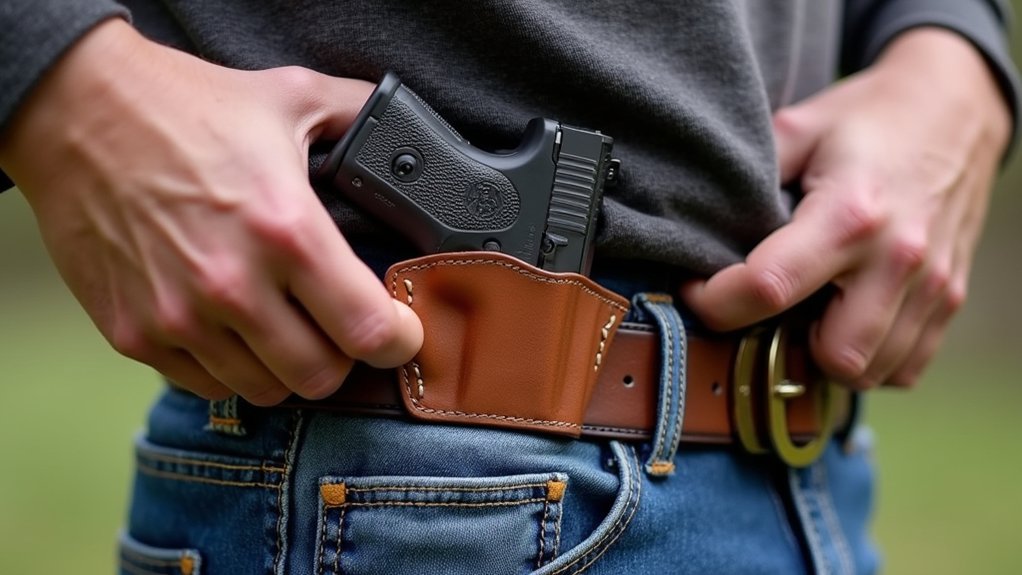
You’ll want to adjust your holster’s cant angle and ride height to find what feels most comfortable and conceals best.
A slight forward cant, around 10-15 degrees, often improves draw speed.
Ride height is important too—it affects both comfort and how much your gun might print.
So, try experimenting with these settings.
That way, you can tailor your setup to your body and clothing, making appendix carry much more effective.
Optimal Cant Angles
When adjusting your IWB holster for appendix carry, finding the right cant angle and ride height is key to a smooth draw and effective concealment.
The ideal cant angle usually falls between 10 to 30 degrees forward, which lets you draw naturally while keeping printing minimal. Since everyone’s body and clothing differ, you’ll want to experiment to determine what works best for you.
Some holsters offer adjustable cant and ride height, making customization easier.
Keep these points in mind:
- A forward cant between 10° and 30° helps align the grip for a quick, natural draw.
- Adjusting cant affects how the gun sits under clothing, influencing concealment.
- Fine-tuning your cant angle can reduce discomfort and improve accessibility throughout the day.
Ride Height Importance
Adjusting the ride height of your IWB holster plays a crucial role in balancing comfort, concealment, and accessibility. Setting the holster lower improves concealment but might slow your draw. Meanwhile, a higher position speeds access but can be less discreet.
The cant angle should align with your natural draw to maximize efficiency and safety. Experimenting with different ride heights and cants, like a 15-degree tilt, helps you find the best fit for your body type and clothing.
| Ride Height | Concealment | Draw Speed |
|---|---|---|
| Low | Excellent conceal | Moderate speed |
| Medium | Balanced | Balanced |
| High | Less conceal | Fastest draw |
| Adjustable | Tailored fit | Optimal access |
| Experiment | Personal preference | Ideal performance |
Personal Comfort Adjustments
Although finding the perfect fit takes some trial and error, tweaking your holster’s cant and ride height can greatly boost both comfort and draw speed.
Adjusting the cant, the angle your holster sits at, can improve accessibility, especially with a forward tilt between 10-30 degrees.
Ride height matters too. Positioning your holster just above the waistband avoids pressure on your abdomen while keeping the firearm secure and concealed.
Using an adjustable holster lets you fine-tune these settings quickly, adapting to different clothing or activities.
Keep practicing with your adjustments to build muscle memory for smooth draws and re-holstering.
- Experiment with cant angles to find your comfort zone
- Position ride height to balance concealment and ease of access
- Use adjustable holsters for quick, personalized changes
Choosing Comfortable Clothing for AIWB Carry
Since comfort plays a crucial role in successfully carrying appendix inside the waistband (AIWB), you should choose clothing that conceals your firearm while allowing ease of movement. Opt for looser-fitting tops like oversized shirts and dark colors or patterns to minimize printing.
Select pants with a higher waistline and some stretch to avoid discomfort when sitting or bending. Breathable, moisture-wicking fabrics prevent irritation during extended wear. Also, consider an EDC belt designed for appendix carry to keep your firearm stable and accessible.
| Clothing Tip | Benefit |
|---|---|
| Looser-fitting tops | Conceals firearm outline |
| Dark colors/patterns | Camouflages printing |
| High-waisted stretchy pants | Comfort sitting and moving |
| Breathable fabrics | Reduces skin irritation |
Securing Your Holster Properly
You’ll want to position your holster accurately around the 1-2 o’clock area for quick access and proper concealment.
Just make sure to adjust the retention settings so your firearm stays secure but still draws smoothly.
Taking these steps will help keep your carry safe and comfortable throughout the day.
Holster Placement Accuracy
Securing your IWB holster properly starts with placing it accurately around the 1-2 o’clock position, right over your appendix area. This placement guarantees quick access and effective concealment.
You’ll want the holster tight against your body to prevent shifting during movement, which can cause discomfort or slow your draw.
Using a sturdy gun belt designed for concealed carry supports the holster’s weight and keeps it stable throughout the day.
Adjusting the cant or angle helps tailor comfort and accessibility to your body type.
Remember, practice drawing and re-holstering to build muscle memory and handle your firearm safely.
Position holster at 1-2 o’clock for ideal access
Secure holster tightly to prevent movement
Use a quality gun belt to maintain holster placement
Adjusting Retention Settings
After positioning your IWB holster correctly, the next step is to adjust the retention settings to keep your firearm firmly in place.
Most quality IWB appendix holsters feature adjustable retention screws that you can tighten or loosen to match your firearm’s fit.
Start by setting the screws moderately tight, then draw your firearm several times to confirm it releases smoothly without requiring too much force.
The goal is to strike a balance: your firearm should stay secure during movement but still allow for a quick, efficient draw.
Remember to check and re-adjust retention regularly, especially after extended use, since wear can loosen the fit.
Proper retention keeps your firearm safe and ready, combining security with accessibility.
Wearing a Supportive Gun Belt
Choosing the right supportive gun belt is essential for comfortable and effective appendix carry. A sturdy belt guarantees your firearm stays secure and accessible without sagging or shifting.
When selecting your belt, focus on materials and design that offer durability and stability.
Here’s what to look for:
- Material: Opt for leather or nylon with reinforced stitching to prevent bending and twisting.
- Width: Choose a belt at least 1.5 inches wide to fit securely through loops and support your holster’s weight.
- Adjustability: Consider belts with ratchet systems for a customizable fit that adapts to your body and clothing changes.
A quality gun belt improves concealment and keeps your holster positioned correctly.
This makes your appendix carry experience both safe and comfortable.
Positioning the Holster Relative to Your Body
Once you have a supportive gun belt in place, the next step is to position your holster correctly on your body. Aim to place it between your belly button and hip bone, ideally near the 1 to 2 o’clock position for easy access and effective concealment.
Adjust the holster so it hugs your body’s contours snugly, minimizing printing without sacrificing comfort. Don’t hesitate to experiment with slight angles like 1:30 or 2:30 to find what suits your shape and clothing best.
Make sure the holster sits above your waistband, allowing you to reach it easily whether you’re standing or seated, without disrupting your posture.
Keeping a consistent holster position helps build muscle memory, making your draw and re-holstering smoother and more reliable.
Practicing Safe Drawing Techniques
While mastering your appendix carry holster, you should always prioritize safe drawing techniques to prevent accidents. Practice drawing in a controlled, safe environment, keeping your finger off the trigger until you’re ready to shoot.
Build muscle memory by practicing both seated and standing draws, and guarantee your line of sight is clear to avoid fumbling.
Here are key points to focus on:
Use smooth, deliberate motions while maintaining trigger discipline to reduce negligent discharges.
Maintain trigger discipline with smooth, deliberate movements to minimize the risk of accidental discharges.
Regularly practice dry-fire drills to sharpen your mechanics without live ammo risks. Train in different positions to get comfortable with your holster’s location and retention.
Techniques for Safe Re-holstering
Master safe re-holstering by keeping your finger off the trigger and maintaining full focus on your firearm throughout the process.
Before you re-holster, perform a mental “hard break” to confirm your gun is clear and your surroundings are safe.
Lean back slightly to create space between your body and holster, allowing a smooth, controlled motion.
Keep your eyes fixed on the firearm as you guide it into the holster to guarantee proper alignment and avoid snagging on clothing.
Use a holster designed specifically for appendix carry that fully covers the trigger guard and offers solid retention.
Following these steps prevents accidental discharges and keeps your re-holstering safe and efficient every time.
Managing Comfort While Sitting and Moving
Because sitting and moving can shift your holster, you should adjust its position away from your body to reduce pressure and discomfort.
Wearing a sturdy, rigid belt helps keep your holster stable and supports your firearm’s weight, preventing unwanted movement.
Choosing looser clothing or fabrics with some stretch lets you move freely without feeling pinched or restricted.
Experiment with ride height and cant angle to find a comfortable setup that still allows quick access.
Adjust the ride height and cant angle for comfort and quick, reliable access to your firearm.
Practice drawing from a seated position to build confidence and muscle memory.
Use a reinforced belt to maintain holster position.
Select flexible clothing that accommodates the firearm’s bulk.
Adjust holster angle for comfort without sacrificing accessibility.
Choosing Firearms Suitable for Appendix Carry
Choosing the right firearm for appendix carry can make a big difference in comfort and concealment.
You’ll want to focus on compact or subcompact striker-fired pistols because their lightweight design minimizes printing under your clothes.
Hammerless revolvers or those with shrouded hammers also work well, reducing the risk of accidental discharge during re-holstering.
Avoid full-size pistols since they create noticeable bulges and discomfort.
Look for firearms with flat-backed slides, which reduce pressure points against your body.
Ultimately, your choice should fit your body type, clothing style, and personal preference.
Testing different models helps you find the best balance between ease of carry and concealment, ensuring you feel comfortable and confident throughout the day.
Using Holster Accessories to Improve Fit and Concealment
Once you’ve selected the right firearm for appendix carry, fine-tuning how it sits on your body can make a big difference in comfort and concealment.
Holster accessories help you customize fit and keep your firearm discreet throughout the day. You can adjust cant and ride height for comfort and quick access, or add a claw accessory to pull the grip closer to your body, reducing printing.
Holster accessories let you tailor fit and concealment, adjusting cant, ride height, and grip position for all-day comfort.
A wedge or concealment wing stabilizes your holster, preventing unwanted movement during activities.
Consider these accessories to improve your appendix carry experience:
- Holster claw for better grip position and concealment
- Adjustable cant and ride height for personalized comfort
- Wedge or concealment wing for improved stability and fit
Using these options guarantees your holster stays secure and comfortable all day.
Tips for Minimizing Printing
To minimize printing when carrying appendix inside the waistband, you’ll want to focus on clothing choices and holster positioning. Choose looser or dark-patterned clothes to mask your firearm’s outline.
Pick a quality AIWB holster with adjustable cant and ride height for better concealment. Use a sturdy EDC belt to keep everything snug and prevent sagging.
Position your holster around 1 o’clock for the best fit and least visibility. Experiment with untucked button-ups or longer t-shirts to cover your firearm stylishly.
| Tip | Description |
|---|---|
| Clothing | Looser fit, dark patterns to disguise shape |
| Holster Selection | Adjustable cant & ride height for concealment |
| Belt | Sturdy EDC belt prevents sagging |
| Positioning | Holster at 1 o’clock, close to body |
Common Challenges and How to Overcome Them
You’ll probably run into some discomfort, safety worries, and trouble keeping your holster hidden when you carry an IWB appendix holster.
But don’t worry—adjusting where you position the holster and practicing your draw can really help make things more comfortable and easier to access.
Also, putting trigger safety first and picking the right clothes to wear will keep you both safe and under the radar.
It takes a bit of trial and error, but you’ll get the hang of it!
Comfort Adjustment Tips
Finding comfort while wearing an IWB appendix holster often requires a few key adjustments tailored to your body and daily routine. You’ll want to focus on positioning and materials to reduce friction and discomfort.
Start by choosing a holster with adjustable cant and ride height to find what fits your shape best. A hybrid holster with a Kydex shell and soft backing can prevent chafing.
Also, your clothing plays a big role; looser shirts and pants help minimize printing and improve comfort. Use a sturdy EDC belt to support your firearm’s weight and keep the holster stable.
Practice drawing and re-holstering regularly to build muscle memory and ease movement. Experiment with different holster adjustments until you find your sweet spot.
Safety Precautions
Although appendix carry offers quick access, it demands strict safety precautions to avoid common challenges. Always verify your holster fully covers the trigger guard to prevent accidental discharges, especially during re-holstering. Practice good trigger discipline and confirm firearm alignment visually each time you holster.
Regularly inspect your holster for damage, as worn gear compromises safety. Using a holster designed for appendix carry with adjustable retention helps secure your firearm without sacrificing accessibility. Stay aware of your firearm’s position and surroundings to minimize risks.
| Common Challenge | How to Overcome It |
|---|---|
| Accidental Discharge | Holster must cover trigger guard completely |
| Negligent Handling | Maintain trigger discipline, check alignment |
| Equipment Failure | Inspect and maintain holster regularly |
Concealment Techniques
Three key adjustments can greatly improve concealment when wearing an IWB holster in the appendix position.
First, choose looser clothing with dark patterns to reduce printing and bulk around your waist.
Second, fine-tune your holster’s cant and ride height, aiming for the 1-2 o’clock position to balance comfort and discretion.
Third, use a sturdy EDC belt to support your setup and prevent sagging that can reveal your firearm.
To further augment concealment, consider these tips:
Experiment with hybrid or adjustable holsters to fit your body and clothing style.
Practice drawing regularly to maintain speed without disrupting concealment.
Opt for clothing that minimizes outlines and tight waistbands that print your firearm.
These simple strategies help you carry confidently and discreetly every day.
Building Muscle Memory for Efficient Appendix Carry
To carry appendix-style efficiently, you’ll need to build muscle memory through regular practice. Start by consistently practicing your draw and re-holstering to improve speed and safety, especially under stress.
Incorporate dry-fire exercises into your routine to focus solely on your draw mechanics without live ammo risk. Use a mirror to watch your movements, ensuring they’re smooth and efficient. This visual feedback helps solidify muscle memory.
Repetition is key; aim for multiple practice sessions weekly to reinforce proper technique. Consider using a weighted or dummy firearm during practice to get accustomed to the feel and balance of your setup.
Frequently Asked Question
Can Appendix Carry Be Safely Done While Driving?
Ever wonder if you can carry your gun appendix-style while driving without risking safety or comfort? It’s a common concern for many who rely on concealed carry daily, especially since the appendix carry method is praised for quick access and comfort.
In fact, appendix carry has become increasingly popular because it offers better concealment and faster draw times compared to hip carry.
But how can you do it safely behind the wheel? The key is adjusting your holster properly so it doesn’t interfere with your seatbelt or driving posture.
Using a sturdy belt and positioning the holster comfortably helps keep everything secure and minimizes any shifting as you move.
Practicing drawing your firearm while seated builds confidence and ensures you’re prepared in an emergency. Plus, always wearing your seatbelt correctly over the holster is crucial for both safety and legal reasons.
If you’re curious about the best ways to carry appendix style while driving, this guide breaks down everything you need to know to stay safe and comfortable on the road.
Here are the top tips that stood out after careful consideration and testing.
How Does Appendix Carry Affect Clothing Choices in Hot Weather?
Ever struggled with feeling overheated or awkward while carrying appendix style in the summer? Finding the right clothing can be a real challenge when you want to stay cool, comfortable, and discreet.
Appendix carry is popular because it offers quick access and comfort, but it demands smart wardrobe choices, especially in hot weather. Studies show that wearing breathable fabrics can help reduce body temperature by up to 2 degrees, making all the difference during sweltering days.
Lightweight, moisture-wicking materials like cotton or technical blends keep you cool, while loose-fitting clothes prevent your firearm’s outline from showing and improve airflow.
In this guide, we’ll explore the best clothing strategies for appendix carrying in hot weather. From fabric picks to outfit combinations, you’ll learn how to stay comfortable without sacrificing concealment.
Plus, we’ll highlight gear essentials like sturdy belts and breathable bottoms that complement your look.
Ready to beat the heat while carrying smart? Here are the top options that stood out after extensive testing.
Are There Legal Restrictions Specific to Appendix Carry in Public?
Worried about whether you can legally carry your gun appendix-style in public? You’re not alone—gun laws can be confusing, especially when it comes to different ways of carrying.
Appendix carry has become popular because it offers quick access and comfort, but the rules around it vary a lot depending on your state or city.
Did you know that some places require a concealed carry permit just to carry anywhere, while others have specific restrictions on how or where you can carry appendix? Understanding these legal nuances is crucial to avoid fines or worse.
In fact, a recent survey showed that over 60% of gun owners weren’t fully aware of their local carry laws.
To help you navigate this tricky landscape, we’ve gathered key information on legal restrictions for appendix carry. This guide will clarify what you need to know about permits, prohibited locations, and best practices so you can carry confidently and stay on the right side of the law.
Here are the top points you need to keep in mind before you decide to carry appendix style in public.
What Are the Best Practices for Appendix Carry During Physical Exercise?
Ever tried exercising with your pistol tucked in your waistband only to find it slipping or feeling uncomfortable? Appendix carry during physical activity can be a real challenge if your gear isn’t up to the task.
As more people prioritize both fitness and personal safety, finding a reliable way to carry that stays secure and comfortable is more important than ever. Studies show that nearly 50% of concealed carriers prefer appendix carry for its quick access, but many struggle with retention during movement.
To help you keep your firearm safe and accessible while breaking a sweat, this guide covers the best practices for appendix carry during exercise.
We’ll explore how to choose a snug holster with adjustable retention, why breathable, moisture-wicking clothes make a big difference, and the importance of practicing your draw in controlled settings before hitting intense workouts.
Plus, we’ll share tips on regularly checking your setup so nothing gets lost in the shuffle.
Ready to carry confidently and comfortably no matter the workout? Here are the top options that stood out after extensive testing.
How Do You Clean and Maintain an Appendix Carry Holster?
Ever notice how your appendix carry holster starts to feel a bit worn or less secure over time? Keeping it clean and in good shape isn’t just about looks—it’s key to a safe, smooth draw when you need it most.
With more people choosing appendix carry for its quick accessibility, knowing how to properly maintain your holster is essential for reliability and longevity.
Cleaning your holster regularly with a damp cloth and mild soap helps remove dirt and residue that can affect grip or draw speed. It’s important to avoid harsh chemicals since they can damage materials like Kydex or leather.
Plus, a quick inspection for cracks, deformities, or retention issues ensures your firearm stays secure. Storing your holster in a cool, dry place away from heat or sunlight keeps it from warping or breaking down too soon.
If you’re looking to keep your appendix carry holster in top condition without hassle, this guide breaks down simple steps that make a big difference. Here are the top tips that stood out after extensive testing and real-world use.
Conclusion
Wearing your IWB holster appendix style means feeling confident and secure, like a second skin hugging your body just right. Imagine the smooth draw from your strong side, the holster sitting discreetly beneath your shirt, barely noticeable to others.
With the right adjustments and practice, you’ll move freely without printing or discomfort. Keep refining your setup, and soon, appendix carry will feel as natural as your own shadow, always there, always ready.