Is Pepper Spray Considered a Weapon? Is It ILLEGAL
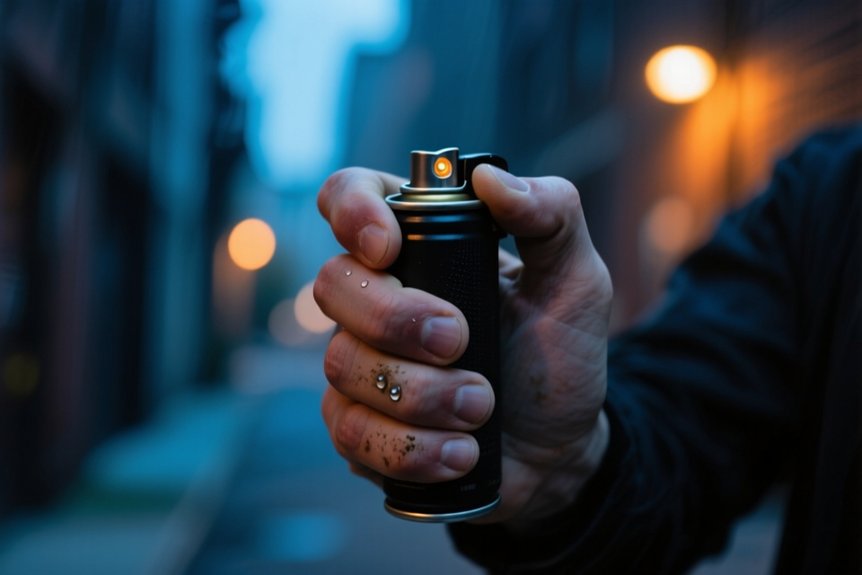
Pepper spray is legally classified as a weapon in many places, but it’s generally allowed for self-defense when used responsibly. Its legality depends on your location, with varying rules about age, concentration, container size, and where you can carry it.
Misusing it, such as deploying it without justification or in prohibited areas, can lead to criminal charges. Understanding these nuances helps you comply with laws and use it safely. Exploring specifics clarifies how regulations affect you.
Key Takeaways
- Pepper spray is legally classified as a weapon in many U.S. states but is primarily intended for self-defense use.
- Its legality varies by jurisdiction, with restrictions on age, container size, and concentration levels.
- Some states require purchases from licensed dealers and prohibit possession in certain areas like schools.
- Misuse or use outside self-defense can result in criminal charges, including assault or battery.
- Penalties for illegal possession or misuse range from misdemeanors to felonies, depending on context and intent.
Definition and Composition of Pepper Spray
Pepper spray consists mainly of capsaicin, a compound extracted from Capsicum plants that causes irritation upon contact.
When you examine its composition, you’ll find that capsaicin is extracted by grinding capsicum and using organic solvents like ethanol.
To maintain suspension in water for aerosol distribution, emulsifiers such as propylene glycol are included.
The concentration of capsaicin and related capsaicinoids (CRC) varies, typically from 0.18% to 3% for personal use, while law enforcement formulations range from 1.3% to 2% CRC.
Various dispersal types such as aerosol, gel, and foam offer different accuracy and coverage levels.
Understanding this composition is essential when considering pepper spray legality, as the concentration and formulation often influence regulatory decisions regarding its possession and use.
Legal Classification of Pepper Spray in Different Jurisdictions
Although often regarded as a self-defense tool rather than a lethal weapon, the legal classification of pepper spray varies widely across jurisdictions.
Pepper spray is commonly seen as self-defense, but its legal status differs significantly across regions.
You’ll find pepper spray restrictions by country or state differ markedly, with many U.S. states requiring users to be at least 18 years old and limiting container size, such as California’s 2.5-ounce cap.
States like New York and Massachusetts impose stricter controls, mandating purchases from licensed dealers or restricting types allowed.
Moreover, local laws may demand registration or specific labeling for manufacturers.
Misuse, including excessive deployment or use in prohibited areas like schools, can result in assault charges or reclassification as a weapon.
Understanding these legal nuances is essential to guarantee compliance when carrying or using pepper spray in various jurisdictions.
Pepper Spray as a Self-Defense Tool
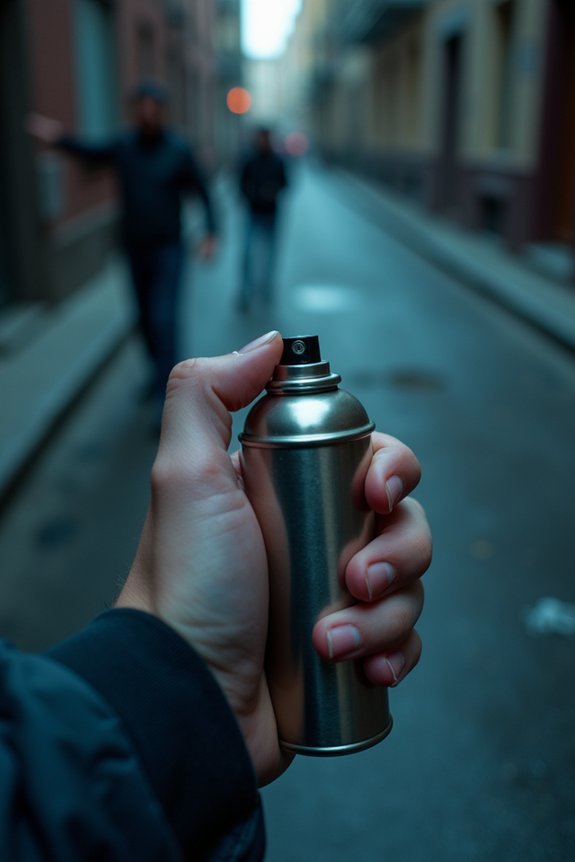
When you carry a self-defense tool designed to temporarily incapacitate an attacker, you want something effective yet non-lethal.
Pepper spray fits this role by causing pain, temporary blindness, and breathing difficulty, allowing you to escape harm.
Under the law in the USA, pepper spray is generally permitted for individuals 18 and older.
However, regulations vary by state regarding container size and concentration limits.
It isn’t classified as an offensive weapon when used responsibly for self-defense.
That said, misuse or deployment outside legal parameters can result in criminal charges.
This emphasizes your responsibility to understand local laws.
Familiarizing yourself with specific state restrictions guarantees you carry pepper spray legally and use it appropriately as a self-defense tool.
Circumstances When Pepper Spray Is Considered a Weapon
You should know that pepper spray is legally considered a weapon in many states.
There are specific rules about how big it can be and how strong the spray is. So, it’s important to use it only for self-defense.
If you use pepper spray in places where it’s not allowed, or for reasons other than protecting yourself, you could face serious legal trouble.
Understanding these rules helps you stay out of trouble and use pepper spray responsibly.
Legal Definitions by State
Since state laws vary widely, understanding the legal definitions of pepper spray is vital for determining when it’s considered a weapon. In many states, pepper spray is classified as a self-defense tool rather than a lethal weapon; however, misuse or possession outside legal parameters can result in it being classified as a weapon.
For example, in California, pepper spray containers are limited to 2.5 ounces, while New York permits only specific types of pepper spray. Massachusetts requires purchases from licensed dealers, reflecting stricter control.
If you misuse pepper spray, such as deploying it in prohibited areas or during unlawful altercations, you risk criminal charges, which may raise its status to a weapon under the law.
Knowing your state’s regulations is vital to avoid legal complications involving pepper spray classified as a weapon in your jurisdiction.
Use Restrictions and Limits
Understanding state-specific legal definitions sets the foundation for recognizing the restrictions placed on pepper spray use.
You must use self-defense spray strictly within the confines of self-defense situations to comply with the law.
Many jurisdictions classify pepper spray as a weapon, limiting its use to defensive purposes only.
Moreover, states may impose size restrictions on pepper spray containers, often capping them at two ounces or less.
For example, New Jersey and North Carolina enforce such limits and consider misuse a misdemeanor offense.
Using pepper spray offensively or in prohibited locations, such as schools, can lead to criminal charges, including assault or battery.
Consequently, you should familiarize yourself with local regulations to guarantee your use of self-defense spray remains lawful and legally justified.
Misuse and Legal Penalties
Although pepper spray is intended for self-defense, using it improperly can result in serious legal consequences. The misuse of pepper spray, including offensive use or deployment in prohibited areas, can lead to criminal charges. Courts evaluate the context and intent behind its use to determine if it qualifies as a weapon.
You should be aware of these key points regarding misuse and legal penalties:
- Using pepper spray against law enforcement officers, as prohibited in states like California and Georgia, carries strict legal penalties.
- Many states treat misuse of pepper spray as a misdemeanor or felony, with consequences varying by intent and circumstance.
- In jurisdictions such as North Carolina and Virginia, malicious use may result in felony charges.
Understanding these factors helps guarantee lawful use and avoids serious repercussions.
State-by-State Variations in Pepper Spray Laws
You’ll find that pepper spray laws vary quite a bit from one state to another.
Some states have strict size limits and age requirements, while others put more emphasis on when and how you can legally use it.
Legal Status Differences
Because pepper spray laws vary widely across the United States, knowing your state’s specific regulations is crucial before carrying or using it.
You might wonder, is pepper spray classified as a weapon in your state? The answer depends on local statutes, which differ greatly.
Consider these key points:
- Container Size Limits: California restricts containers to 2.5 ounces, while New Jersey limits them to 0.75 ounces. Some states, like Alabama, have no size restrictions.
- Age and Purchase Requirements: Many states require users to be 18 or older; Massachusetts mandates purchases through licensed dealers.
- Legal Classification: Pepper spray may be considered a weapon in some jurisdictions, affecting possession and use regulations.
Understanding these legal status differences guarantees you comply with laws and avoid criminal penalties.
Usage Restrictions
Knowing whether pepper spray is classified as a weapon in your state is only part of the legal landscape.
Usage restrictions vary greatly across states, impacting whether pepper spray is permitted for self-defense and under what conditions.
For instance, Alabama allows pepper spray for self-defense but treats misuse as a Class C felony.
Arizona permits it for individuals aged 18 and older, with strict misuse penalties.
California limits civilian container size to 2.5 ounces, while New Jersey further restricts containers to 0.75 ounces, classifying misuse as a legal violation.
North Carolina permits self-defense use with container sizes capped at 150 cc (approximately 5 ounces) and considers misuse a Class 2 misdemeanor.
Understanding these regulations guarantees compliance with local laws regarding pepper spray possession and use.
Restrictions on Possession and Use
Although pepper spray is widely available for self-defense, its possession and use are subject to various restrictions that you must follow.
If you wonder, “is carrying pepper spray legal for civilians,” the answer depends on your state and local laws. Typically, individuals 18 years or older may legally carry pepper spray, but you must adhere to specific regulations.
- Size limits vary by state, ranging from 0.75 oz in New Jersey to about 1.7 oz in South Carolina.
- Misusing pepper spray, such as deploying it outside self-defense or against law enforcement, can result in criminal charges.
- Certain areas, including schools and government buildings, commonly prohibit possession to maintain safety.
Always verify local ordinances before carrying or using pepper spray to remain compliant with the law.
Differences Between Pepper Spray and Other Defensive Weapons
Understanding the restrictions on pepper spray sets the stage for comparing it with other defensive weapons.
Pepper spray is classified as a less-lethal weapon, designed to temporarily incapacitate an attacker through capsaicin’s effects.
Pepper spray serves as a less-lethal option, temporarily disabling threats via capsaicin’s irritant properties.
In contrast, firearms and knives are lethal weapons with the potential to cause permanent injury or death. You’ll find that many states allow possession of pepper spray without permits, while other weapons often require licenses or training.
Furthermore, regulations frequently limit pepper spray container size, such as California’s 2.5-ounce maximum, a restriction not commonly applied to other weapons.
However, misuse of pepper spray can carry legal consequences similar to those for other defensive weapons.
Consequently, while pepper spray offers a less-lethal alternative, it remains subject to specific legal frameworks distinct from more dangerous arms.
Health Effects and Safety Concerns
When you come into contact with pepper spray, you’ll feel immediate effects like intense facial pain, your eyes closing involuntarily, and trouble breathing.
These symptoms usually go away within 20 to 90 minutes.
But if you’re exposed repeatedly, it can lead to long-term health problems, like changes in how sensitive your corneas are and respiratory issues.
Immediate Physical Reactions
Because pepper spray contains capsaicin, exposure immediately triggers intense pain in the face, involuntary eye closure, difficulty breathing, runny nose, and coughing.
As a non-lethal weapon, pepper spray’s effects typically last between 20 to 90 minutes, though eye irritation may persist up to 24 hours, causing temporary vision impairment and disorientation.
Recovery usually occurs within 7 to 15 minutes, but discomfort can linger. To mitigate effects, victims should blink vigorously, as capsaicin isn’t water-soluble and water only dilutes it.
Key immediate physical reactions include:
- Severe eye pain and involuntary closure impairing vision
- Respiratory distress such as coughing and difficulty breathing
- Nasal irritation leading to runny nose and sneezing
Understanding these reactions is crucial for safe use and response to this non-lethal weapon.
Long-Term Health Risks
Although a single exposure to pepper spray rarely causes lasting harm, repeated or prolonged contact can lead to significant long-term health concerns. You should be aware that long-term health risks include altered corneal sensitivity, which may affect your vision over time.
Furthermore, certain vulnerable populations, such as individuals with respiratory issues or those who are restrained, face increased risk of severe complications, including respiratory distress.
While immediate symptoms like pain and eye irritation generally resolve within minutes to hours, these long-term effects warrant caution.
Since capsaicin, the active ingredient, resists water decontamination, proper treatment involving saline solution and blinking is essential to minimize damage.
Understanding these long-term health risks is vital for evaluating the safety and legality of pepper spray use in various settings.
Legal Consequences of Misusing Pepper Spray
If you misuse pepper spray, you could face serious legal consequences that vary by jurisdiction and circumstances.
The legal consequences of using pepper spray on a person depend on intent, location, and the nature of the incident. You should be aware that:
- Criminal charges such as assault or battery may apply, with penalties ranging from misdemeanors to felonies, as seen in North Carolina and Virginia.
- Using pepper spray against peace officers or in prohibited areas like schools or courts is illegal and subject to increased penalties.
- Courts evaluate the context and intent behind the use, influencing the severity of legal repercussions.
Understanding these factors helps you avoid misuse and the legal ramifications associated with improper deployment of pepper spray.
Advocacy for Civilian Use and Regulation
When considering personal safety, many advocates emphasize the importance of civilian access to pepper spray as a non-lethal self-defense option. Advocacy for civilian use of pepper spray has gained traction, especially in regions where self-defense rights are emphasized. Supporters argue it provides a non-lethal option for personal safety. Campaigns often call for consistent regulations and improved safety standards.
| Aspect | Supporters’ Viewpoint | Regulatory Focus |
|---|---|---|
| Accessibility | Essential for self-defense | Clear, consistent legal status |
| Safety | Non-lethal alternative | Rigorous manufacturing oversight |
| Legal Framework | Calls for legalization expansion | Uniform definitions nationwide |
You should recognize that this advocacy reflects a balance between individual protection and regulatory responsibility.
Guidelines for Responsible and Legal Use
Since pepper spray is classified as a weapon in many jurisdictions, you must understand and comply with the legal requirements for its possession and use. Knowing if OC spray is legal for self-protection depends on your local laws, which often specify age limits and container size restrictions.
Follow these guidelines for responsible and legal use:
- Carry pepper spray discreetly and guarantee it complies with your jurisdiction’s size limits, typically around 2 to 2.5 ounces.
- Use pepper spray strictly in situations involving a reasonable threat to your safety; misuse can lead to serious legal consequences.
- Avoid carrying or using pepper spray in prohibited locations such as schools or government buildings.
Adhering to these rules guarantees you respect the law and use pepper spray appropriately for self-defense.
Frequently Asked Question
Can Pepper Spray Be Used on Animals Legally?
You can use pepper spray on animals legally in some places, but it depends on your local laws. Typically, it’s allowed only for self-defense against aggressive animals, like dogs or wildlife.
You should check your state or country’s regulations carefully, as misuse might be considered animal cruelty or weapon misuse.
Make sure you understand the rules before using pepper spray on animals to avoid any legal issues or penalties.
How Long Does Pepper Spray Incapacitate a Person?
You might be surprised to learn that pepper spray typically incapacitates a person for 20 to 90 minutes. This depends on how strong the spray is and the individual’s reaction.
Right away, it causes intense pain, involuntary eye closure, and breathing difficulties, disorienting the person.
Although eye irritation can linger up to 24 hours, most people regain vision and coordination within 7 to 15 minutes after exposure.
Is Pepper Spray Effective Against Multiple Attackers?
Yes, pepper spray can be effective against multiple attackers due to its wide dispersal patterns like cone and fog, which cover broader areas.
However, your success depends on deploying it accurately and quickly, especially since wind can reduce its effectiveness.
You should also consider attackers’ proximity; closer targets are easier to incapacitate.
Can Pepper Spray Be Used Indoors Safely?
You can use pepper spray indoors with caution, but it’s best to avoid it unless absolutely necessary.
The confined space can amplify its effects, creating an uncomfortable environment for everyone nearby.
Make certain the area is well-ventilated and be mindful of others’ safety.
Always check local regulations before use, as improper deployment might lead to unintended consequences or legal trouble.
Prioritize safety and responsibility when considering indoor use.
Are There Any Travel Restrictions for Carrying Pepper Spray?
Yes, you’ll face travel restrictions when carrying pepper spray. Many airlines prohibit it in carry-on luggage, and some restrict it in checked bags.
Internationally, certain countries ban civilian possession altogether, making it illegal to bring pepper spray across their borders.
You should always verify the laws of your destination and transit points to avoid confiscation or legal trouble.
Staying informed guarantees you comply with all relevant regulations.
Conclusion
You should know that while pepper spray is widely recognized as a non-lethal self-defense tool, its legal status varies greatly across jurisdictions. Notably, studies show that over 60% of U.S. states permit civilian possession with certain restrictions.
Understanding these laws is essential to avoid legal consequences and guarantee responsible use. By staying informed, you can confidently use pepper spray within the law to protect yourself while minimizing health risks to others.